Revista de la Facultad de Ciencias
Agrarias. Universidad Nacional de Cuyo. Tomo 55(2). ISSN (en línea) 1853-8665.
Año 2023.
Original article
Volunteer
soybean (Glycine max) interference in bean (Phaseolus vulgaris) crops:
ethoxysulfuron and halosulfuron critical level of damage and selectivity
Interferencia
de la soja (Glycine max) voluntaria en el cultivo del frijol (Phaseolus
vulgaris): nivel crítico de daño y selectividad de los herbicidas
etoxysulfuron y halosulfuron
Fortunato De
Bortolli Pagnoncelli Jr.1,
Patricia
Bortolanza Pereira2,
Denise Roberta
Rader3,
Rodrigo Biedacha4,
Leandro Galon5,
Adriano
Bresciani Machado6
1Basf
Brasil, Desenvolvimento de Traits - Basf - Luis Eduardo Magalhães. Bahia. Brasil.
2Universidade
Tecnológica Federal do Paraná- UTFPR. Via do Conhecimento. s/n
- KM 01 - Fraron. Pato Branco. Paraná. Brasil. 85503-390.
3Cargill
- Av. Marechal Floriano Peixoto. 495. Bairro Paraguai. Maracaju. Mato Grosso do
Sul. Brasil. 79150-000.
4Coopavel
-Avenida Padre Ivo Zolet- 880. Bom Sucesso do Sul- Paraná- Brasil. 85515-000.
5Federal
University of Fronteira Sul. Campus Erechim. Laboratory of Sustainable Management
of Agricultural Systems. 99700-970. Erechim. Rio Grande do Sul. Brazil.
6CEDEP
AGRO. Rua Marechal Floriano Peixoto. 1675. Renascença. Paraná. Brasil. 85610-000.
*trezzi@utfpr.edu.br
Abstract
This study aimed
to determine the negative impact of volunteer soybean plants on bean crop yield
and the tolerance of bean genotypes to the herbicides ethoxysulfuron and
halosulfuron. To determine the impact of volunteer soybean plants on bean
crops, a field experiment was developed, with sub-sub-plots, and four
replications. The main plots contained two bean cultivars, while the sub-plots
received two soybean sowing times (0 and 7 days after the beans had been sown),
while the sub-sub-plots contained five soybean plant densities (0, 5, 10, 20,
and 40 plants m-2). The tolerance of the bean genotypes was
evaluated with two experiments in a completely randomized design with three
replications. They were arranged in a 28 x 3 factorial design (bean genotypes x
herbicide doses). Each soybean plant per m2 reduced bean crop yield
by 4%. The recommended doses of ethoxysulfuorn and halosulfuorn resulted in
tolerance levels above 70% for all the studied bean genotypes.
Keywords: competitive
interference, volunteer soybean, tolerance, herbicides
Resumen
Este estudio
determinó el impacto negativo de las plantas voluntarias de soja en el rendimiento
del frijol y la tolerancia de genotipos de frijol a los herbicidas
etoxysulfuron y halosulfuron. Para determinar el impacto de la soja en el
cultivo de frijol, se desarrolló un experimento de campo, en sub-sub-parcelas,
con cuatro repeticiones. Las parcelas principales contenían dos cultivares de
frijol; las subparcelas tenían dos tiempos de siembra de soja (0 y 7 días
después del frijol); las sub-subparcelas contenían 5 densidades de soja (0, 5,
10, 20 y 40 plantas m-2). La tolerancia de los genotipos de frijol
se evaluó con dos experimentos en un diseño completamente al azar con tres
repeticiones, en un factorial 28 x 3 (genotipos de
frijol x dosis). Cada planta de soja por m2 redujo un 4% el
rendimiento del frijol. Las dosis recomendadas de etoxysulfuron y halosulfuron
resultaran niveles de tolerancia superiores al 70%.
Palabras clave: interferencia
competitiva, soja voluntaria, tolerancia, herbicidas
Originales:
Recepción: 06/08/2023 - Aceptación: 21/11/2023
Introduction
Bean crops are
among the most commonly cultivated species in the world. According to the FAO
(2022) (8), in 2020 bean cultivation
occupied 34.8 million ha, with a total production of 27.55-million-tons. This
resulted in a mean global yield of 791.5 kg ha-1 (8), even though some genotypes have a potential yield
of over 4 ton ha-1 (5). Low
productivity, in many of the areas where bean crops are cultivated, can be a
result of the poor adaptation of some genotypes and environmental conditions,
such as extreme temperature and drought stress, but it is mainly due to grain
loss from pests, diseases and weeds.
Bean plants
present a fast development cycle and a low ability to accumulate biomass, which
makes them susceptible to competition from weed plants. The literature reports
that a mixed infestation of weeds can reduce grain yield by up to 80% (3, 9), in addition to lowering the commercial
quality of bean grains.
The importance
of intensive farming systems has increased in regions with suitable soil and
climatic conditions, since they improve the use of these areas, creating the
possibility of cultivating more than one crop per year. In Brazil, the use of
early and very early soybean cultivars as the first and second crop in a
rotation is becoming more normal. Fallow, as a practice to prevent the effects
of Asian soybean rust (Phakopsora pachyrhizi) in some Brazilian states,
has constrained the sowing of off-season soybean, which results in the
intensification of maize, sorghum and bean crops in this period. Natural
soybean grain dehiscence or the incorrect adjustment of the harvesting machine
can result in the emergence of soybean plants in the middle of a bean crop
(second crop), which can interfere with crop growth and yield.
Volunteer corn
plants can reduce bean yield between 27 and 35% per corn plant m-2
emerging at the same time as the bean plants. Between 4.6 and 9.7 plants / m-2
can reduce bean yield by 50% (1). To
date, the impact generated by volunteer soybean plants competing with bean
plants is unknown, but they are suspected to have the potential to be highly
competitive since there are many morphological similarities between the two
species, which could intensify the competition for the same ecological niche (20). In addition, chemical management in this
situation is hampered by the high selectivity of the herbicides for both
cultures.
The herbicides
ethoxysulfuron and halosulfuron, which inhibit the acetolactate synthase (ALS)
enzyme, are registered in Brazil for the control of volunteer soybean plants in
bean crops (4) and are considered
efficient (16). The success of these
herbicides depends on how selective they are for different bean cultivars and
how efficiently they can control soybean plants presenting greater genetic
variability. The identification of the bean genotype response to herbicides is fundamental
to determining its use in weed management; it is also essential for improvement
programs aimed at the selection of herbicide-tolerant genotypes.
The objective of
this study was to determine the impact of the interference of soybean plants on
the grain yield of different bean genotypes and the tolerance of these vean
genotypes to the herbicides ethoxysulfuron and halosulfuron.
Materials
and methods
Experimental
site
The experiments
were carried out in a greenhouse and in the field at the Federal University of
Technology - Paraná, Campus Pato Branco (UTFPR-PB) (26°10’31.6’’ S and
52°42’28.01’’ W) at an altitude of 740m. The climatic region is considered a
climatic transition between the cfa/cfb climates (both rainy and hot temperate
climates, the former is humid in all seasons and hot in the summer; while the
latter is humid in all seasons with moderately hot summers), according to the
Köppen climate classification (12). The
soil used in both experiments is classified as an Oxisol (table 1).
Table
1. Physicochemical characteristics of the
soil where the experiments were carried out.
Tabla 1.
Características físico-químicas del suelo donde se llevaron a cabo los
experimentos.
1/
Organic Matter (g dm-3); 2/ Phosphorus (mg dm-3);
3/ Potassium (cmolc dm-3); 4/ Cation exchange
capacity; 5/ Soil pH; 6/ Exchangeable acidity (cmolc dm-3).
1/
Materia Orgánica (g dm-3); 2/ Fósforo (mg dm-3);
3/ Potasio (cmolc dm-3); 4/ Capacidad de intercambio
catiónico; 5/ pH del suelo; 6/ Acidez intercambiable (cmolc
dm-3).
For the
greenhouse experiments, the collected soil was sieved in a 5 mm mesh sieve and
deposited in 5L polyvinyl chloride (PVC) pots. Irrigation was carried out
manually twice a day. The greenhouse conditions during the experimental period
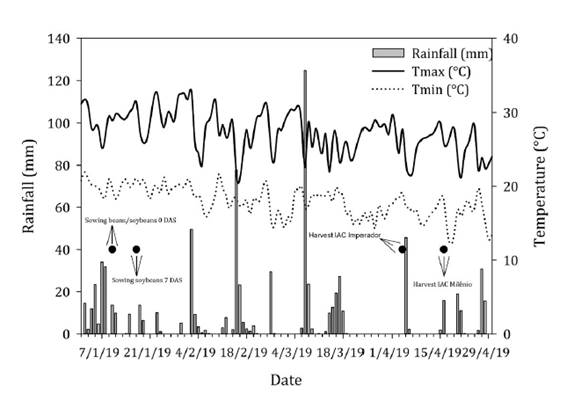
were 20 to 30°C and 60 to 90% relative air humidity. For the field experiment,
the climate conditions during the experimental period are presented in figure
1.
Source: Simepar (Meteorological System of Paraná).
Fuente de información: Simepar (Sistema
Meteorológico de Paraná).
Figure 1.
Rainfall (■), Minimum (-) and maximum (---) temperature during the development
of the experiment in 2019 in Pato Branco, PR, Brazil.
Figura 1.
Lluvia (■), temperatura mínima (-) y máxima (---) durante el desarrollo del
experimento en 2019 en Pato Branco, Paraná, Brasil.
Soybean
plant interference in bean plants
A field
experiment was set up, using a randomized block experimental design with
sub-sub plots and four repetitions. In the main plots, two bean genotypes were
implanted with distinct morphophysiological characteristics: IAC Imperador,
with a determinate growth habit, upright position and a 75-day cycle; and IAC Milênio,
with an indeterminate growth habit, semi-upright position and a 95-day
development cycle. The sub-plots comprised two soybean sowing times, 0 and 7
days after bean sowing, and in the sub-sub-plots, five soybean plant densities
were implemented (0, 5, 10, 20 and 40 plants per m-2). The soybean
plant genotype used was P95R51, with an indeterminate growth habit and a
120-day development cycle.
The
sub-sub-plots consisted of five 5m long lines, with a 0.45m interval between
them. The usable area of the sub-sub-plots was composed of the three central
lines, excluding 0.5 m at each end. Bean sowing was carried out using a no-till
sower, with a desired plant density of 280.000 pl ha-1 for both
genotypes. The seeds were treated with a 100g i.a. dose of fipronil +
pyraclostrobin + thiophanate-methyl per 100 kg of seeds. The base fertilization
used was 269 kg ha-1 of the 8-28-16 (N-P2O5-K2O)
formulation. When the plants were in the V4 phase, topdressing was
carried out with 60 kg ha-1 urea (46% N). Soybean sowing was carried
out manually and after the plants had emerged, excess plants were removed to
homogenize the densities set for the treatments.
Weeds were
manually removed during the experimental period. Insect control was carried out
with thiamethoxan+lambda-cyhalothrin (30.87 g i.a. ha-1), acefate+
aluminum silicate (975,5 g i.a. ha-1), and
beta-cyfluthrin+imidacloprid (81.37 g i.a. ha-1). Disease control
was carried out with fentin hydroxide (250 g i.a. ha-1),
prothioconazole+trifloxystrobin (162,5 g i.a. ha-1), and mancozebe
(2250 g i.a. ha-1).
When the bean
plants were fully grown, 10 plants from the usable area (5.4 m2) of
each sub-sub plot were selected to determine plant height (ESTm), first pod
insertion height (AIPV), number of pods per plant (NVP), number of grains per
pod (NGV) and 1000-grain mass (MMG). Bean grain yield (REND) for each genotype
was determined by harvesting and then threshing the plants of the usable area
of each sub-sub-plot, the resulting grains were weighed and the grain mass
humidity determined and corrected to 13%.
Tolerance
of the bean genotypes
In the
greenhouse, two experiments were set up in a completely randomized experimental
design, with three replications and two factors. The first experiment was
developed with the herbicide ethoxysulfuron, while the second investigated the
herbicide halosulfuron. In both experiments, the first factor contained 28 bean
genotypes, which included: IAC Imperador, IAC Milênio, Jalo
Precoce, BRS Radiante, ANFP 110, IPR Colibri, BRS Esteio,
IPR Uirapuru, IPR Tuiuiú, IAC Harmonia, BRS Esplendor,
IPR Campos Gerais, IPR Tiziu, IPR Juriti, BRS Talismã,
IPR Siriri, IPR Tangará, IAPAR 81, IPR Andorinha, IPR Corujinha,
IPR El dourado, IPR Grauna, IPR Chopim, IPR Saracura,
IPR Garça, IPR Maracanã, ANFC 9, and IPR Gralha. The
second factor was defined by the doses of each herbicide applied to each
experiment. The doses applied of the herbicide ethoxysulfuron were 0, 45, and
90 g ha-1, while the doses applied of halosulfuron were 0, 80, and
160 g ha-1. Four seeds were placed in each pot; after emergence and
establishment, excess plants were removed leaving only two plants.
Herbicide was
applied when 50% or more plants presented an expanded third trifoliate leaf,
using a CO2 pressurized back sprayer equipped with XR 110.02
flat-fan nozzles. The volume of the mixture used was 200 L ha-1,
with a 3.6 km h-1 application speed. For the herbicide halosulfuron,
the mixture included a nonylphenol ethoxylate surfactant at a 0.5% v/v
concentration.
Twenty-eight
days after application, the tolerance of the bean plants was determined using a
scale in which 100 corresponded to the absence of herbicide symptoms and 0
corresponded to plant death intermediate values were ascribed according to
discolouration, atrophy and growth reduction.
Statistical
analysis
The data were
submitted to variance analysis (p ≤ 0.05) using the R
language (2018). For the bean tolerance evaluation experiments, the means
were grouped using the Scott-Knott test (p ≤ 0.05), using the R language (2018). For the competition experiment, when
the means of the qualitative data were significant, they were compared using
the Tukey (p ≤ 0.05) test (21), while the
means of quantitative data were fitted to a linear polynomial (Equation 1),
three-parameter logistic (Equation 2) and rectangular hyperbola (Equation 3)
models, using the Sigmaplot software version 12.0 (24).
Y = A * B + X
Y = A / [1 + (X
/ D50) ^ ]
YL = (A * X) /
(D50 + X)
where
Y = the dependent
variable
X = the soybean
density
A = the Y value
when the X value tends to 0
B = the curve
slope
D50 = the soybean
plant density needed to reduce the dependent variable by 50%
YL = the grain
yield loss (%).
For the
rectangular hyperbola model, the relation between parameters A and D50
results in the i parameter, which represents the yield loss when the
soybean density is 1 plant m-2 and is considered the critical damage
level (6).
Results and discussion
Interference
of soybean plants in bean plants
The variance
analysis indicated significance for only the bean genotype isolated factor
regarding the ESTm, GVG, and MMG variables. For the AIPV variable, significance
was observed for the simple effects of bean genotype and soybean density, while
the VAG variable presented significance for the simple effects of bean
genotype, soybean density and soybean establishment time. For the REND
variable, significance was observed for soybean density, bean genotype
interaction and the simple effect of soybean establishment time.
An increase in
bean AIPV was observed with the increase in soybean density, which was 20% in relation
to the control, without plants, when the soybean density was 40 pl m-2
(figure 2, page 113).
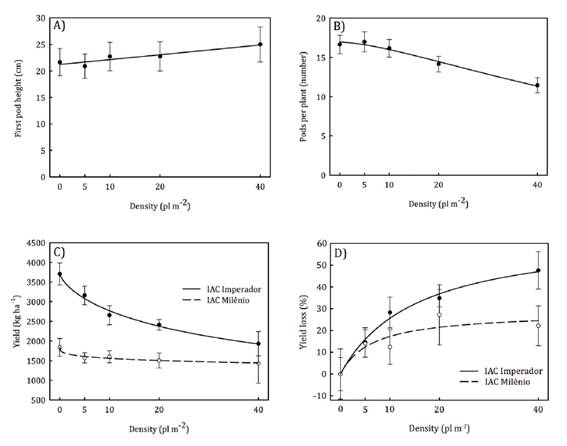
A) first pod insertion height (cm), B) Pods per
plant (number), C) Grain yield (%), (D) Bean yield loss (%). Each point
represents a mean of three replications and the bars represent the mean
standard error. Parameters are presented in table
2 and table 3 (page 114).
A) altura de inserción de la primera vaina (cm), B)
Vainas por planta (número), C) Rendimiento de grano (%), (D) Pérdida de
rendimiento (%) de frijol. Cada punto representa la media de tres repeticiones
y las barras representan el error estándar medio. Los parámetros se presentan
en la tabla 2 y tabla 3 (pág. 114).
Figure 2. Impact
of soybean plant density, with two different establishment times (0 and 7 days
after bean sowing) and of two bean cultivars (IAC Milênio and IAC Imperador).
Figura 2. Impacto
de la densidad de plantas de soja, de dos tiempos de establecimiento (0 y 7
días después de la siembra del frijol) y de dos cultivares de frijol (IAC
Milênio e IAC Imperador).
However, the
number of pods per plant reduced with the increase in soybean plant density,
reaching a 30% reduction with the 40 pl m-2 density. As reported by Machado et al. (2015), increased weed density
negatively impacted the number of pods per bean plant, which was a result of
the reduction in the number of branches per plant. Competition between plants
promotes a greater search for light, favouring etiolation and the development
of branches in the upper third of the plant to the detriment of the lower
third, which causes a higher AIPV.
The IAC Imperador
genotype presented lower ESTm (46%) and AIPV (61%) when compared with IAC Milênio,
while the IAC Milênio genotype presented lower GVG, MMG and VAG (8, 17,
and 32%, respectively) in comparison with IAC Imperador (table
2, page 113).
Table
2. Height of adult plants (cm) (ESTM),
First pod insertion height (cm) (AIPV), Grains per pod (n) (GVG), 1000 grain
mass (g) (MMG) and Pods per plant (n) (VAG) for beans plants of the cultivars
IAC Imperador and IAC Milênio.
Tabla 2. Altura
de las plantas maduras (cm) (ESTM), Altura de inserción de la primera vaina
(cm) (AIPV), Granos por vaina (n) (GVG), Masa de mil granos (g) (MMG), Vainas
por planta (n) (VAG) de plantas de frijol de los cultivares IAC Imperador e IAC
Milênio.
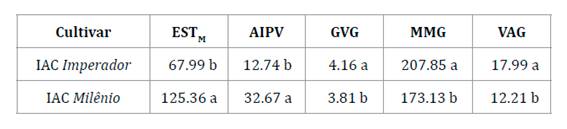
1/
Means followed by the same letter in the same column did not differ according
to the Tukey test (p≤0.05). The data represents the means of all densities and
times of soybean sowing.
1/
Medias seguidas de la misma letra en la misma columna no difieren en la prueba
de Tukey (p≤0,05). Los datos representan las medias de todas las densidades y
épocas de siembra de soja.
The differences
observed between the genotypes are due to the intrinsic characteristics of each
material. When the soybean plants were established simultaneously with the vean
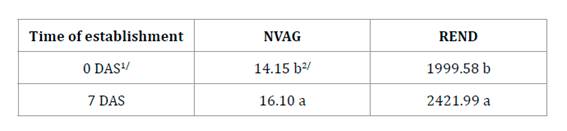
plants, lower NVAG (14%) and REND (21%) were observed when compared with the
results obtained from soybean plants established 7 days after the bean sowing (table 3).
Table
3. Pods per plant (n) (VAG) and grain yield
(Kg ha-1) (REND) of beans with two different times of soybean crop
establishment.
Tabla 3.
Vainas por planta (n) (VAG) y rendimiento de grano (Kg ha-1) (REND)
de frijol en dos tiempos de establecimiento del cultivo de soja.
1/ Days after
soybean sowing. 2/ Means followed by the same letter in the same
column did not differ in the Tukey test (p≤0.05). The data represents the means
of all densities and the bean cultivars.
1/ Dias después de
la siembra de soja. 2/ Medias seguidas de la misma letra en la misma
columna no difieren en la prueba de Tukey (p≤0,05). Los datos representan las
medias de todas las densidades y los cultivares de frijol.
The weed
interference potential tends to be greater when these plants are established in
the area simultaneously or before the commercial crop plants, as has been
observed in several works on different species both cultivated and weeds (14, 18). The plants that establish first in the
environment present some advantages regarding the allocation of resources,
guaranteeing a greater competitive potential (20).
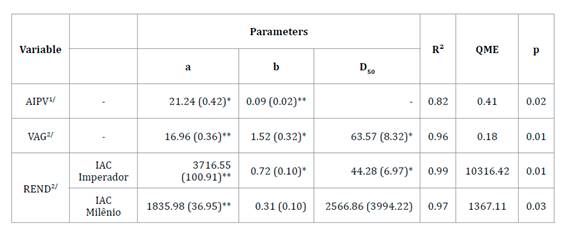
The maximum
grain yield values for each of the bean genotypes were distinct, as revealed by
the “a” parameter value (table 4).
Table
4. Equation parameters to determine the
impact of soybean plant densities on the first pod insertion height (AIPV)
(cm), number of pods per plant (VAG) and grain yield (REND) (kg ha-1)
of bean plants.
Tabla 4.
Parámetros de la ecuación para determinar el impacto de las densidades de
plantas de soja en la altura de inserción de la primera vaina (AIPV) (cm),
número de vainas por planta (VAG) y rendimiento de grano (REND) (kg ha-1)
de plantas de frijol.
*
and ** significant at 5 and at 1%
probability, respectively; 1/ Linear polynomial model. 2/
Three-parameter logistic model.
*
y ** significativos al 5 y al 1% de
probabilidad, respectivamente; 1/ Modelo de polinomio lineal. 2/
Modelo logístico de tres parámetros.
The maximum
yield of the IAC Imperador genotype was 3716 kg ha-1, and was
reduced by 48% with a soybean density of 40 pl m-2. The IAC Milênio
genotype presented a maximum grain yield of 1836 kg ha-1, lower
than that of IAC Imperador, however, it was reduced by only 22% with the
maximum soybean density (figure 2D, page 113).
The NCD of
soybean plant interference in the beans crop was higher than that caused by the
interference of the Brachiaria plantaginea (0.4 to 0.7) (11), but
similar to that caused by Euphorbia heterophylla (2.4 to 5.5) (14), and lower than that caused by maize plants
to beans (27 to 35) (1). This highlights
the high damage caused by soybean plants to bean crops. As reported by Radosevich et al. (2007), the higher the
morphologic similarity between the plants is, the higher the competition
between them. In the soybean crop, for example, the NCD can vary from 0.97 to
36.42, depending on the weed type and its establishment time (18).
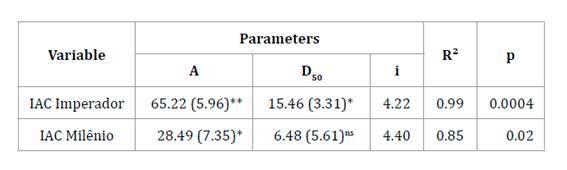
Despite the
different potentials for soybean plant interference in the bean genotypes, the
level of damage (NCD) observed was similar between them, that is, a soybean
plant per m² was able to reduce the grain yield of both genotypes by
approximately 4% (table 5). This occurred because the NCD
value (parameter i) corresponds to the tangent of the rectangular
hyperbola angle in the curve region where the infesting density is close to
zero (6). Therefore, parameter i does
not detect the negative impact on the gain yield at higher densities, and this
impact is greater in the cultivar IAC Imperador than IAC Milênio.
However, i is still a useful parameter, since it estimates losses at low
densities, which are usually close to the economic damage level (18).
Table 5. Equation
parameters for determining the impact of soybean plant densities on grain yield
loss (%) in bean plants.
Tabla 5.
Parámetros de la ecuación para determinar el impacto de las densidades de
plantas de soja en la pérdida de rendimiento de grano (%) de las plantas de
frijol.
*
and ** significant at 5 and 1% probability,
respectively; 1/ Rectangular hyperbola.
*
e ** significativos al 5 y al 1% de
probabilidad, respectivamente; 1/ Hipérbola rectangular.
Bean
genotype tolerance
A significant
effect was observed for the interaction between dose and bean genotype for both
herbicides. Regardless of the herbicide, reduced tolerance was observed for all
the genotypes with the increase in herbicide dose. With the 45 g ha-1
dose of ethoxysulfuron, the genotypes IAC Harmonia, IPR Campos gerais,
IPR Chopim and IPR Tiziu stood out for having high tolerance
levels, over 95%, compared with the other genotypes (figure 3,
page 116).
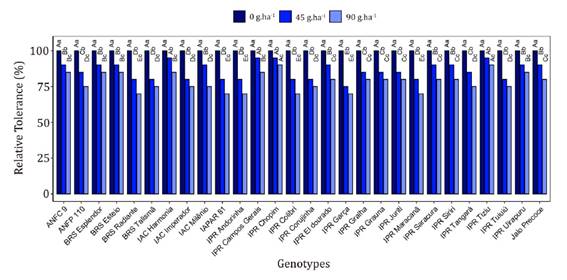
*Uppercase
letters compare cultivars within each dose, while lowercase letters compare
doses within each cultivar using the Scott-Knott test (p ≤ 0.05).
*Las
letras mayúsculas comparan los cultivares dentro de cada dosis, mientras que
las letras minúsculas comparan las dosis dentro de cada cultivar usando la
prueba de Scott-Knott (p ≤ 0,05).
Figure 3. Relative
tolerance (%) of 28 bean cultivars to the different doses of the herbicide
ethoxysulfuron 28 days after application (DAA).
Figura 3. Tolerancia
relativa (%) de 28 cultivares de frijol a diferentes dosis de ethoxysulfuron 28
días después de su aplicación (DAA).
When the dose
was increased to 90 g ha-1, only the genotypes IPR Chopim and
IPR Tiziu presented high tolerance levels, over 90%. With the 45 g ha-1
dose of ethoxysulfuron, the genotype IPR Garça showed lower tolerance
than the others, 75%. When the dose was increased to 90 g ha-1, the
genotypes BRS Radiante, IPR 81, IPR Andorinha, IPR Colibri,
IPR Garça and IPR Maracanã showed greater sensitivity to the
herbicide, with a 70% maximum tolerance.
With both doses
of the herbicide halosulfuron, 80 and 160 g ha-1, the genotypes ANFC 9, IAC Milênio,
IPR Gralha and IPR Tuiuiu stood out for presenting a higher
tolerance than the other gynotypes, reaching over 90% (figure 4,
page 116).
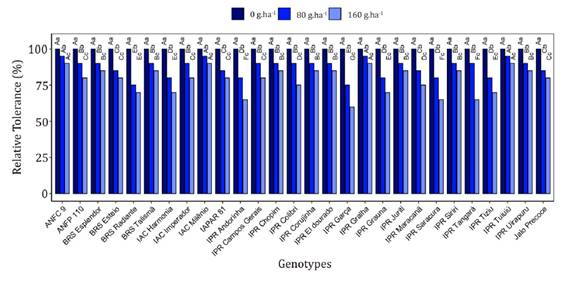
*Uppercase
letters compare cultivars within each dose, while lowercase letters compare
doses within each cultivar using the Scott-Knott test (p ≤ 0.05).
*Las
letras mayúsculas comparan los cultivares dentro de cada dosis, mientras que
las letras minúsculas comparan las dosis dentro de cada cultivar usando la
prueba de Scott-Knott (p ≤ 0,05).
Figure 4. Relative
tolerance (%) of 28 bean cultivars to different doses of the herbicide
halosulfuron 28 days after application (DAA).
Figura 4. Tolerancia
relativa (%) de 28 cultivares de frijol a diferentes dosis de halosulfuron 28
días después de su aplicación (DAA).
It is necessary
to highlight that none of the genotypes that showed higher tolerance to
ethoxysulfuron presented the same reaction to halosulfuron. However, some
genotypes such as IAC Harmonia and IPR Tiziu presented a high
tolerance to ethoxysulfuron, and an intermediate tolerance to halosulfuron.
Only the genotypes BRS Radiante and IPR Garça presented a low
tolerance to halosulfuron in the 80 g ha-1 dose, reaching the 75%
level. When the dose was increased to 160 g ha-1, the genotypes IPR Andorinha,
IPR Garça, IPR Saracura, and IPR Tangará showed lower tolerance
than the other genotypes, which was either equal to or lower than 65%.
Highly variable
responses to both herbicides were observed for the bean genotypes, similar
results were found by Soltani et al. (2015)
for the same herbicides. In that study, the authors observed that the level of
injury provided by halosulfuron would barely pass 15%, however, the damage to
some genotypes resulting from ethoxysulfuron could reach 70%. In the present
study, the mean tolerance to ethoxysulfuron for all the genotypes was
86.07±5.83 (mean ± standard deviation) (45 g ha-1) and 78.39±6.24
(90 g ha-1) and the mean tolerance to halosulfuron was 87.14±5.84
(80 g ha-1) and 78.75±8.78 (160 g ha-1). This shows that
there was a similar mean tolerance to both herbicides; however, differences
were observed between the cultivars. In addition, the standard deviation for
the herbicide halosulfuron for the 160 g ha-1 dose was the highest, suggesting
a greater response variability by the genotypes to the higher doses of this
herbicide when compared with ethoxysulfuron. The differential tolerance of bean
genotypes to different herbicides such as saflufenacil, sulfentrazone,
clomazone, dimethenamid, and metolachlor, applied pre-emergence (7, 10, 17, 22, 23) or to the herbicides
chlorimuron and imazethapyr applied post-emergence (19)
has also been observed. The differential tolerance between genotypes could be
related mainly to the tolerance mechanism. The main mechanism involved in the
tolerance of cultivated plants is metabolization through enzymes belonging to
the cytochrome P450. In fact, the involvement of these proteins has been
suggested in bean tolerance to the herbicides ethoxysulfuron and halosulfuron (13). However, differences regarding the interception
and absorption of herbicides, mainly related to the plant morphology (leaf
angle, quantity and quality of the epicuticular wax), as well as differences
regarding translocation between plants may also justify the differential
tolerance between genotypes (2, 15).
Increased doses
resulted in a reduction in plant tolerance to both herbicides in all genotypes.
This suggests that suitable management practices must be adopted to prevent a
reduction in the tolerance of the cropped species. Situations that require
increased doses, such as the management of a difficult control plant inside the
crop, must be avoided. Likewise, taking care when applying the herbicides, by
not overfilling the spray bar, for example, is a recommended practice to
prevent loss of herbicide selectivity.
It is very
difficult to estimate the threshold of injury to the plants in the vegetative
phase, the level over which grain yield loss occurs, since the correlation
between an early level of damage and yield loss is influenced by several
factors, such as the herbicide action mechanism, environmental conditions that
determine plant recovery, and management practices adopted, among others. If we
consider that the plants can recover from an observed injury at 28 DAA of the
herbicide up to the tolerance threshold of 70%, it could be assumed, given the
data presented in this study, that the use of the label recommended dose of
both herbicides, ethoxysulfuron and halosulfuron, would allow the recovery of
the plants without hampering their productive potential. However,
ethoxysulfuron doses greater than the ones recommended on the label would not
be tolerated by the genotypes BRS Radiante, IPR Colibri, IPR 81,
IPR Andorinha, IPR Garça and IPR Maracanã. Likewise,
halosulfuron doses over the ones recommended would not be tolerated by the
genotypes BRS Radiante, IAC Harmonia, IPR Tiziu, IPR Tangará,
IPR Andorinha, IPR Graúna, IPR Saracura and IPR Garça,
since they could harm the productive potential of the plants.
In the tests
that evaluated the tolerance of bean genotypes, a highly variable response to
the herbicides was observed. This highlights the importance of a good
management plan that considers the tolerance of bean genotypes to herbicides
when cropping beans and soybean in succession. The cultivation of bean
genotypes with lower tolerance to the herbicides (BRS Radiante, IPR Colibri,
IPR 81, IPR Andorinha, IPR Garça and IPR Maracanã to
ethoxysulfuron and BRS Radiante, IAC Harmonia, IPR Tiziu,
IPR Tangará, IPR Andorinha, IPR Graúna, IPR Saracura and
IPR Garça to halosulfuron) could result in grain losses. However, field
experiments comparing bean genotypes have to be performed to obtain further
information on grain yield.
According to the
data analysis, the impact of soybean plants on bean grain yield is high. Among
the genotypes used in the competition study, IAC Milênio presented a
comparatively high tolerance to halosulfuron; however, its tolerance to
ethoxysulfuron can be considered intermediate to low, depending on the dose
used. The genotype IAC Imperador presented intermediate tolerance to
halosulfuron; however, its tolerance to ethoxysulfuron was low.
The behavioural
difference of bean genotypes in relation to the different herbicides should be
highlighted. Despite the mean behaviour of all genotypes being similar in
relation to the herbicides (86 and 87% for the label recommended dose and 78
and 79% for double the recommended dose, respectively, for ethoxysulfuron and
halosulfuron), different responses from the same genotype to each of the
herbicides were observed. This occurred for the genotype IPR Tiziu,
which presented high tolerance to ethoxysulfuron, but had a low tolerance to
halosulfuron, when compared to the other genotypes. This emphasizes the importance
of knowing the tolerance of the genotype before choosing the herbicide.
Conclusions
Each soybean
plant is capable of causing a 4% reduction in bean plant grain yield,
regardless of the establishment time of the soybean plants or the bean genotype.
Calculating the level of economic damage by considering both economic and
biological variables is recommended to assist with decision-making to control
soybean plants infesting bean crops.
The bean
genotypes displayed a highly variable response to the herbicides ethoxysulfuron
and halosulfuron; however, when the label recommended dose of the herbicides
was used, the tolerance levels observed were over 70%. Knowledge of this
variable response to the herbicides is important as a warning to farmers and
technicians and can be used in vean breeding programs. An increase in each of
the herbicide doses promotes an increase in bean plant damage. Therefore, care
should be taken when applying herbicides, mainly by avoiding over-spraying.
Acknowledgements
This study was
financially supported by UTFPR and the company Corteva Agriscience and
benefitted from CNPq (IC and Productivity) and CAPES (doctorate program)
grants. We also appreciate the Soil Laboratory at UTFPR Campus Pato Branco for
carrying out the soil analyses.
1. Aguiar, A. C.
M. 2018. Interferência e nível de dano econômico de milho voluntário em feijão.
Dissertação de Mestrado. Programa de Pós-graduação em Agronomia, Agricultura e
Ambiente. UFSM, Campus Frederico Westphalen. 111 p.
2. Azania, C. A.
M.; Azania, A. A. P. M. 2014. Seletividade de herbicidas. In: Monquero, P. A.
(Org.). Aspectos da biologia e manejo das plantas daninhas. São Carlos: Rima.
217-233.
3. Borchartt,
L.; Jakelaitis, A.; Valadão, F. C. D. A.; Venturoso, L. A. C.; Santos, C. L. D.
2011. Períodos de interferência de plantas daninhas na cultura do
feijoeiro-comum (Phaseolus vulgaris L.). Revista Ciência Agronômica.
42(3): 725-734.
4. Brasil.
Agrofit - Sistema de Agrotóxicos Fitossanitários.
https://agrofit.agricultura.gov. br/agrofit_cons/principal_agrofit_cons.
Consultation carried out in 10.07.2022.
5. Castro
Oliveira, M. G.; de Oliveira, L. F. C.; Kusdra, G. D. R. F.; Díaz, J. L. C.
2017. Desempenho Produtivo da Cultivar de Feijão-Comum BRS Esteio em Unidades
Demonstrativas na Região Centro-Sul do Paraná. Boletim de Pesquisa e
Desenvolvimento. (49): 19.
6. Cousens, R.;
Doyle, C. J.; Wilson, B. J.; Cussans, G. W. 1986. Modelling the economics of
controlling Avena fatua in winter wheat. Pesticide Science. 17(1): 1-12.
https://doi.org/10.1002/ps.2780170102
7. Diesel, F.;
Trezzi, M. M.; Oliveira, P. H.; Xavier, E.; Pazuch, D.; Pagnoncelli Junior, F.
2014. Tolerance of dry bean cultivars to saflufenacil. Ciência e
Agrotecnologia. 38(4): 352-360. https://doi.org/10.1590/S1413-70542014000400005
8. Food and
Agriculture Organization of the United Nations (FAO). 2022. FAOSTAT statistical
database. Rome. https://www.fao.org/faostat. Consultation carried out in
10.07.2022.
9. Galon, L.;
Winter, F. L.; Forte, C. T.; Agazzi, L. R.; Basso, F. J. M.; Holz, C. M.;
Perin, G. F. 2017. Associação de herbicidas para o controle de plantas daninhas
em feijão do tipo preto. Revista Brasileira de Herbicidas. 16(4): 268-278.
https://doi.org/10.7824/rbh.v16i4.559
10. Hekmat, S.;
Shropshire, C.; Soltani, N.; Sikkema, P. H. 2007. Responses of dry beans (Phaseolus
vulgaris L.) to sulfentrazone. Crop Protection. 26(4): 525-529.
https://doi.org/10.1016/j.cropro.2006.05.002
11. Kalsing, A.;
Vidal, R. A. 2013. Nível crítico de dano de papuã em feijão-comum. Planta
Daninha. 31(4): 843-850. https://doi.org/10.1590/S0100-83582013000400010
12. Köppen, W.
1931. Grundriss der Klimakunde. Walter de Gruyter. Berlin. 388p.
13. Li, Z.;
Kessler, K. C.; de Figueiredo, M. R. A.; Nissen, S. J.; Gaines, T. A.; Westra,
P.; Van Acker, R. C.; Hall, C.; Robinson, D.; Soltani, N.; Sikkema, P. H. 2016.
Halosulfuron absorption, translocation, and metabolism in white and adzuki
bean. Weed Science. 64(4): 705-711. https://doi.org/10.1614/WS-D-16-00029.1
14. Machado, A.
B.; Trezzi, M. M.; Vidal, R. A.; Patel, F.; Cieslik, L. F.; Debastiani, F.
2015. Rendimento de grãos de feijão e nível de dano econômico sob dois períodos
de competição com Euphorbia heterophylla. Planta daninha. Viçosa, MG.
Vol. 33(1): 41-48. https://doi.org/10.1590/S0100-83582015000100005
15. Oliveira Jr,
R. S.; Inoue, M. H. 2011. Seletividade de Herbicidas para Culturas e Plantas
Daninhas. IN: Oliveira Jr, R. S.; Constantin, J.; Inoue, M. H. Biologia e
Manejo de Plantas Daninhas. ed. Omnipax. 243-259.
16. Pagnoncelli,
F.; Vidal, R. A.; Trezzi, M. M.; Batistel, S. C.; Gobetti, R. C.; Cavalheiro,
B. M.; Viecelli, M. 2017. Ethoxysulfuron no controle de plantas daninhas na
cultura do feijoeiro comum. Revista
Brasileira de Herbicidas . 16(4): 257-267. https://doi.org/10.7824/rbh.v16i4.550
17. Poling, K.
W.; Renner, K. A.; Penner, D. 2009. Dry edible bean class and cultivar response
to dimethenamid and metolachlor. Weed Technology. 23(1): 73-80.
https://doi.org/10.1614/WT-07-092.1
18. Portugal,
J.; Vidal, R. A. 2010. Definições e terminologia sobre nível crítico de dano
(NCD) na herbologia. In: Vidal, R.A.; Portugal, J.; Skora Neto, F. Nível
crítico de dano de infestantes em culturas anuais. Porto Alegre: Evangraf. p.
8-19.
19. Procópio, S.
O.; Braz, A. J. B. P.; Barroso, A. L. L.; Cargnelutti Filho, A.; Cruvinel, K.
L.; Betta, M.; Braz, G. B. P.; Fraga Filho, J. J. S.; Cunha Júnior, L. D. 2009.
Potencial de uso dos herbicidas chlorimuron-ethyl, imazethapyr e
cloransulam-methyl na cultura do feijão. Planta Daninha. 27(2): 327-336.
https://doi. org/10.1590/S0100-83582009000200016
20. Radosevich,
S. R.; Holt, J. S.; Ghersa, C. M. 2007. Ecology of weeds and invasive plants:
relationship to agriculture and natural resource management. John Wiley &
Sons.
21. R Core Team.
2018. R: A language and environment for statistical computing. R Foundation for
Statistical Computing, Vienna. Austria. Acesso em: 20 jun 2020.
https://www.R-project.org/
22. Sikkema, P.
H.; Shropshire, C.; Soltani, N. 2007. Effect of clomazone on various market
classes of dry beans. Crop Protection. 26(7): 943-947.
https://doi.org/10.1016/j.cropro.2006.08.014
23. Soltani, N.;
Shropshire, C.; Sikkema, P. H. 2015. Response of four market classes of dry
beans to halosulfuron applied postemergence at five application timings.
Agricultural Sciences. 6(2): 247. https://doi.org/10.4236/as.2015.62025
24. Systat
software. N.d. San Jose. California. https://systatsoftware.com/