Revista de la Facultad de Ciencias
Agrarias. Universidad Nacional de Cuyo. Tomo 56(1). ISSN (en línea) 1853-8665.
Año 2024.
Original article
Nutritional
quality of amaranth (Amaranthus) silage in response to forage airing and
addition of lactic bacteria
Calidad
nutricional de amaranto (Amaranthus) ensilado en respuesta a la
aireación del forraje y a la adición de bacterias lácticas
Julián Agustín
Repupilli1
Juan José
Gallego3
1Universidad
Nacional de Río Negro. Sede Atlántica. Don Bosco y Leloir s/n. Viedma (8500).
Río Negro. Argentina.
2Universidad
Nacional de Río Negro (UNRN-CONICET). CIT-RIO NEGRO Sede Atlántica. Don Bosco y
Leloir s/n. Viedma (8500). Río Negro. Argentina.
3Instituto
Nacional de Tecnología Agropecuaria (INTA). Estación Experimental Valle Inferior
de Río Negro. Ruta Nac. N° 3 km 971 - Camino 4 IDEVI (8500) Viedma. Río Negro.
Argentina.
Abstract
Climate change
is reducing forage availability for ruminants. Previous studies in Northern Patagonia,
Argentina, have demonstrated the adaptation of the amaranth crop to these agroclimatic
conditions under irrigation. Moreover, this crop is used as forage in marginal areas
of the world, given its outstanding productive and nutritional qualities. The
objective of this study was to evaluate the nutritional quality of amaranth
silage in response to previous wilting and the addition of lactic acid
bacteria. The crop was harvested at the milky grain stage and ensiled in
experimental microsilos for 60 days. Before ensiling, different treatments
(wilting and addition of lactic acid bacteria) were applied. Parameters related
to nutritional quality were evaluated, including ash, crude protein (CP),
neutral detergent fiber (NDF), acid detergent fiber (ADF), dry matter
digestibility (DMD), and metabolizable energy (ME). Simultaneous treatment with
air and the addition of lactic acid bacteria before ensiling resulted in the
best nutritional quality characteristics of the silage. The most significant
results were protein value of 12.7%, 41.1% NDF and 19.1% FDA. The DM and ME
were 74% and 2.67 Mcal/kg, respectively. Thus, amaranth silage can be
considered an alternative conserved forage for animal feed in this region.
Keywords: nutritional
value, amaranth, silage, inoculation, quality
Resumen
El cambio
climático está reduciendo la disponibilidad de forraje para los rumiantes. Estudios
previos en la Patagonia Norte Argentina demuestran la adaptación del cultivo de
amaranto a estas condiciones agroclimáticas bajo riego. Sin embargo, este cultivo
se utiliza como forraje en zonas marginales del mundo, dadas las destacadas
cualidades productivas y nutricionales del cultivo de amaranto. El objetivo de
este estudio fue evaluar la calidad nutricional del ensilado de amaranto en
respuesta al oreado previo del forraje y a la adición de bacterias lácticas. El
cultivo se cosechó en el estado grano lechoso y se ensiló en microsilos
experimentales durante 60 días. Antes del ensilado, se llevaron a cabo diferentes
tratamientos (oreado y adición de bacterias lácticas). Se evaluaron parámetros relacionados
con la calidad nutricional: cenizas, proteína cruda (PC), Fibra Detergente Neutro
(FDN), Fibra Detergente Ácido (FDA), digestibilidad de la materia seca (DMS) y energía
metabolizable (EM). El tratamiento simultáneo de oreado y adición de bacterias lácticas
antes del ensilado dio lugar a las mejores características de calidad
nutricional del ensilado obtenido. Los resultados más importantes bajo estas
condiciones fueron valores de proteína del 12,7%, FDN del 41,1% y FDA del
19,1%. La DMS y la EM fueron del 74% y 2,67 Mcal/kg, respectivamente. Así, el
ensilaje de amaranto puede ser considerado como una alternativa forrajera
conservada para la alimentación animal de la región.
Palabras claves:
valor
nutricional, amaranto, ensilado, inoculación, calidad
Originales: Recepción: 11/05/2023 - Aceptación: 29/02/2024
Introduction
The projected
growth in global food demand has led to an increased focus on underutilized crops,
with the potential to improve global food security and mitigate the adverse
effects of climate change. Animal production in the Lower Rio Negro Valley is
limited by a seasonal lack of forage. Feed and conserved fodder, such as
silage, ensures forage quality and quantity. The main silage resource in the
area is corn, with a biomass yield of over 30 t/ha and a protein content of 8%.
However, its cultivation requires 900 mm of water and 300 kg/ha of nitrogen (27). Amaranthus cruentus cv Mexicano has
shown adaptability to the local environmental conditions with yields of 21
t/ha, needing 800 mm and 150 kg/ha of water and nitrogen requirements,
respectively (39, 40, 41). Therefore,
amaranth could be an alternative forage resource for the region given its high
biomass production and low management requirements. Seguín
et al. (2013) stated that amaranth shows high rumen degradability
when used as animal feed, either by direct grazing or as conserved forage. The
nutritive value of this forage varies according to the developmental stage, standing
out for its high crude protein content (8-29%), low lignin values (1.7-7.3%),
and high in vitro digestibility (59-79%) (23,
28). However, high moisture and protein content could negatively
affect the ensiling process. According to Borreani et
al. (2018), moisture content produces effluents that reduce soluble
carbohydrates, whereas high protein values in the forage have a buffering
capacity and prevent pH decrease (<5.0) in the silage. A common practice to
decrease forage moisture is to wilt the forage in the field for 24-48 hours
under good weather conditions (no risk of rain) and with minimal mechanical
treatment. This increases dry matter, resulting in a higher concentration of
soluble carbohydrates that favors the fermentation process and nutritive value
(37). The use of additives, such as
bacterial inoculants, could favor a rapid decrease in pH, improving the
conservation and nutritive value of silage (4, 32).
Among the most commonly used inoculants are lactic acid bacteria (LAB), which
ferment carbohydrates into lactic acid, acidifying the silage and inhibiting growth
of undesirable bacteria (24), thus
improving the fermentation and aerobic stability of the final product. Although
silage techniques have been studied for this crop, different results depend on
variety, cutting time, processing methodology, and place of origin (16, 20, 28, 29). In South America, there is no
information on amaranth as fodder or its conservation in silage. In this study,
we hypothesized that wilting and LAB inoculation would improve fermentation
quality of amaranth forage. The objective of this study was to evaluate the
nutritional quality of amaranth silage in response to previous wilting of
forage and addition of lactic acid bacteria.
Materials
and methods
Site
location, climatic conditions, and forage production
Field
experiments were conducted at the INTA-Estación Experimental Agropecuaria Valle
Inferior del Río Negro (40°48’ S, 63°05’ W; 4 m). This area in Patagonia,
Argentina, has an irrigation system that covers 24,000 ha. During the growth
period of amaranth in 2019 (November to April), rainfall was 186 mm and the
average temperature was 19°C. The physicochemical characteristics of the upper
50 cm of the experimental loam soil were: pH (8.20); electrical conductivity
(1.2 mmhos cm-1); organic matter (3.8%); total nitrogen (0.18%);
N-NO3 (24.60 mg kg-1); P (Olsen, 16.60 mg kg-1);
S (14.7 mg kg-1 as a SO4=); Ca (8.230 mg kg-1);
Mg (1.170 mg kg-1); sodium-adsorption ratio (1.83). The INTA
laboratory performed the soil characterization.
The cultivar
evaluated was A. cruentus cv Mexicano, sown in rows with a horticultural
seeder at the end of spring (November 20th). The sowing area was 70
m2 (10 furrows 0.7 m wide × 10 m long). Weeding was performed
manually when the plants reached 20-30 cm in height; thinning was performed by
hand, leaving ten plants m-2. Furrow irrigation was applied
according to soil moisture retention curve before reaching the permanent
wilting point, with a total lamina of 800±50 mm. Fertilization with granulated
urea (46% N), with a nitrogen (N) dose of 90 ha-1, was carried out
in two stages; on plants 60 cm high and at bloom.
Treatment
of plant material before the silage process
The forage was
cut at advanced flowering stage (between milky-pasty grains), corresponding to
a chronological time of 123 days or 1627 growing degree days, with dry matter
(DM) values above 20%. Amaranth plants were manually cut 50 cm above the soil
surface (26) and then wilted in the field
for 24 hours before chopping the material. The plants were chopped using a
Thomas Willey mill until they reached a size of 1-3 cm. The chopped material
was then treated with lactic acid bacteria (LAB) under conditions recommended
by the manufacturer using an atomizer. (Bemix Plus® 2% w/v). Four different
types of silage were obtained: unwilted, ensiled amaranth (UWAE); unwilted,
ensiled amaranth with added lactic acid bacteria (UWAEL); wilted, ensiled
amaranth (WAE); and wilted, ensiled amaranth with added lactic acid bacteria
(WAEL).
Ensiling
process
The silage was
prepared at laboratory scale using 110mm PVC tubes 30 cm long, known as
experimental microsilage. The filling of the experimental microsilage was
performed by placing the plant material in compacted layers with a hydraulic
press (140 kgf) ensuring homogeneous compaction. The tubes were capped and
sealed to achieve anaerobic conditions (four replicates for each forage type).
The experimental microsilage was maintained under environmental conditions for 60
days.
Characterization
and chemical analyses of the forage and silage types
Chop size: A
fresh sample (100 g) of non-ensiled plant material was measured using a Vernier
caliper and grouped according to length. After the ensiling period, the average
temperature was determined with an infrared thermometer (AMPROBE IR-710) and a
simple (50 g) was collected at a depth of 15 cm from each silo. All samples
were frozen at -18°C until use for quality determination. An aqueous extract
(1:4) was made and left to rest for 1 h at room temperature, after which pH was
measured with a pH meter (Foodcare HI99161) (10).
Dry matter content (% DM) was determined according to the AOAC
(2000). The samples were ground using a grinder (ARCANO®). Ash content,
crude protein (CP%), Neutral Detergent Fiber (NDF %), and Acid Detergent Fiber
(ADF %) were determined following the methodology proposed by the AOAC (2000). The dry matter digestibility (% DMD) was
estimated using the predictive equation proposed by Rohweder
et al. (1978). Metabolizable Energy (ME) was determined using the
following formula: EM: 3.61*DMD according to Di Marco
(2011). All measurements were performed in triplicate.
Statistical
analysis
A completely
randomized block design was used, with four treatments and four replicates for
each treatment. Pre-ensiling quality variables were analyzed using simple ANOVA
(WA-C; UWA-C). Silage quality parameters were analyzed by double ANOVA with the
following sources of variation: wilting (UWAE; WAE), inoculation (UWAEL; WAEL),
and their interaction as main effects (2 × 2 factorial design). The T° and pH
showed no interaction, while DM, CP, ash, NDF, and SDF were analyzed by simple
ANOVA to evaluate the effect of wilting and addition of lactic acid bacteria
separately. Comparisons of means were made using Fisher’s least significant
difference (LSD) test at 5%. Statistical analyses were performed using InfoStat
(8).
Results
and discussion
Pre-ensiling
characteristics of forage
Visual
differences in coloration between UWA-C and WA-C were observed in the chopped
plant material (data not shown). The latter had an opaque yellow-olive color, whereas
UWA-C was bright olive-green, which could be associated with the loss of water
during the wilting process. In addition, drying plant material in the sun
results in the formation of indigestible protein-carbohydrate complexes called
Maillard products. The DM values are presented in table 1.
Table
1. Nutritional parameters of unwilted
amaranth control (UWA-C) and wilted amaranth control (WA-C).
Tabla 1. Parámetros
nutricionales del forraje de amaranto no oreado control (UWA-C) y forraje de
amaranto oreado control (WA-C).
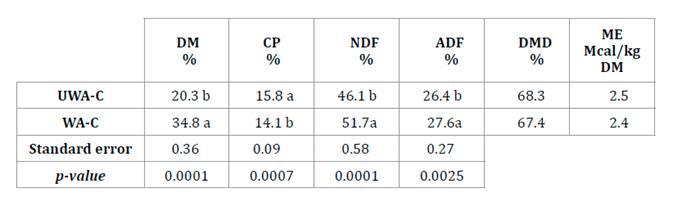
Dry matter (DM); Crude Protein (CP), Neutral
Detergent Fiber (NDF); Acid Detergent Fiber (ADF), Dry Matter Digestibility
(DMD), Metabolizable Energy (ME) associated with the quality of the forage
before silage. Values of the same variable followed by the same letter are not
statistically different according to Fisher’s LSD test (p > 0.05).
Materia Seca (MS); Proteína Cruda (PC), Fibra
Detergente Neutra (FDN); Fibra Detergente Ácida (FA), Digestibilidad de la
Materia Seca (DMS), Energía Metabolizable (EM) asociados a la calidad del
forraje antes del ensilaje. Los valores de las mismas variables seguidos de la
misma letra no son estadísticamente diferentes según la prueba LSD de Fisher (p
> 0,05).
Knowing the
proper DM content of forage at the pre-ensiling stage is essential to achieve
efficient compaction and an anaerobic environment while preventing growth of
undesirable microorganisms. DM content of 30-35% is usually recommended to
obtain high-quality amaranth silage (14).
Krawutschke et al. (2013) achieved an optimum
DM content of 30-35 % when wilting red clover (Trifolium pratense L.),
which like amaranth is difficult to ensile due to a lower water-soluble
carbohydrate concentration (WSC), higher buffering capacity (BC) and lower dry
matter (DM) content at harvest. In amaranth, wilting (WA-C) resulted in dry
matter values that reached the recommended values for silage; therefore,
wilting could favor a higher concentration of soluble carbohydrates and a lower
concentration of lactic acid (21).
On the other
hand, table 1, shows the nutritional parameters of the
material before the ensiling process and statistically significant differences
(p> 0.001) were observed between the UWA-C and WA-C treatments. Forage total
N determines the total amount of N available for animal consumption. In this
study, the %CP of UWA-C was higher than that of WA-C, possibly because the
drying process favors loosing nonstructural carbohydrates, volatile organic
substances, and protein degradation. This results in amino acids with higher
solubility that can be removed from plant tissues, and although this process
can significantly decrease the %CP, it varies depending on the drying method. N
decreased by only 5% in this case because of wilting conditions. WA-C had the
highest fiber content (NDF and SDF), possibly because exposure of the material
to ultraviolet radiation (wilting) decreased forage soluble components. In this
study, NDF content ranged from 46.1% to 51.7%, and FAD content ranged from
26.4% to 27% when amaranth plants were wilted. Fiber components, such as NDF,
FAD, and lignin, are generally inert during plant respiration, but their
concentrations increase because of a decrease in oxidized soluble compounds.
Therefore, slow-drying methods are expected to result in higher proportions of
NDF and FAD. The digestibility of UWA-C was significantly higher (p> 0.001)
than that of WA-C, mainly given by the lower fiber content of the undried plant
material.
On the other
hand, the size of the plant material obtained in this study before ensiling was
between adequate ranges (1-3 cm), coinciding with the recommendations of Citlak and Kilic (2020).
Determination
of parameters related to fodder processing and conservation
A double ANOVA
determined that the wilting and inoculation treatments did not affect the
temperature and pH variables. However, as shown in table 2,
significant differences in T° were observed with the wilting effect, where the
minimum and maximum values (UWAE and WAE, respectively) were recorded, but
there were no differences in this parameter after LAB addition.
Table
2. Parameters related to fodder processing
and conservation.
Tabla 2. Parámetros
relacionados con el procesado y conservación del forraje.
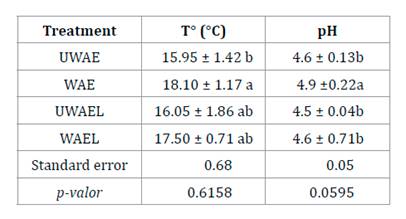
Temperature (T°), and pH of the experimental
microsilage at the moment of opening for unwilted amaranth ensiled (UWAE);
unwilted amaranth ensiled with added lactic acid bacteria (UWAEL); wilted amaranth
ensiled (WAE); wilted amaranth ensiled with added lactic acid bacteria (WAEL).
Values of the same variable followed by the same letter are not statistically
different according to Fisher’s LSD test (p > 0.05).
Temperatura (T°), y pH de los microsilos
experimentales en el momento de apertura. Amaranto ensilado sin orear (UWAE);
amaranto ensilado oreado (WAE); amaranto ensilado sin orear con adición de
bacterias lácticas (UWAEL); amaranto ensilado oreado con adición de bacterias
lácticas (WAEL). Los valores de las mismas variables seguidos de la misma letra
no son estadísticamente diferentes según la prueba LSD de Fisher (p > 0,05).
Temperature
affected silage fermentation, and the best results were obtained with a
moderate T between 20 and 30°C. For corn silage, Zhou et
al. (2019), reported that increasing storage temperature from 5°C to
25°C did not affect fermentation profiles of most biochemical parameters or
bacterial and fungal populations. In the present study, the low temperatures
observed when opening the experimental microsilage could be related to low
ambient temperature at the study site.
When anaerobic
fermentation occurs in the silage process, lactic acid bacteria in the forage
are desirable because they rapidly lower the pH, achieve rapid stabilization,
and maintain the characteristics of the ensiled material (9, 36). The pH (average of 4.65) observed for all
silages was within the established values for good-quality silages, which is
comparable with the values reported for different amaranth varieties, harvest
stages, and place of cultivation (26).
Several factors may be responsible for silage having a higher than normal pH
(~4.0), including buffering capacity provided by high protein content (17). In UWAEL and WAEL, the use of bacterial
inoculants slightly increased acidity of the experimental microsilage. Similar
results have been obtained for corn, oats, and amaranth silages (4, 20). In alfalfa, a forage with high buffering
capacity, wilting pretreatment, and a pH of 5.19 was reported after 60 days of
ensiling (11). In this study, silage with
pre-wilting and higher DM (WA-C, table 1) showed a slight
increase in T° and pH; however, the silage obtained with wilted forage and
addition of lactic acid bacteria (WAEL) only showed a decrease in pH.
Other authors
have reported that lactic acid bacteria in temperate to cold environments favor
a lower pH and rapid production of desirable metabolites, such as lactic acid,
accelerating fermentation, and better-conserving silage nutrients over a wide
range of growth temperatures (4, 13).
Nutritional
quality of ensiled plant material
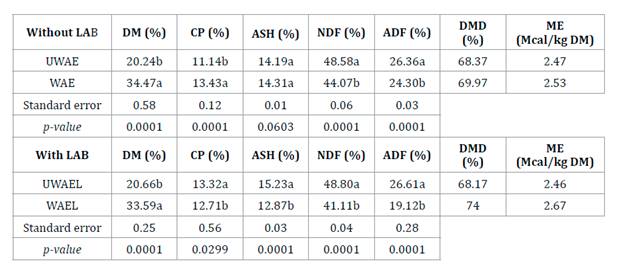
For the DM, CP,
Ash, NDF, and ADF variables, the double ANOVA detected interactions between
sources of variation (wilting and inoculation with LAB); therefore, the results
are presented separately (table 3).
Table
3. Parameters related to nutritional
quality.
Tabla 3. Parámetros
relacionados con la calidad nutricional.
Dry Matter (DM); Crude Protein (CP), Neutral
Detergent Fiber (NDF); Acid Detergent Fiber (ADF), Digestibility of Dry Matter
(DMD), Metabolizable Energy (ME) of ensiled plant material. Unwilted amaranth
ensiled (UWAE); wilted amaranth ensiled (WAE); unwilted amaranth ensiled with
added lactic acid bacteria (UWAEL); wilted amaranth ensiled with added lactic
acid bacteria (WAEL). Values of the same variable followed by the same letter
are not statistically different according to Fisher’s LSD test (p > 0.05).
Materia Seca (MS); Proteína Cruda (PC), Fibra
Detergente Neutra (FDN); Fibra Detergente Ácida (FDA), Digestibilidad de la
Materia Seca (DMS), Energía Metabolizable (EM)) del material vegetal ensilado.
Ensilado de amaranto sin orear (UWAE); ensilado de amaranto oreado (WAE);
ensilado de amaranto sin orear con adición de bacterias lácticas (UWAEL);
ensilado de amaranto oreado con adición de bacterias lácticas (WAEL). Los
valores de las mismas variables seguidos de la misma letra no son
estadísticamente diferentes según la prueba LSD de Fisher (p > 0,05).
When DM was
determined after the ensiling process, values of approximately 20% were
observed in the unwilted plant material (UWAE and UWAEL) and values approached
34% in the wilted material (WAE and WAEL). These values are similar to those
obtained before ensiling (table 1). Good fermentation results
in DM losses of less than 10% (3), and
the dry matter reduction was <1% in our case.
High protein
content is generally associated with higher forage quality, and protein content
has been reported to vary from 11.5 to 14% in amaranth silage (16). These variations could be associated with
on-site environmental conditions and agronomic practices affecting nutritional
composition (39). Table 3
shows protein content of the different silages used in this study, with values
within the mentioned range. Thus, UWAE had the lowest value (11.14%) for this
variable, whereas WAE had the highest value (13.43%). A decrease in protein
content of the ensiled material was observed when compared with the non-silage
forage (WA-C and UWA-C). The greatest decrease in protein content was observed
in UWAE (26% and 12% in UWAE and UWAEL, respectively); however, these decreases
were smaller in previously wilted forage (7% WAE and 10% WAEL). In general, a
higher osmotic pressure results from higher dry matter (DM) content, which
affects plant enzymatic activity and reduces proteolytic capacity (16, 30). This leads to a decrease in soluble
protein (CP) and an increase in the insoluble protein fraction, although the
latter is still potentially degradable in wilted silages (34, 35).
In contrast, the
addition of LAB to unwilted forage decreased proteolysis by 54% and CP loss
decreased. However, in the case of WAEL, the addition of LAB did not decrease
proteolysis, indicating an interaction between wilting and the addition of LAB,
reflected in a decrease in CP. These results agree with those published by Abbasi et al. (2018), who observed decreases in
protein content in relation to fresh material of 9%, 10%, and 7.5% in ensiled
forage, silage with lactic acid bacteria, and wilted forage, respectively.
Ash contents of
the different experimental microsilages is listed in table 3.
The silages with BL (UWAEL and WAEL) had the highest and lowest ash values,
respectively. However, silages without the addition of lactic acid bacteria
(UWAE-WAE) did not show statistically significant differences (p>0.05), and
the wilting process did not affect ash content. Amaranth species are
characterized by high mineral content that can vary according to variety,
harvest time, climate, soil, and crop management (39).
The ash values obtained were within the range of those published by other
authors for amaranth silage, which provides more minerals for livestock (25, 28). Seguín et al. (2013)
reported that the major mineral in amaranth is Ca, generally found as calcium
carbonate, and a fermentation process can favor the forage buffering capacity
to the detriment of its acidification.
Fibers in a feed
consist of structural carbohydrates in the cell walls and soluble or
nonstructural carbohydrates. Concerning fiber content of fresh chopped forages
(UWA-C and WA-C), the ensiling process reduced the NDF and ADF values, in
agreement with previous reports (16, 20, 25).
Fiber values in the silages obtained (table 3) were within
the ranges described in the literature for this crop (NDF: 28-47.7% and ADF:
26-31%) (14, 21). ADF and NDF showed
statistically significant differences due to the effect of wilting, and a
decrease was observed as a consequence. However, the addition of LAB further
favored this decrease in ADF and NDF. Similar results have been reported for
amaranth under similar conditions (wilting and addition of LAB) (1). However, in our study on unwilted silages, no
such decrease was observed. The higher moisture content and lower temperature
of the experimental microsilage in UWAE and UWAEL may have limited the
fermentation process and decreased the action of cellulolytic bacteria
responsible for the reduction in the fibrous fraction (14, 38). Fiber content is directly related to
digestibility and influences the rate at which feed passes through the
digestive tract of an animal (18).
Digestibility values for UWAE and UWAEL mirrored those observed for FDN and
FAD, and the addition of LAB did not increase this parameter. However, WAE and
WAEL showed higher digestibility and metabolizable energy values (table
3). A synergistic effect was observed between wilting and the addition of
LAB, achieving silage with a digestibility of 74.02%. This silage would be
classified as good quality according to Di Marco’s classification (7), whereas the rest of the silages would be of
medium quality. Regarding the ME of WAEL (2.67 Mcal/k DM), an 8% increase was
observed with respect to the non-silage plant material (WA-C). This energy
value can be expressed as 11.17 MJ/k DM and is within the range determined for
silages of other amaranth species (1, 29).
Based on the results obtained in this study, we can conclude that WAEL
presented the best organoleptic, conservation, and nutritional characteristics
among the four silages evaluated. By comparing the quality of this silage with
the values described for crops traditionally used in this type of conservation
technique (table 4), we can infer that it is comparable to
the quality of corn silage.
Table
4. Comparison of nutritional quality
parameters of the main crops used as fodder.
Tabla 4. Comparación
de los parámetros de calidad nutricional de los principales cultivos utilizados
como forraje.
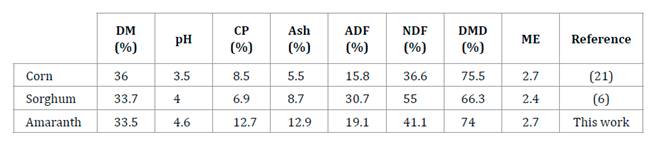
Dry Matter (DM); pH; Crude Protein (CP), Ashes; Acid
Detergent Fiber (ADF), Neutral Detergent Fiber (NDF); Digestibility of Dry
Matter (DMD), Metabolizable Energy (ME).
Materia seca (MS); pH; Proteína Cruda (PC), Cenizas;
Fibra Detergente Ácida (FDA); Fibra Detergente Neutra (FDN); Digestibilidad de
la Materia Seca (DMS), Energía Metabolizable (EM).
Likewise, it is
evident that amaranth protein content did not affect the ensiling process, and
its digestibility was comparable to that of corn silage. Regarding corn biomass
production for silage, previously reported values in the Lower Rio Negro Valley
vary between 16-34 Tn DM/ha, depending on the hybrid and management (19). In this sense, amaranth yields (7.8-21 Tn
DM/ha) were comparable to those of corn (39).
Conclusion
Wilting and
inoculation of amaranth forage with lactic acid bacteria before ensiling
resulted in silage with nutritional characteristics (crude protein percentage,
fiber content, dry matter digestibility, and metabolizable energy) that can be
classified as a high-quality component of animal diets. The practice of
ensiling amaranth as an alternative for conserving forage can be considered
viable in semi-arid regions such as Patagonia. However, further research under in
vivo conditions is required, especially regarding animal responses
according to category and species, as well as the exploration of combinations
with other ingredients to achieve complementarity and a better balance of
nutrients and energy.
Acknowledgements,
financial support and full disclosure
Financial
support from the Consejo Nacional de Investigaciones Científicas y Técnicas
(CONICET), Universidad Nacional de Río Negro is gratefully acknowledged. The
authors thank to INTA Valle Inferior del Río Negro for the possibility to
conduct this study. Authors assures there is no actual or potential conflict of
interest including any financial, personal or other relationships with other people
or organizations.
1. Abbasi, M.;
Rouzbehan, Y.; Rezaei, J.; Jacobsen, S. E. 2018. The effect of lactic acid
bacteria inoculation, molasses, or wilting on the fermentation quality and
nutritive value of amaranth (Amaranthus hypochondriaus) silage. Journal
of animal science. 96(9): 3983-3992. https://doi.org/10.1093/jas/sky257.
2. AOAC.
Official Methods of Analysis. 2000. 17th ed. The Association of Official
Analytical Chemists Gaithersburg MD USA.
3. Borreani, G.;
Tabacco, E.; Schmidt, R. J.; Holmes, B. J.; Muck, R. E. 2018. Silage review:
Factors affecting dry matter and quality losses in silages. Journal of Dairy
Science. 101(5): 3952-3979.
4. Chen, L.;
Bai, S.; You, M.; Xiao, B.; Li, P.; Cai, Y. 2020. Effect of a low temperature
tolerant lactic acid bacteria inoculant on the fermentation quality and
bacterial community of oat round bale silage. Animal Feed Science and
Technology. 269: 114669. https://doi.org/10.1016/j.anifeedsci.2020.114669.
5. Citlak, H.;
Kilic, U. 2020. Innovative Approaches in Covering Materials Used in Silage
Making. International Multilingual. Journal of Science and Technology. 5:
2046-2050. http://www.imjst.org/wp-content/uploads/2020/12/IMJSTP29120390.pdf
6. De León, M.;
Giménez, R. A. 2011. Ensilajes de sorgo y maíz: rendimiento, composición, valor
nutritivo y respuesta animal. https://inta.gob.ar/sites/default/files/ scripttmp-ensilajes_de_sorgo_y_maz_rendimiento_composicin_va.pdf
(February 2018).
7. Di Marco, O.
2011. Estimación de calidad de los forrajes. Producir XXI. 20(240): 24-30.
https://www.produccion-animal.com.ar/tablas_composicion_alimentos/45-calidad.pdf
8. Di Rienzo, J.
A. InfoStat versión 2020. UNC Argentina.
9. dos Santos,
A. P. M; Santos, E. M.; Silva de Oliveira, J.; Garcia Leal de Araújo, G.; de
Moura Zanine, A.; Araújo Pinho, R. M.; Costa do Nascimento, T. V.; Fernandes
Perazzo, A.; Ferreira, D. de J.; da Silva Macedo, A. J.; de Sousa Santos, F. N.
2023. PCR identification of lactic acid bacteria populations in corn silage
inoculated withlyophilised or activated Lactobacillus buchneri. Revista de la
Facultad de Ciencias Agrarias. Universidad Nacional de Cuyo. Mendoza.
Argentina. 55(1): 115-125. DOI: https://doi.org/10.48162/rev.39.101
10. Faithfull,
N. T. 2002. Methods in Agricultural Chemical Analysis: A Practical Handbook.
CAB International. 304 p.
11. Huo, W.;
Zhang, Y.; Zhang, L.; Shen, C.; Chen, L.; Liu, Q.; Guo, G. 2022. Effect of
lactobacilli inoculation on protein and carbohydrate fractions, ensiling
characteristics and bacterial community of alfalfa silage. Frontiers in
Microbiology. 13: 1070175.
12. Krawutschke,
M.; Thaysen, J.; Weiher, N.; Taube, F.; Gierus, M. 2013. Effects of inoculants
and wilting on silage fermentation and nutritive characteristics of red clover
grass mixtures. Grass and Forage Science. 68: 326-338.
https://doi.org/10.1111/j.1365-2494.2012.00892.x
13. Kung, J. L.;
Shaver, R. D.; Grant, R. J.; Schmidt, R. J. 2018. Silage review Interpretation
of chemical, microbial, and organoleptic components of silages. Journal of
Dairy Science. 101: 4020-4033. https://doi.org/10.3168/jds.2017-13909
14. Liu, Q.;
Zong, C.; Dong, Z.; Wu, J.; Zhu, J.; Li, J.; Shao, T. 2020. Effects of
cellulolytic lactic acid bacteria on the lignocellulose degradation, sugar
profile and lactic acid fermentation of highmoisture alfalfa ensiled in
low-temperature seasons. Cellulose. 27: 7955-7965. https://doi.org/10.1007/s10570-020-03350-z
15. Liu, Y. F.;
Qiu, H. R.; Yu, X.; Sun, G. Q.; Ma, J.; Zhang, D. L.; Senbati, H. 2017. Effects
of addition of lactic acid bacteria, glucose, and formic acid on the quality of
Amaranthus hypochondriacus silage. Acta Prataculturae Sinica. 26:
214-220. DOI: 10.11686/cyxb2017164
16. Lotfi, S.;
Rouzbehan, Y.; Fazaeli, H.; Feyzbakhsh, M. T.; Rezaei, J. 2022. The Nutritional
Value and Yields of Amaranth (Amaranthus hypochondriacus) Cultivar
Silages Compared to Silage from Corn (Zea mays) Harvested at the Milk
Stage Grown in a Hot-humid Climate. Animal Feed Science and Technology. 289:
115336. https://doi.org/10.1016/j.anifeedsci.2022.115336
17. McDonald,
P.; Henderson, A. R.; Heron, S. J. E. 1991. The biochemistry of silage.
Chalcombe publications.
18. Mertens, D.
R.; Grant, R. J. 2020. Digestibility and intake. Forages: the science of
grassland agriculture. 2: 609-631. https://doi.org/10.1002/9781119436669.ch34
19. Miñon, D.
P.; Gallego, J. J.; Barbarossa, R. A.; Margiotta, F. A.; Martinez, R. S.;
Reinoso, L. 2009. Evaluación de la producción de forraje de híbridos de maíz
para silaje en el Valle Inferior del Río Negro (campaña 2008-2009). INTA EEA
Valle Inferior.
20. Mu, L.; Xie,
Z.; Hu, L.; Chen, G.; Zhang, Z. 2021. Lactobacillus plantarum and
molasses alter dynamic chemical composition, microbial community, and aerobic
stability of mixed (amaranth and rice straw) silage. Journal of the Science of
Food and Agriculture. 101: 5225-5235. https://doi.org/10.1002/jsfa.11171
21. Patterson, J.
D.; Sahle, B.; Gordon, A. W.; Archer, J. E.; Yan, T.; Grant, N.; Ferris, C. P.
2021. Grass silage composition and nutritive value on Northern Ireland farms
between 1998 and 2017. Grass Forage Science. 76: 300-308.
https://doi.org/10.1111/gfs.12534
22. Pineda, J.
A.; Sánchez, M. E.; Scaramuzza, J. P. 2015. Estudio comparativo de calidad y
valor nutritivo de silos bolsa de maíz en la zona de James Craik-Córdoba
(Bachelor’s thesis).
23. Pisarikova
B.; Peterka, J.; Trckova, M.; Moudry, J.; Zraly, Z.; Herzig, I. 2007. The
content of insoluble fibre and crude protein value of the aboveground biomass
of Amaranthus cruentus and A. hypochondriacus. Czech Journal of
Animal Science. 52: 348-353. DOI:10.17221/2339-CJAS
24. Queiroz, O.
C. M.; Arriola, K. G.; Daniel, J. L. P.; Adesogan, A. T. 2013. Effects of 8
chemical and bacterial additives on the quality of corn silage. Journal of
Dairy Science. 96(9): 5836-5843.
25. Rahjerdi, N.
K.; Rouzbehan, Y.; Fazaeli, H.; Rezaei, J. 2015 Chemical composition,
fermentation characteristics, digestibility, and degradability of silages from
two amaranth varieties (Kharkovskiy and Sem), corn, and an amaranth-corn
combination. Journal of Animal Science. 93: 5781-5790.
https://doi.org/10.2527/jas.2015-9494
26. Ramírez
Ordóñes, S.; Rueda, J. A.; Medel Contreras, C. I.; Hernández Bautista, J.;
Corral Luna, A.; Portillo, M. F. 2023. Effect of cutting height, a bacterial
inoculant and a fibrolytic enzyme on corn (Zea mays L.) silage quality.
Revista de la Facultad de Ciencias Agrarias. Universidad Nacional de Cuyo.
Mendoza. Argentina. 55(2): 129-140. DOI: https://doi.org/10.48162/rev.39.115
27. Reinoso, L.
G.; Martinez, R. S.; Otegui, M. E.; Mercau, J.; Gutierrez, M. 2018. Rendimiento
potencial de maíz en los valles de Norpatagonia: una aproximación desde los
modelos de simulación.
28. Rezaei, J.;
Rouzbehan, Y.; Fazaeli, H. 2009 Nutritive value of fresh and ensiled amaranth (Amaranthus
hypochondriacus) treated with different levels of molasses. Animal Feed
Science and Technology. 151: 153-160.
https://doi.org/10.1016/j.anifeedsci.2008.12.001
29. Rezaei, J.;
Rouzbehan, Y.; Fazaeli, H.; Zahedifar, M. 2014. Effects of substituting
amaranth silage for corn silage on intake, growth performance, diet
digestibility, microbial protein, nitrogen retention and ruminal fermentation
in fattening lambs. Animal Feed Science and Technology. 192: 29-38.
https://doi.org/10.1016/j.anifeedsci.2014.03.005
30. Rohweder,
D.; Barnes, R. F.; Jorgensen, N. 1978. Proposed hay grading standards based on
laboratory analyses for evaluating quality. Journal of Animal Science. 47:
747-759. https://doi.org/10.2527/jas1978.473747x
31. Seguin, P.;
Mustafa, A. F.; Donnelly, D. J.; Gélinas, B. 2013. Chemical composition and
ruminal nutrient degradability of fresh and ensiled amaranth forage. Journal of
the Science of Food and Agriculture. 93(15): 3730-3736.
32. Silveira
Pimentel, P. R.; dos Santos Brant, L. M.; Vasconcelos de Oliveira Lima, A. G.;
Costa Cotrim, D.; Costa Nascimento, T. V.; Lopes Oliveira, R. 2022. How can
nutritional additives modify ruminant nutrition? Revista de la Facultad de
Ciencias Agrarias. Universidad Nacional de Cuyo. Mendoza. Argentina. 54(1):
175-189. DOI: https://doi.org/10.48162/rev.39.076
33. Slottner,
D.; Bertilsson, J. 2006. Effect of ensiling technology on protein degradation
during ensilage. Animal feed science and technology. 127(1-2): 101-111.
34. Tamminga,
S.; Ketelaar, R.; Van Vuuren, A. M. 1991. Degradation of nitrogenous compounds
in conserved forages in the rumen of dairy cows. Grass and Forage Science.
46(4): 427-435.
35. Verbič, J.;
Ørskov, E. R.; Žgajnar, J.; Chen, X. B.; Žnidaršič-Pongrac, V. 1999. The effect
of method of forage preservation on the protein degradability and microbial
protein synthesis in the rumen. Animal feed science and technology. 82(3-4):
195-212.
36. Villa, R.;
Rodriguez, L. O.; Fenech, C.; Anika, O. C. 2020. Ensiling for anaerobic
digestion: A review of key considerations to maximise methane yields. Renewable
and Sustainable Energy Reviews. 134: 110401. https://doi.org/10.1016/j.rser.2020.110401
37. Wan, J. C.;
Xie, K. Y.; Wang, Y. X.; Liu, L.; Yu, Z.; Wang, B. 2021. Effects of wilting and
additives on the ensiling quality and in vitro rumen fermentation
characteristics of sudangrass silage. Animal Bioscience. 34(1): 56. DOI:
10.5713/ajas.20.0079
38. Zhou, Y.;
Drouin, P.; Lafrenière, C. 2019. Effects on microbial diversity of fermentation
temperatura (10°C and 20°C), long-term storage at 5°C, and subsequent warming
of corn silage. Asian-Australasian Journal of Animal Sciences. 32: 1528.
DOI:10.5713/ajas.18.0792
39. Zubillaga,
M. F.; Camina, R.; Orioli, G. A.; Barrio, D. A. 2019. Response of Amaranthus
cruentus cv Mexicano to nitrogen fertilization under irrigation in the
temperate, semiarid climate of North Patagonia, Argentina. Journal of plant
nutrition. 42: 99-110. https://doi.org/10.1080/01904167.2018.1549674
40. Zubillaga,
M. F.; Camina, R.; Orioli, G.; Failla, M.; Barrio, D. A. 2020. Amaranth in
southernmost latitudes: plant density under irrigation in Patagonia, Argentina.
Revista Ceres. 67: 93-99. https://doi.org/10.1590/0034-737X202067020001
41. Zubillaga,
M. F.; Martínez, R. S.; Camina, R.; Orioli, G. A.; Failla, M.; Alder, M.;
Barrio, D. A. 2021. Amaranth irrigation frequency in northeast Patagonia,
Argentina. Biotechnologie, Agronomie, Société et Environnement. 25: 247-258.
DOI: 10.25518/1780-4507.19310