Revista de la Facultad de Ciencias
Agrarias. Universidad Nacional de Cuyo. Tomo 56(1). ISSN (en línea) 1853-8665.
Año 2024.
Original article
Effect
of three different fixed-time AI protocols on folicular dynamics and pregnancy
rates in suckled, dual-purpose cows in the Ecuadorian Amazon
Efecto
de tres protocolos diferentes de IA a tiempo fijo sobre la dinámica folicular y
las tasas de preñez en vacas de doble propósito amamantando en la Amazonía
Ecuatoriana
Juan Carlos
López Parra1†,
Alejandro Javier
Macagno4, 5*,
1Ministerio
de Agricultura y Ganadería. Subsecretaría de desarrollo Pecuario. Centro
Nacional de Mejoramiento Genético y Productivo El Rosario. Ecuador.
2Universidad
Nacional de Rosario. Facultad de Ciencias Veterinarias. Ovidio lagos y ruta 33
(2170). Argentina.
3Universidad
Nacional de Rosario. Carrera del Investigador Científico (CIC).
4
Instituto de Reproducción Animal Córdoba (IRAC). Zona Rural General Paz, C. P.
5145. Córdoba. Argentina.
5Universidad
Nacional de Villa María. Instituto A. P. de Ciencias Básicas y Aplicadas.
Medicina Veterinaria. Obispo Ferreyra 411. Villa del Rosario. Córdoba.
Argentina. C. P. 5963.
*macagno9@gmail.com
Abstract
Reproductive
performance is crucial for profitability of dual-purpose cow-calf production in
the Ecuadorian Amazon. To evaluate three different fixed-time artificial insemination
(FTAI) protocols in suckled, dual-purpose cows in the Ecuadorian Amazon.
Lactating, Brown Swiss cows (n=301) received 2 mg estradiol benzoate (EB) and
an intravaginal device containing 0.5 g of progesterone (P4) on Day 0. They
were allocated randomly into the following three treatment groups: Cows in the
EB group received 500 μg cloprostenol (PGF2α), and P4 devices were removed on
Day 7, and 1 mg EB was administered on Day 8. Cows in the ECP group were
treated as those in the EB group, except that they received 0.5 mg estradiol
cypionate (ECP) at the time of P4 device removal on Day 7 instead of EB on Day
8. Cows in the J-Synch group had the P4 device removed and PGF2α administered
on Day 6. All cows were FTAI on Day 9; cows in the J-Synch group also received
100 μg gonadorelin at that time. Although the diameter of the dominant follicle
and the resulting CL were greater (P<0.05) in cows in the J-Synch group,
pregnancies per AI did not differ (P>0.2) among groups (EB: 51.0%, ECP:
53.0% and J-Synch: 59.4%). The three protocols tested were applied successfully
in suckled, dual-purpose cows with no differences in pregnancies per AI.
Keywords: prolonged
proestrus, estradiol/progesterone, P4 device, FTAI, pregnancy per AI, lactating
dual-purpose cows, tropical
Resumen
El desempeño
reproductivo es crucial para la rentabilidad de la producción doble propósito
en la Amazonía Ecuatoriana. Evaluar tres protocolos para Inseminación
Artificial a tiempo fijo (IATF) en vacas en lactancia de doble propósito. Vacas
Pardo Suizo en lactancia (n=301) recibieron 2 mg de benzoato de estradiol (EB)
y un dispositivo intravaginal con 0,5 g de progesterona (P4) el Día 0 y fueron
asignadas aleatoriamente en tres grupos. Las vacas del grupo EB recibieron 500
μg de cloprostenol (PGF2α) y se les retiró el dispositivo el Día 7, y
recibieron 1 mg de EB el Día 8. Las vacas del grupo ECP fueron tratadas como
las del grupo EB, excepto que recibieron 0,5 mg de cipionato de estradiol (ECP)
en el día del retiro del dispositivo (Día 7) en lugar de EB el Día 8. En las
vacas del grupo J-Synch, el retiro del dispositivo y la administración de PGF2α
se realizaron el Día 6. Todas las vacas fueron IATF el Día 9 y las del grupo
J-Synch recibieron 100 μg de gonadorelina en ese momento. Aunque el diámetro
del folículo dominante y del CL fueron mayores (P<0,05) en las vacas del
grupo J-Synch, las tasas de preñez a la IATF no difirieron entre los grupos
(EB: 51,0%, ECP: 53,0% y J-Synch: 59,4%). Los tres protocolos probados se
pueden aplicar con éxito en vacas de doble propósito amamantando.
Palabras clave: proestro
prolongado, estradiol/progesterona, dispositivo de P4, IATF, preñez por
IA, vacas doble propósito en lactancia,
tropical
Originales:
Recepción: 13/10/2023 - Aceptación: 09/05/2024
Introduction
Dual-purpose
cattle production (i.e., milk and meat) represents a main source of
income for small farms in tropical areas around the world, such as the
Ecuadorian Amazon. However, there is a need for improvement in terms of
reproductive performance and genetics in dual-purpose livestock (31). Less-than-optimal efficiency is due to
multiple factors, including the environment (high temperature and humidity),
nutrition, health, management, and poor animal welfare, among others (31). One of the technologies that has had the
greatest impact on reproductive performance in beef and dairy cattle has been
the systematic application of artificial insemination (AI), without estrus
detection, known as fixed-time AI (FTAI) (4).
Currently, there is a wide range of FTAI protocols used in beef and dairy
cattle (4, 15, 47) which requires testing
in dual-purpose cattle in the Ecuadorian Amazon. FTAI protocols are classified
according to the main hormones used. Ovsynch-type protocols are based on the
use of GnRH and prostaglandin F2α (PGF2α; 35, 47)
and may be combined with the use of an intravaginal progesterone (P4) releasing
device in beef (26, 29) and dairy cattle
(41). Estradiol and P4-based protocols (2, 30) have also been commonly used for FTAI in
beef and dairy cattle, especially in South America (3,
4, 48). This treatment has been simplified by the administration of
estradiol cypionate (ECP) as an ovulation-inducing agent, given at the time of
P4 device removal (14) replacing the use
of estradiol benzoate (EB) 24 h after P4 device removal in beef (14, 44) and dairy cattle (40, 42). In general, both FTAI protocols
(GnRH-based and estradiol/P4-based) result in pregnancies per AI (P/AI) between
40 to 60% in beef (1, 5) and 30 to 50% in
dairy cattle (15, 43). In 2012, a new
estradiol/P4-based protocol, called J-Synch, was developed (19). In this treatment protocol, the P4-releasing
device is inserted for a shorter period of time (6 days) and the administration
of ECP at the time of P4 device removal was replaced by the administration of
GnRH at the time of AI (72 h after P4 device removal), promoting a longer
proestrous period. Subsequent studies have shown that the J-Synch protocol is
an efficient treatment to synchronize ovulation in beef (19, 32) and dairy (36)
heifers, resulting in greater pregnancy rates than those achieved with the
conventional estradiol/P4-based protocols which used ECP or EB to induce
ovulation (5, 20, 36). The higher
pregnancy rates obtained with the J-Synch protocol were associated with longer
exposure to elevated endogenous estradiol concentrations during the proestrus
period, which resulted in a more appropriate environment for early embryo
development (20).
The current
experiment was designed to evaluate three different estradiol/P4-based FTAI
protocols, which differ mainly in the duration of the proestrus period, in
suckled dual-purpose cows of the Ecuadorian Amazon. The hypothesis to be tested
was that the protocol with the prolonged proestrus and utilizing GnRH to induce
ovulation, named J-Synch, would result in greater P/AI than conventional
estradiol/P4 protocols, which utilized EB or ECP to induce ovulation.
Materials
and methods
The study was
performed in the Ecuadorian Amazon, at the Center of Postgraduate Research and Conservation
of the Amazon (CIPCA) of the Amazon State University in the province of Napo,
which is located in the Northeast of Ecuador (Latitude: 01°14’32” South,
Longitude: 53°77’13” West), from October 2015 to April 2016. The climate is
tropical, with 4000 mm of precipitation per year, average relative humidity of
80% and temperatures ranging between 25 and 30°C. The altitude varies from 580
to 990 m above sea level, and although the soils have a very heterogeneous
composition, most originated in fluvial sediments from the Andean plateaus.
Animals
and feeding
Lactating, Brown
Swiss cows (n = 301) with suckling calves were used. The study was performed in
three replicates of 100 animals each. Cows were grazing a mixed pasture based
on Brachiaria decumbens (17.585 kg DM/ha/year), Brachiaria brizantha (26.970
kg DM/ha/year), Arachis pinto (6.212 kg DM/ha/year), Desmodium
ovalifolium (5.890 kg DM/ha/year) and Stylosanthes guianensis (15.237
kg DM/ha/year). They received the standard vaccination and health protocols
applied commonly to cattle at the CIPCA. This included the application of
vitamins and minerals, deworming, insecticide dips against ticks and flies,
vaccinations for Foot and Mouth Disease, Bovine Rabies and Vesicular
Stomatitis. The cows were multiparous (i.e., 2-5 lactations), 112.0±1.0
(mean±SEM) days postpartum, with a mean body condition score (BCS) of 2.4±0.3
(1 to 5 scale; 22), and they were producing 6.7±0.6 Kg of milk per day. Cows
were selected for treatment by the presence of a CL, or at least one follicle
>10 mm in diameter in their ovaries through an ultrasound examination and
without any abnormalities of the reproductive tract. All cows were handled in
the same milking facility and were inseminated with frozen-thawed semen from one
bull of proven fertility. Animal procedures were approved and supervised by the
Animal Care and Use Committee of the CIPCA and the Institutional Committee for
the Care and Use of Laboratory Animals (CICUAL) of the University of Villa
Maria (UNVM), Argentina.
Treatments
Cows were
randomly allocated to one of three FTAI protocols. The EB protocol (n = 100):
On Day 0, cows received a P4-releasing intravaginal device (DIB 0.5 g, Zoetis,
Ecuador) plus 2 mg EB (Gonadiol, Zoetis) by intramuscular (i.m.) injection. On
Day 7, the P4 device was removed, and cows received 500 μg cloprostenol (PGF2α,
Ciclase DL, Zoetis) i.m. On Day 8, all cows received 1 mg EB i.m. and the tail
heads were painted (Divasa - Farmavic, Spain) for the determination of estrus.
On Day 9, (48 to 54 h after P4 device removal) cows were FTAI (figure
1).
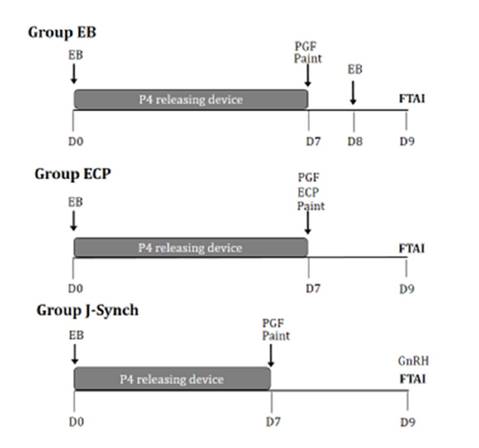
EB group: Day 0, P4 releasing device (0.5 g of P4)
plus 2 mg EB; Day 7 device removal plus 500 μg cloprostenol (PGF); Day 8, 1 mg
of EB; Day 9, FTAI (48 to 54 h after P4 device removal). ECP group: Day 0, P4
releasing device (0.5 g of P4) plus 2 mg EB; Day 7 device removal plus 500 μg
cloprostenol (PGF) and 0.5 mg ECP; Day 9, FTAI (48 to 54 h after P4 device
removal). J-Synch group: Day 0, P4 releasing device (0.5 g of P4) plus 2 mg EB;
Day 6 device removal plus 500 μg cloprostenol (PGF); Day 9, GnRH and FTAI (72 h
after device removal).
EB: Día 0, dispositivo liberador de P4 (0,5 g de P4)
más 2 mg de EB; Día 7, retiro del dispositivo más 500 μg de cloprostenol (PGF);
Día 8, 1 mg de EB; Día 9, IATF (48 a 54 h después de retirado el dispositivo de
P4). ECP: Día 0, dispositivo liberador de P4 (0,5 g de P4) más 2 mg de EB; Día
7, retiro del dispositivo más 500 μg de cloprostenol (PGF) y 0,5 mg de ECP; Día
9, IATF (48 a 54 h después de retirado el dispositivo de P4). J-Synch: Día 0,
dispositivo liberador de P4 (0,5 g de P4) más 2 mg de EB; Día 6, retiro del
dispositivo más 500 μg de cloprostenol (PGF); Día 9, GnRH y IATF (72 h después
de retirado el dispositivo de P4).
Figure 1. Treatment
Groups.
Figura 1. Grupos
de tratamiento.
The ECP protocol
(n = 100): On Day 0, cows received a P4 intravaginal device plus 2 mg of EB
i.m. On Day 7, the P4 device was removed, and cows received PGF2α and 0.5 mg
ECP (Cipiosyn, Zoetis) i.m. and the tail heads were painted as in the EB
protocol. On Day 9, (48 to 54 h after P4 device removal), cows were FTAI (figure 1).
The J-Synch
protocol (n = 101): On Day 0, cows received a P4 device plus 2 mg of EB i. m.
On Day 6, the P4 device was removed, cows received PGF2α i.m. and the tail
heads were painted as in the previous groups. On Day 9, (72 h after P4 device
removal), cows received 100 μg gonadorelin acetate (GnRH, Gonasyn gdr, Zoetis)
and were FTAI concurrently (figure 1).
Ultrasonography
All cows were
examined by real-time ultrasonography (Ibex Pro and Lyte ®, USA), with a linear
probe of 5.0 MHzon Days 7, 9 and 10. A map was made to measure and record all
follicles >5 mm present in both ovaries, and to identify the dominant follicle
which was defined as the follicle with the largest diameter at the time of
device removal. To determine the timing of ovulation (disappearance of the
follicle of greatest diameter) animals were examined at the time of FTAI (Day
9) and then every 12 h for the next 24 h. If the cows ovulated after Day 10,
the ovulation time was defined as an ovulation occurring > 24 h after FTAI.
The ovulation was reconfirmed by the presence of a CL 7 days after FTAI. Two
measurements of the CL were taken using the equipment’s software which included
the vertical and horizontal diameter (width and height) of each CL as described
previously (25).
Estrus
detection
Estrus was
recorded visually and by the disappearance of the tail-paint. The animals with
>30% of the paint removed were considered to be in estrus (13). The visual observations 3 times a day:
morning, noon and afternoon of Days 7, 8 and 9 were initiated after the removal
of the P4 device.
Blood
sampling and progesterone analysis
Seven days after
FTAI a blood sample was taken for P4 analysis. After cleaning and disinfecting
the base of the tail, samples were taken from the coccygeal vein using 10 mL
Vacutainer tubes. Samples were stored at the laboratory at 4°C for 4 to 6 h
after extraction and then centrifuged at 3000 RPM for 20 minutes to separate
the serum. The serum was extracted and then stored at -20°C until its
subsequent analysis (18). The serum P4
concentrations were determined together, in duplicates, using a progesterone
ELISA kit (Progesterone Elisa, DiaMetra S.R.L., Italy). The minimum detectable
P4 concentration of the kit was 0.05 ng/mL and the low and high intra-assay
coefficients of variation were 4.4% and 19.5%, respectively.
Pregnancy
diagnosis
The diagnosis of
pregnancy was determined by ultrasonography at 35 to 40 days after FTAI.
Statistical
analysis
For each
continuous variable studied, the arithmetic mean (x) and the standard error
(SEM) were estimated. The data were analyzed using ANOVA and means were
compared by the Tukey-Kramer HSD test. Differences were considered significant
with a P value of <0.05. The statistical analysis was carried out using the
JMP program (JMP ®, 2003) in its version 5.0 for
Windows. Estrus, ovulation and P/AI rates were compared among groups using
logistic regression for binary data (i.e., 1 = success, 0 = failure) and
a logit link, using the Infostat program (21).
Results
Estrus
expression
Overall, 90.4%
(272/301) of the cows showed estrus. The percentage of cows in estrus was lower
(P < 0.01) in the J-Synch treatment group (78.2%, 79/101), than in the ECP
(93%, 93/100) or EB (100%, 100/100) treatment groups.
Follicular
characteristics
The diameters of
the dominant follicle at the time of P4 device removal and at the time of FTAI
are shown in figure 2. Cows in the J-Synch group had the
smallest mean diameter follicle at the time of P4 device removal and the
largest diameter follicle at the time of FTAI (P < 0.05).
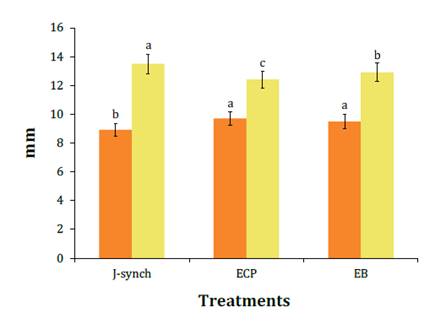
abc
Different superscripts indicate significant differences between groups
(P<0.05).
abc
indica diferencias significativas entre grupos (P<0,05).
Figure 2.
Diameter of dominant follicle (means ± SEM) at the time of P4 device removal
(orange columns) and at the time of FTAI (yellow columns) in suckled,
dual-purpose cows subjected to three different estradiol/P4-based protocols.
Figura 2. Diámetro
del folículo dominante (media ± SEM) en el momento del retiro del dispositivo
P4 (columnas naranjas) y en la IATF (columnas amarillas) en vacas de doble
propósito sometidas a tres protocolos que utilizan estradiol/P4.
Time
of ovulation
The mean
interval from P4 device removal to ovulation was longer (P < 0.01) in the
J-Synch group (87.7 ± 0.6 h) than in the ECP (73.7 ± 0.6 h) or EB (75.7 ± 0,6
h) groups. Overall, the percentage of cows that ovulated by 12 h after FTAI was
41.9% (126/301) and it was greater (P < 0.01) in the J-Synch group than in
the other two groups (table 1).
Table
1. Ovulatory response up to 12 h and
between 12.1 and 24 h after FTAI in suckled dual-purpose cows subjected to
three different estradiol/P4-based protocols.
Tabla 1. Respuesta
ovulatoria hasta 12 y entre 12.1 y 24 h después de la IATF en vacas de doble propósito
sometidas a diferentes protocolos que utilizan estradiol/P4.
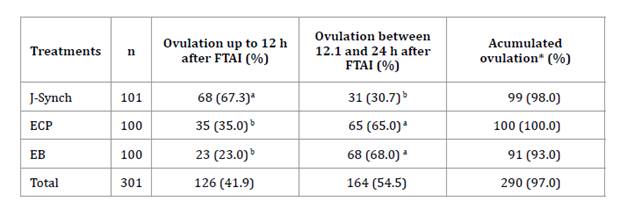
Percentages with different superscripts differ (abP
<0.01). *Ovulations occurring within 24 h after FTAI.
Los porcentajes con diferentes superíndices indican
diferencias significativas (abP <0,01). *Ovulaciones que ocurren
dentro de las 24 h posteriores a la IATF.
Conversely, the
percentage of cows that ovulated between 12.1 and 24 h after FTAI was less in
the J-Synch group than in the EB and ECP treatment groups (P < 0.01). The
percentage of cows that ovulated more than 24 h after P4 device removal was 3%
(9/301) and all were in the EB treatment group (9%; P > 0.1).
CL
diameter and serum P4 concentration 7 days after FTAI
The CL diameter
was greater (P < 0.05) in cows in the J-Synch group compared to the
other two groups, which did not differ from one another (table 2).
Table
2. CL diameter and serum progesterone
concentrations 7 days after FTAI (mean ± SEM) in suckled, dual-purpose cows
subjected to three different estradiol/P4-based protocols.
Tabla 2. Diámetro
del CL y concentración sérica de progesterona a los siete días de la IATF
(media ± SEM) en vacas de doble propósito sometidas a diferentes protocolos que
utilizan estradiol/P4.
Means within columns with different superscritps
differ (ab P < 0.05).
Las medias con diferentes superíndices indican
diferencias significativas (ab P < 0,05).
Similarly, serum
P4 concentrations were higher (P < 0.05) in the J-Synch group than in
the EB group but were intermediate in the ECP group which did not differ from
either of the other treatment groups (table 2).
Pregnancies
per FTAI (P/AI)
Overall, 164/301
(54.4%) of the cows were pregnant following FTAI. P/AI were numerically, but
not significantly higher (P<0.2) in cows in the J-Synch group (59.4%,
60/101), compared to the EB (51.0%, 51/100) and ECP (53.0%, 53/100) treatment
groups.
Another analysis
investigated the effects of the diameter of the dominant follicle at the time
of FTAI and the diameter of the ensuing CL on P/AI (table 3).
Table
3. Comparison of the follicular and luteal
characteristics in suckled, dual-purpose cows that became pregnant or did not
become pregnant following treatment with three different estradiol/P4-based
FTAI protocols (Mean ± SEM).
Tabla 3. Comparación
de las características foliculares y luteales entre vacas que quedaron preñadas
o no, en vacas de doble propósito sometidas a tres protocolos diferentes que
utilizan estradiol/P4 (media ± SEM).
*Pregnancy
Status: (P) pregnant; (O) non-pregnant.
*Estado
de gestación: (P) preñadas; (O) no preñadas.
Dominant
follicle diameter at the time of FTAI was greater (P < 0.01) in cows that
became pregnant than in those that did not become pregnant. Furthermore, the
diameter of the CL tended (P=0.0861) to be greater in cows that became pregnant
than in those that did not become pregnant to FTAI.
Discussion
The environment,
genetics, nutrition, health and management have been reported to be
determinants of the reproductive performance in cattle. Although the prolonged
proestrus protocol (J-Synch) resulted in the largest dominant follicle at the
time of FTAI and the largest CL 7 days after FTAI, the hypothesis that this
treatment results in greater P/AI than those in the conventional estradiol/P4
based protocols currently used in South America was not supported.
Nevertheless, the results of this study have important implications because
they demonstrate that other estradiol/P4-based FTAI alternatives can be applied
successfully in suckled dual-purpose cattle in tropical environments. The P/AI
exceeded 50% in the three treatment groups, which agrees with other studies
performed on beef cattle in tropical regions (1, 5,
27, 38), but superior to those reported with dairy cattle in the same
region (40, 46).
Another interesting
factor related to tropical regions is the low estrus expression rate and a
tendency to show estrus during the night, greatly affecting the efficiency of
AI programs (4). However, in the present
study, the overall estrus expression was 90.4%, which is higher than those
reported for beef and dairy cattle in tropical regions (15, 33, 38, 39). Several studies have shown that
the estrus expression at the time of FTAI, detected by tail-paint or estrus
detection patches is associated with greater P/AI (13,
33, 38, 39, 42, 43) suggesting that tail-paint or patches are useful
aids to determine that cows are indeed showing estrus at the time of FTAI,
which is likely to result in improved pregnancy outcomes following FTAI. The
duration of the proestrus period tended to have an influence on P/AI in this
study and has been reported to be positively related to an improved uterine
environment and fertility (7, 8, 9, 11).
Furthermore, the difference in dominant follicle diameter at P4 removal and at
the time of FTAI in this study agrees with a similar study reported by de la Mata et al. (2018), where cows receiving the
J-Synch treatment had the smallest follicles at P4 device removal, but had
follicles of the greatest diameter at the time of FTAI compared with two other
conventional (short proestrus) protocols. Although P/AI was only numerically
greater in cows in the J-Synch group, the cows that became pregnant, regardless
of treatment groups, had a greater follicle diameter at the time of FTAI than
those cows that did not become pregnant. This is also consistent with the
results reported by Yañez et al. (2016) on
dairy cows in Ecuador. It has also been reported that Bos taurus beef
heifers have the maximum probability of pregnancy when the follicular diameter
at the time of FTAI is >12.8 mm (34).
Furthermore, Bos indicus cows with follicles > 15 mm in diameter had
the greatest probability of ovulating and becoming pregnant in estradiol/P4
based FTAI programs (38, 39). Thus,
efforts to increase ovulatory follicle size would appear to be a worthy
endeavor.
When the time of
ovulation was evaluated in relation to the time of FTAI, the percentage of cows
ovulating up to 12 h after FTAI in J-Synch treatment group was the highest
(67.3%) compared to the ECP (35.0%) or EB (23.0%) treatment groups; while the
percentage of cows that ovulated between 12.1 and 24 h after FTAI was 30.7% for
the J-Synch treatment, and 65.0% and 68.0% for the ECP and EB treatment groups,
respectively. The determination of the percentage of cows ovulating 12, 24 and
after 24 h from FTAI may have important implications for fertility to FTAI
programs. It has been estimated that the maximum sperm viability in the female
genital tract is 24 to 30 h (23) and
after ovulation occurs, the oocyte has an even shorter fertile lifespan (6). Therefore, achieving greater synchrony
between ovulation and sperm arrival in the oviduct is very likely to increase
P/AI (37). Although pregnancy rates did
not differ among groups, inseminating cows nearer to the time of ovulation may
have given an advantage to the J-Synch group; however, results did not differ
significantly and increasing P/AI in the ECP and EB groups may have been due to
later ovulations within 24 h after FTAI, which is still considered appropriate
in cattle (16). In this study CL size 7
days after FTAI was greater in the J-Synch treatment group than in the other
groups, which is in agreement with the results reported by de la Mata et al. (2018). Nevertheless, it is
important to note that when all cows were considered, regardless of their
treatment, those that became pregnant had larger dominant follicles and tended
to have larger CL than those that did not become pregnant, which is in
agreement with other studies (12, 45).
Thus, larger ovulatory follicles should result in larger CL and greater P/AI
regardless of FTAI treatment protocol, again making this a worthy endeavor.
Endocrine and uterine environments associated with elevated estradiol
concentrations before ovulation have been reported to affect the maintenance of
the conceptus (9). Furthermore, preovulatory estradiol
concentrations have been reported to have a positive impact on subsequent
conceptus development (17). Therefore,
the positive relationship between the expression of estrus, follicle diameter,
plasma P4 concentration and P/AI may be explained by the effects of estradiol
and P4 on the endometrial tissue, as has been shown in other studies (10, 20, 24, 28).
Conclusions
Although the
prolonged proestrus protocol (J-Synch) resulted in the largest dominant
follicle at the time of FTAI and the largest CL 7 days after ovulation, P/AI
did not differ from the other estradiol/P4-based treatments in dual-purpose
cows. Nevertheless, the present study has shown a positive association between
the manifestation of estrus, follicle diameter at the time of FTAI and CL
diameter 7 days later in suckled dual-purpose cows synchronized with
estradiol/P4-based protocols for FTAI. Finally, it is concluded that the three
protocols tested can be successfully applied in lactating dual-purpose cows in
the Ecuadorian Amazon.
1. Baruselli, P.
S.; Reis, E. L.; Marques, M. O.; Nasser, L. F.; Bó, G. A. 2004. The use of
hormonal treatments to improve reproductive performance of anestrous beef
cattle in tropical climates. Animal Reproduction Science. 82-83: 479-486. DOI:
10.1016/j.anireprosci.2004.04.025
2. Bó, G. A.;
Adams, G. P.; Pierson, R. A.; Mapletoft, R. 1995. Exogenous control of
follicular wave emergence in cattle. Theriogenology. 43: 31-40. DOI: 10.1016/0093-691X(94)00010-R
3. Bó, G. A.;
Baruselli, P. S.; Martı́nez, M. F. 2003. Pattern and manipulation of follicular
development in Bos indicus cattle. Animal Reproduction Science. 78: 307-326.
DOI: 10.1016/S0378-4320(03)00097-6
4. Bó, G. A.;
Baruselli, P. S.; Mapletoft, R. J. 2013. Synchronization techniques to increase
the utilization of artificial insemination in beef and dairy cattle. Animal
Reproduction. 10: 137-142. DOI: 10.1017/S1751731114000822
5. Bó, G. A.; de
la Mata, J. J.; Baruselli, P. S.; Menchaca, A. 2016. Alternative programs for
synchronizing and re-synchronizing ovulation in beef cattle. Theriogenology.
86: 388-396. DOI: 10.1016/j.theriogenology.2016.04.053
6. Brackett, B.
G.; Oh, Y. K.; Evans, J. F.; Donawick, W. J. 1980. Fertilization and early
development of cow ova. Biology of Reproduction. 23: 189-205. DOI:
10.1095/biolreprod23.1.189
7. Bridges, G.
A.; Hesler, L. A.; Grum, D. E.; Mussard, M. L.; Gasser, C. L.; Day, M. L. 2008.
Decreasing the interval between GnRH and PGF2α from 7 to 5 days and lengthening
proestros increases timad-IA pregnancy rates in beef cow. Theriogenology. 69:
843-851. DOI: 10.1016/j.anireprosci.2009.05.002
8. Bridges, G.
A.; Mussard, M. L.; Burke, C. R.; Day, M. L. 2010. Influence of the length of
proestros on fertility and endocrine function in female cattle. Animal
Reproduction Science. 117: 208-2154. DOI: 10.1016/j.anireprosci.2009.05.002
9. Bridges, G.
A.; Ahola, J. K.; Brauner, C.; Cruppe, L. H.; Currin J. C.; Day, M. L.; Gunn,
P. J.; Jaeger, J. R.; Lake, S. L.; Lamb, G. C.; Marquezini, G. H. L.; Peel, R.
K.; Radunz, A. E.; Stevenson, J. S.; Whittier, W. D. 2012. Determination of the
appropriate delivery of prostaglandin F2α in the five-day CO-Synch + controlled
intravaginal drug release protocol in suckled beef cows. Journal of Animal
Science. 90: 4814-4822. DOI: 10.3168/jds.2013-6845
10. Bridges, G.
A.; Day, M. L.; Geary, T. W.; Cruppe, L. H. 2013a. Deficiencies in the uterine
environment and failure to support embryonic development. Journal of Animal
Science. 91: 3002-3013. DOI: 10.2527/jas.2013-5882
11. Bridges, G.
A.; Mussard, M. L.; Helser, L. A.; Day, M. L. 2013b. Dynamics and hormone
concentrations between the 7-day and 5-day CO-Synch + CIDR program in
primiparous beef cows. Theriogenology. 81: 632-638. DOI:
10.1016/j.theriogenology.2013.11.020
12. Busch, D.
C.; Atkins, J. A.; Bader, J. F.; Schafer, D. J.; Patterson, D. J.; Geary, T.
W.; Smith, M. F. 2008. Effect of ovulatory follicle size and expression of
estrus on progesterone secretion in beef cows. Journal of Animal Science. 86:
553-563. DOI: 10.2527/jas.2007-0570
13. Cedeño, A.
V.; Cuervo, R.; Tríbulo, A.; Tríbulo, R.; Andrada, S.; Mapletoft, R.; Menchaca,
A.; Bó, G. A. 2021. Effect of expression of estrus and treatment with GnRH on
pregnancies per AI in beef cattle synchronized with an
oestradiol/progesterone-based protocol. Theriogenology. 161: 294-300. DOI:
10.1016 /j.theriogenology .2020.12.014
14. Colazo, M.
G.; Kastelic, J. P.; Mapletoft, R. J. 2003. Effects of oestradiol cypionate
(ECP) on ovarian follicular dynamics, synchrony of ovulation, and fertility in
CIDR-based, fixedtime AI programs in beef heifers. Theriogenology. 60: 855-865.
DOI: 10.1016/S0093-691X(03)00091-8
15. Cosentini,
C. E. C.; Wiltbank, M. C.; Sartori, R. 2021. Factors that optimize reproductive
efficiency in dairy herds with emphasis on timed artificial insemination
programs. Animals. 11: 301-331. DOI: 10.3390/ani11020301
16. Dalton, J.
C.; Nadir, S.; Bame, J. H.; Noftsinger, M.; Nebel, R. L.; Saacke, R. G. 2001.
Effect of time of insemination on number of accessory sperm, fertilization
rate, and embryo quality in nonlactating dairy cattle. J. Dairy Sci. 84:
2413-2418. DOI: 10.3168/jds.S0022-0302(01)74690-5
17. Davoodi, S.;
Cooke, R. F.; Fernandes, A. C.; Cappellozza, B. I.; Vasconcelos, J. L.; Cerri,
R. L. 2016. Expression of estrus modifies the gene expression profile in
reproductive tissues on day 19 of gestation in beef cows. Theriogenology. 85:
645-655. DOI: 10.1016/j.theriogenology.2015.10.002
18. de Castro,
T.; Valdez, L.; Rodríguez, M.; Benquet, N.; Rubianes, E. 2004. Decline in
assayable progesterone in bovine serum under different storage conditions.
Trop. Anim. Health Prod. 36: 381-384. DOI: 10.1023/b:trop.0000026669.06351.26
19. de la Mata,
J. J.; Bó, G. A. 2012. Sincronización de celos y ovulación utilizando
protocolos de benzoato de oestradiol y GnRH en periodos reducidos de inserción
de un dispositivo con progesterona en vaquillonas para carne. Taurus.
55: 17-23.
20. de la Mata,
J. J.; Nuñez-Olivera, R.; Cuadro, F.; Bosolasco, D.; de Brun, V.; Meikle, A.;
Bó, G. A.; Menchaca, A. 2018. Effects of extending the length of pro-oestrus in
an ooestradioland progesterone-based oestrus synchronisation program on ovarian
function, uterine environment, and pregnancy establishment in beef heifers.
Reprod. Fertil. Dev. 30: 1541-1552. DOI: 10.1071/RD17473
21. Di Rienzo,
J. A.; Casanoves, F.; Balzarini, M. G.; Gonzalez, L.; Tablada, M.; Robledo, C.
W. InfoStat versión 2020. Grupo InfoStat, F.C.A., Universidad Nacional de
Córdoba, Argentina. URL http://www.infostat.com.ar
22. Edmonsond,
A. J.; Lean, I. J. 1989. A body condition scoring chart for Holando dairy cows.
Tulare 93274 Journal of Dairy Science. 72: 68-78. DOI:
10.3168/jds.S0022-0302(89)79081-0
23. Hiers, E.;
Barthle, C.; Dahms, V.; Portillo, G.; Bridges, G.; Rae, D.; Thacher, W.;
Yelich, J. 2003. Synchronization of Bos indicus x Bos taurus cows for
timed artificial insemination using gonadotropin-releasing hormone plus
prostaglandina F2α in combination with melegestrol acetate. Journal Animal
Science. 81: 830-835. DOI: 10.2527/2003.814830x
24. Jinks, E.
M.; Smith, M. F.; Atkins, J. A.; Pohler, K. G.; Perry, G. A.; MacNeil, M. D.;
Roberts, A. J.; Waterman, R. C.; Alexander, L. J.; Geary, T. W. 2013.
Preovulatory oestradiol and the establishment and maintenance of pregnancy in
suckled beef cows. Journal Animal Science. 91: 1176-1185. DOI:
10.2527/jas.2012-5611
25. Kastelic, J.
P.; Bergefelt, D. R.; Ginther, O. J. 1990. Relationship between ultrasonic
assessment of the corpus luteum and plasma progesterone concentration in
heifers. Theriogenology. 33: 1269-1278. DOI: 10.1016/0093-691X(90)90045-U
26. Lamb, G. C.;
Stevenson, J. S.; Kesler, D. J.; Garverick, H. A.; Brown, D. R.; Salfen, B. E.
2001. Inclusion of an intravaginal progesterone insert plus GnRH and
prostaglandin F2α for ovulation control in postpartum suckled beef cows.
Journal of Animal Science. 79: 2253-2259. DOI: 10.2527/2001.7992253x
27. Madureira,
G.; Consentini, C.; Motta, J.; Drum, J.; Prata, A.; Monteiro, P.; Melo, L. F.;
Gonçalves, J.; Wiltbank, M.; Sartori, R. 2020. Progesterone-based timed AI
protocols for Bos indicus cattle II: Reproductive outcomes of either EB or
GnRH-type protocol, using or not GnRH at AI. Theriogenology. 145: 86-93. DOI:
10.1016/j.theriogenology.2020.01.033
28. Mann, G. E.
2009. Corpus luteum size and plasma progesterone concentrations in cows. Animal
Reproduction Science. 115: 296-299. DOI: 10.1016/j.anireprosci.2008.11.006
29. Martínez, M.
F.; Kastelic, J. P.; Adams, G. P.; Janzen, E.; McCartney, D.; Mapletoft, R. J.
2000. Estrus synchronization and fertility in beef cattle given a CIDR and
oestradiol or GnRH. Can. Vet. J. 41: 786-790. PMCID: PMC1476379 PMID: 11062836
30. Martínez, M.
F.; Kastelic, J. P.; Bó, G. A.; Caccia, M.; Mapletoft, R. J. 2005. Effects of
ooestradiol and some of its esters on gonadotrophin release and ovarian
follicular dynamics in CIDRtreated beef cattle. Anim Reprod Sci. 86: 37-52.
DOI: 10.1016/j.anireprosci.2004.06.005
31. Moyano, J.
C.; López, J. C.; Vargas, J.; Quinteros, O. R.; Marini, P. R. 2015.
Plasmaspiegel von LH (luteinisierendes Hormon), Brunstsymptome und Qualität der
Gelbkörper in verschiedenen Protokollen, zur Synchronisation der Brunst in
Brown-Swiss-Milchrindern. Züchtungskunde. 87(4): 265-271.
32. Nuñez-Olivera,
R.; Bó, G. A.; Menchaca, A. 2022. Association between length of proestrus,
follicular size, estrus behavior, and pregnancy rate in beef heifers subjected
to fixedetime artificial insemination. Association between length of proestrus,
follicular size, estrus behavior, and pregnancy rate in beef heifers subjected
to fixedetime artificial insemination. Theriogenology. 181: 1-7. DOI:
10.1016/j.theriogenology.2021.12.028
33. Pereira, M.
H. C.; Wiltbank, M. C.; Vasconcelos, J. L. M. 2016. Expression of estrus
improves fertility and decreases pregnancy losses in lactating dairy cows that
receive artificial insemination or embryo transfer. Journal Dairy Science. 99:
237-2247. DOI: 10.3168/jds.2015-9903
34. Perry, G.
A.; Smith, M. F.; Roberts, A. J.; MacNeil, M. D.; Geary, T. W. 2007.
Relationship between size of the ovulatory follicle and pregnancy success in
beef heifers. J. Anim. Sci. 85: 684-519. DOI: 10.2527/jas.2006-519
35. Pursley, J.
R.; Mee, M. O.; Wiltbank, M. C. 1995. Synchronizatión of ovulation in dairy
cows using PGF2α and GnRH. Theriogenology. 44: 915-923. DOI: 10.1016/0093-691x(95)00279-h
36. Ré, M. G.;
Racca, G.; Filippi, L.; Veneranda, G.; Bó, G. A. 2021. Sincronización de la
ovulación y tasas de preñez en vaquillonas lecheras tratadas con protocolos que
prolongan el proestro. Taurus. 91: 28-45.
37. Saacke, R.
G.; Dalton, J. C.; Nadir, S.; Nebel, R. L.; Bame, J. H. 2000. Relationship of
seminal traits and insemination time to fertilization rate and embryo quality.
Animal Reproduction Science. 60-61: 663-677. DOI: 10.1016/s0378-4320(00)00137-8
38. Sá Filho, M.
F.; Crespilho, A. M.; Santos, J. E. P.; Perry, G. A.; Baruselli, P. S. 2010.
Ovarian follicle diameter at timed insemination and estrous response influence
likelihood of ovulation and pregnancy after estrous synchronization with
progesterone or progestin-based protocols in suckled Bos indicus cows. Animal
Reproduction Science. 120: 23-30. DOI: 10.1016/j.anireprosci.2010.03.007
39. Sá Filho, M.
F.; Santos, J. E. P.; Ferreira, R. M.; Sales, J. N. S.; Baruselli, P. S. 2011.
Importance of estrus on pregnancy per insemination in suckled Bos indicus cows
submitted to oestradiol/progesterone based timed insemination protocols.
Theriogenology. 76: 455-463. DOI: 10.1016/j.theriogenology.2011.02.022
40. Souza, A.
H.; Viechnieski, S.; Lima, F. A.; Silva, F. F.; Araujo, R.; Bó, G. A.;
Wiltbank, M. C.; Baruselli, P. S. 2009. Effects of equine chorionic
gonadotropin and type of ovulatory stimulus in a timed-AI protocol on
reproductive responses in dairy cows. Theriogenology. 72: 10-21. DOI:
10.1016/j.theriogenology.2008.12.025
41. Stevenson,
J. S.; Pursley, J. R.; Garverick, H. A.; Fricke, P. M.; Kesler, D. J.; Ottobre,
J. S.; Wiltbank, M. C. 2006. Treatment of cycling and noncycling lactating
dairy cows with progesterone during Ovsynch. Journal Dairy Science. 89:
2567-2578. DOI: 10.3168/jds.S0022-0302(06)72333-5
42. Tschopp, J.
C.; Bó, G. A. 2022a. Success of artificial insemination based on expression of
estrus and the addition of GnRH to an oestradiol/progesterone-based protocol on
pregnancy rates in lactating dairy cows. Animal Reproduction Science. 238:
106954. DOI: 10.1016/j.anireprosci.2022.106954
43. Tschopp, J.
C.; Macagno, A. J.; Mapletoft, R. J.; Menchaca, A.; Bó, G. A. 2022b. Effect of
the addition of GnRH and a second prostaglandin F2α treatment on pregnancy per
artificial insemination in lactating dairy cows submitted to an
estradiol/progesterone-based timed-AI protocol. Theriogenology. 188: 63-70.
DOI: 10.1016/j.theriogenology.2022.05.019
44. Uslenghi,
G.; González Chavez, S.; Cabodevila, J.; Callejas, S. 2014. Effect of
oestradiol cypionate and amount of progesterone in the intravaginal device on
synchronization of estrus, ovulation and on pregnancy rate in beef cows treated
with FTAI based protocols. Animal Reproduction Science. 145: 1-7. DOI:
10.1016/j.anireprosci.2013.12.009
45. Vasconcelos,
J. L.; Sartori, R.; Oliveira, H. N.; Guenther, J. G.; Wiltbank, M. C. 2001.
Reduction in size of the ovulatory follicle reduces subsequent luteal size and
pegnancy rate. Theriogenology. 56: 307-314. DOI: 10.1016/S0093-691X(01)00565-9
46. Vasconcelos,
J. L. M.; Pereira, M. H. C.; Wiltbank, M. C.; Guida, T. G.; Lopes Jr, F. R.;
Sanches Jr, C. P.; Pereira Barbosa, L. F.; Costa Jr, W. M.; Kloster Munhoz, A.
2018. Evolution of fixed-time AI in dairy cattle in Brazil. Animal
Reproduction. 15(Suppl. 1): 940-951. DOI: 10.21451/1984-3143-AR2018-0020
47. Wiltbank, M.
C.; Pursley, R. J. 2014. The cow as an induced ovulator: Timed AI after
synchronization of ovulation. Theriogenology. 81: 170-185. DOI:
10.1016/j.theriogenology.2013.09.017
48. Yañez, D.;
Barbona, I.; López, J. C.; Moyano, J. C.; Quinteros, R.; Bernardi, S.; Marini,
P. R. 2016. Possible factors affecting pregnancy rate of cows in the amazon
ecuatorian. Proceedings, VI Peruvian Congress Animal Reproduction. p. 66. DOI:
10.18548/aspe/0004.12
Author
contributions
GAB:
Conceptualization, Writing - review & editing; PRM: Writing - review &
editing; JCLP: Supervision, Data curation, Methodology, Writing - original
draft. AM: writing-review & editing.
Conflicts of
interest
The authors
declare no conflicts of interest.
Declaration of
Funding and acknowledgments
This research
was supported by Fondo Nacional de Ciencia y Tecnología (FONCYT PICT 2017-4550)
of Argentina and the Center of Postgraduate Research and Conservation of the
Amazon (CIPCA), Ecuador. We also thank our colleagues at the CIPCA for
technical assistance and Dr. Reuben J. Mapletoft from the University of
Saskatchewan for the critical review of the final versión of the manuscript.
A Data
Availability Statement
The data that
supports this study will be shared upon reasonable request to the corresponding
author.