Rev. FCA UNCuyo | 2026 | 58(1) | ISSN 1853-8665
Production and animal health
https://doi.org/10.48162/rev.39.208
Beef Quality of Braford Young Intact Males and Steers Grazing Pastures and Supplemented with Energy-Protein Sources During Growing and Fattening
Calidad de la carne de machos enteros jóvenes y novillos Braford en sistema pastoril suplementados con fuentes de energía y proteína durante el crecimiento y engorde
María José Fernández Salom 1, 2*,
Natalia Verónica Taboada 1,
Diego Bottegal 4,
Sandra Luz Martinez 5,
María Zimerman 4
1 Universidad Nacional de Santiago del Estero. Facultad de Agronomía y Agroindustrias. Av. Belgrano (S) 1912. Santiago del Estero 4200. Argentina.
2 Instituto Multidisciplinario de Salud, Tecnología y Desarrollo (CONICET-UNSE). Ruta Nacional No 9 Km 1125. S/N. Villa El Zanjón. Santiago del Estero. C. P. 4206.
3 Estación Experimental Agropecuaria Santiago del Estero. Instituto Nacional de Tecnología Agropecuaria (INTA). Jujuy 850. Santiago del Estero 4200. Argentina.
4 Instituto de Investigación Animal del Chaco Semiárido (IIACS). Centro de investigaciones Agropecuarias (CIAP). Insittuto Nacional de Tecnología Agropecuaria (INTA) Chañar Pozo s/n. Leales. Tucumán. C. P. 4113.
5 Universidad Nacional de Santiago del Estero. Facultad de Agronomía y Agroindustrias. Instituto de Ciencia y Tecnología de los Alimentos ICYTA.
* mjfsalom2439@gmail.com
Abstract
In this study, the quality parameters of the carcass and meat of Braford young intact males (YIM) and steers (STR) aged 17 and 20 months were evaluated and compared under Rhodes grass grazing with supplementation systems. YIM and STR (n = 60) were assigned to the grazing period and finished concentration. The carcass quality parameters studied were conformation, fat content, tissue composition, carcass weight, dressing, longissimus thoracis area (LTA) and subcutaneous fat thickness (SFT). Meat quality parameters such as pH, color, water holding capacity and texture were studied in the longissimus thoracis (LT) and semitendinosus (ST) muscles at two aging times, 3 and 15 days. YIM exhibited significantly higher body weight (BW), lower subcutaneous fat thickness (SFT), and larger longissimus thoracis area (LTA) postmortem compared to STR. Significant differences (p <0.05) were found between the two slaughter ages for LTA. Among texture parameters, only the elasticity of LT varied with the age of animals, and this parameter decreased as the age of animals increased (p <0.05). Results show that YIM generate a good quality product (carcasses and meat), which justifies the implementation of this new category for productive advantages, demonstrating superiority in the meat industry.
Keywords: meat quality, carcasses, young intact males, steers
Resumen
En este estudio se compararon parámetros de calidad de carcasa y de carne en MEJ (machos enteros jóvenes) y novillos de la raza Braford (n = 60), a dos edades, 17 y 20 meses, invernados en sistema pastoril con suplementación. Los parámetros de calidad de la canal estudiados fueron conformación, engrasamiento, composición del tejido, peso de la canal, rendimiento, área de ojo de bife (AOB) y espesor de grasa dorsal (EGD). Se evaluaron parámetros de calidad de la carne: pH, color, capacidad de retención de agua y perfil de textura en los músculos Longissimus thoracis (LT) y Semitendinosus (ST) en dos tiempos de maduración 3 y 15 días. Los MEJ mostraron (p≤0,05) un mayor peso vivo antes del sacrificio, menor nivel de EGD y mayor AOB postmortem en comparación con los novillos. Se encontraron diferencias significativas (p≤0,05) entre las dos edades de faena para AOB. En lo referido a los parámetros de textura solo la elasticidad del LT varía con la edad de los animales, esta disminuye a medida que aumenta la edad del animal (p≤0,05). Los resultados muestran que el MEJ genera un producto de buena calidad para la industria cárnica y presenta ventajas productivas en sistemas pastoriles con suplementación, que evidencian su superioridad para la industria cárnica.
Palabras claves: calidad de la carne, canales, machos enteros jóvenes, novillos
Originales: Recepción: 23/06/2024 - Aceptación: 03/10/2025
Introduction
The creation of the category ¨young intact male¨ (YIM) (in Spanish MEJ, macho entero joven) in 2010 by the Ministry of Agriculture, Livestock and Fisheries (Ministerio de Agricultura, Ganadería y Pesca) (Resolution No. 4906/2010) allows including a product underexplored in the Argentine beef market. The YIM category seems to be an interesting alternative for obtaining heavy and leaner carcasses from feedlot animals, especially in countries where growth promoters are forbidden (4). The world meat market has undergone significant changes in recent years, some resulting from factors that have modified the consumption habits of the population. Forage-feeding systems could confer specific physical, chemical and sensory characteristics to meat, as well as a positive image for consumers, who associate pastoral systems with natural products (14). Numerous studies have highlighted the advantages of using intact males in terms of growth rate and feed conversion efficiency compared with steers (STR) for beef production (23, 37). To exploit these biological advantages while increasing the profitability of bull production, there is considerable interest in including a grazing period to decrease production costs (38). Feedstuff accounts for a major proportion of the total costs in most cattle production systems, and grazed grass is the cheapest feedstuff in temperate climates (17). Forage systems need to increase their beef production to achieve adequate exportable balances, which translates into greater foreign exchange income for the sector (21). A large part of the expansion of beef export in global volumes came from Argentina, Canada, the European Union, Thailand and the United States (36). The balance of exportable meat in our country results from the decrease in per capita consumption (44.3 kg/capita/year) attributed to factors such as fall in purchasing power and growth of alternative meat (poultry and pork) (7). In Argentina, one of the challenges for agricultural producers is to innovate production systems that improve the growth rate of animals, feed conversion efficiency and carcass development, both qualitatively and quantitatively (29). This concept underlies the production of YIM (with testicles), with up to two (2) permanent incisors teeth (less than 24 months of age) at the time of slaughter and intervertebral cartilages of the sacral region with incipient ossification. Age at slaughter significantly affects beef quality. Younger cattle typically produce meat with finer muscle fibers, leading to more tender cuts, whereas older animals may yield tougher meat due to increased collagen cross-linking and reduced water-holding capacity. The aging process of meat (maturation) further improves tenderness and flavor (3). Meat aged for 3 days retains much of its original structure, with minimal enzymatic breakdown of proteins. However, after 15 days of aging, natural enzymes break down muscle fibers, improving tenderness, juiciness and flavor. Extended aging allows for the degradation of connective tissue, enhancing the overall meat quality (24). The study aimed to compare and evaluate the quality of carcass and meat of YIM and STR cattle at two slaughter ages (17 and 20 months) in a grazing system with supplementation and two aging times of beef (3 and 15 days) to define quality parameters for the meat industry.
Materials and Methods
Nutritional and animal management was carried out under controlled conditions at the Animal Research Institute of the Semi-Arid Chaco (IIACS), Leales, Tucumán, Argentina (27°11’10.60” S and 65°14’32.45” O) at 335 m a. s. l. This region is subtropical, sub-humid, with a dry season and an average annual rainfall of 880 mm between October and March. The average annual temperature is 19°C, ranging from 25°C in the warmest month to 13°C in the coldest month.
Animals and Treatments
Sixty Braford crossbred yearling males (177 kg ± 12.5 kg body weight, (BW) were divided into two groups: YIM, non-castrated (n=30) and steers (STR), surgically castrated at 9 months of age (n=30). Animals grazed on a pasture plot of 14 ha for each treatment, seeded with Rhodes grass (Chloris gayana, cv Fine Cut). Rearing and fattening were under grazing with supplementation, with higher levels of supplementation during fattening. Throughout the experiment, all animals were handled according to age and BW. During rearing, supplementation with corn and soybean expeller was adjusted to achieve an average daily gain (ADG) of 0.6-0.7 kg/animal/d, thus, the ration was modified throughout this period. During fattening, supplementation consisted of 3 kg of whole corn, 2 kg of ground corn and 1 kg of soybean expeller representing 1.5% of BW to achieve an ADG of 1 kg/animal/d. The body condition score (BCS) scale for bovines ranges from 1 (emaciated) to 9 (obese) and is used to evaluate fat reserves. On-farm BW was measured with an electronic scale. The longissimus thoracis (LT) muscle area (LTA) and subcutaneous fat thickness (SFT) between the 12th and 13th ribs were recorded 24 h before slaughter, using an Esaote Aquila Vet portable ultrasound scanner. At each slaughter age (17 and 20 months), eight animals from each treatment (n=16) were randomly selected from those that met the pre-established criteria, i.e. BCS ≥ 6 and SFT ≥ 5 mm. They were transported to the Forres Beltrán commercial slaughterhouse, Santiago del Estero, 150 km from the IIACS, after a 12 h fasting period with ad libitum access to drinking water.
Slaughter and Collection of Meat Samples
Animal handling and husbandry procedures followed guidelines provided by the National Agricultural Technology Institute (INTA), and slaughter procedures complied with regulations established by the National Service of Animal Health (SENASA). Animals were stunned using a captive bolt pistol. Slaughter weights (final BW) were recorded. Carcasses were weighed, classified and graded (conformation and fatness) after slaughter using the Sistema oficial argentino de Tipificación (Secretaría de Agroindustria, Ganadría y Pesca, 2018). Carcass conformation was based on visual assessment of muscle mass development. The conformation score system for Argentina varies from A (excellent) to B, C, D and E (poor). Fat cover, including external and thoracic cavity fat, ranges from 0 (none) to 4 (excessive).
Analytical Methods
Meat samples were transported under refrigeration to the central laboratories of the Instituto de Ciencia y Tecnologia de los Alimentos, Facultad de Agronomia y Agroindustrias, N Universidad Nacional de Santiago del Estero (UNSE). This guaranteed the integrity of samples for subsequent analysis under controlled conditions. Muscle samples were collected within 90 min after slaughter from the left LT muscle between the 8th and 13th ribs and from the complete semitendinosus (ST) muscle, according to the method reported by Cañeque and Sañudo (2005). Samples were stored at 12-15°C for 24 h. The longissimus thoracis area and SFT were measured with AUTOCAD® and a caliber, respectively. The pH was recorded at 45 min (pH45), 3 h (pH3), 6 h (pH6) and 24 h (pH24) postmortem using a pH meter Van London Phoenix model 557-3512, according to methodologies described in Cañete and Sañudo (2005). Instrumental color was measured with a Minolta CR-300 colorimeter (Cielab L*, a*, b*; ∅ 8 mm, Illuminant C, 2° Observer). Water-holding capacity (WHC) was determined in the LT of the 9th rib 48 h postmortem as expressible juice, i.e., release of juice from meat during external pressing (40). Tissue composition was estimated following the method reported by Garcia Torres (2005), dissecting the 10th rib into lean, subcutaneous fat, intermuscular fat, bone and other tissues such as blood vessels, ligaments, tendons. The ageing times (3 and 15 days) for each sample were randomized within the same muscle (ribs 8-9th and 11-12th). The matured samples were vacuum-packed and refrigerated at 4°C ± 1°C in the dark and then frozen at -20°C ± 1°C until processing. After thawing in a refrigerator for 24 h, samples were cooked with a press grill Speedy G3 model 1096 (Speedy, Mar del Plata), 220 V, 50 Hz frequency and 3 kW power until reaching an internal temperature of 70°C, following the general guidelines of AMSA (1995). After cooking, steaks were allowed to rest and cool to room temperature for approximately 4 h. Cores (1.27 cm diameter) were removed parallel to the fiber orientation with a hand-held coring device. Eight cores were taken from each LT and ST steak, according to the surface area of each steak. Texture profile analysis (TPA) was performed with a TA-XT Plus model texture analyzer (Texturolab, Mexico City). The texture parameters recorded were hardness, elasticity, gumminess and chewiness.
Statistical Analysis
To evaluate the effects of category, animal age and ageing time of meat on the parameters measured, a comparison of means was carried out through analysis of variance (ANOVA) with a significance level of α = 0.05. Statistical analyses were performed with InfoStat statistical software (14). The statistical model included the main effects of category, slaughter age, ageing time and all two-way interactions. When interactions were not significant, they were removed from the model. Results were expressed as mean ± standard deviation (SD).
Results
Carcass Quality
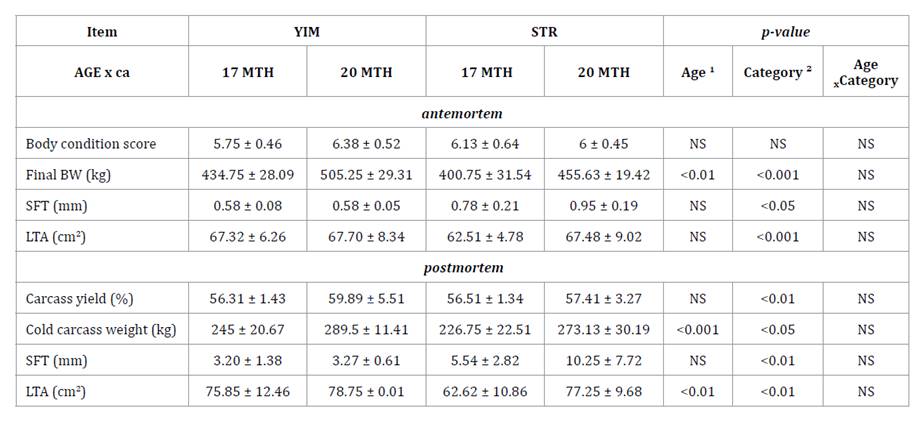
We analyzed the effects of castration and slaughter age on parameters related to carcass quality, such as final BW, carcass yield, LTA and SFT antemortem and postmortem, tissue composition, and classification and grading of carcasses. Table 1, shows the results related to carcass quality. No interaction effects (Category × Age) (p>0.1) were found in any variable evaluated (annex Table 1). The YIM were heavier and showed a larger LTA than STR, which had greater SFT. There was an effect of slaughter age on LTA postmortem (p <0.05) and cold carcass weight; however, no effect was found on SFT postmortem (p > 0.1).
Table 1. Carcass characteristics (mean ± SD) in young intact males (YIM) and steers (STR) at two slaughter ages, 17 and 20 months, in a pastoral system with supplementation.
Tabla 1. Características de la canal (media ± DE) de machos enteros jóvenes (MEJ) y novillos con dos edades de faena, 17 y 20 meses, en sistema pastoril con suplementación.
¹ effect of slaughter age, 17 or 20 months. / ² effect of animal category, YIM or STR NS: Non-Significant. / NS: No Significativo.
¹ efecto de la edad de faena, 17 o 20 meses de edad / ² efecto de la categoría de animal, MEJ o novillo.
Classification and Grading
Regarding conformation, at 17 months of age, YIM were typified in 62.5% as C (good), 12.5 % as B (very good) and 25% as A (excellent), while STR were typified in 50% as C and 50 % as B. At 20 months, 50% of YIM were classified as B and 50% as C, while 62.5% of STR were classified as C and 37.5% as B. Regarding fatness, at 17 months of age, 100% of the carcasses of YIM were grade 1, while 75% of the carcasses of STR were grade 1 and 25% were grade 2. Regarding 20 months of age, STR obtained grade 1 in 62.5 % and grade 2 in 37.5 %, while YIM obtained grade 1 in 100 %. However, all carcasses evaluated met the conditions required for special consumption (annex Figure 1).
Tissue Composition
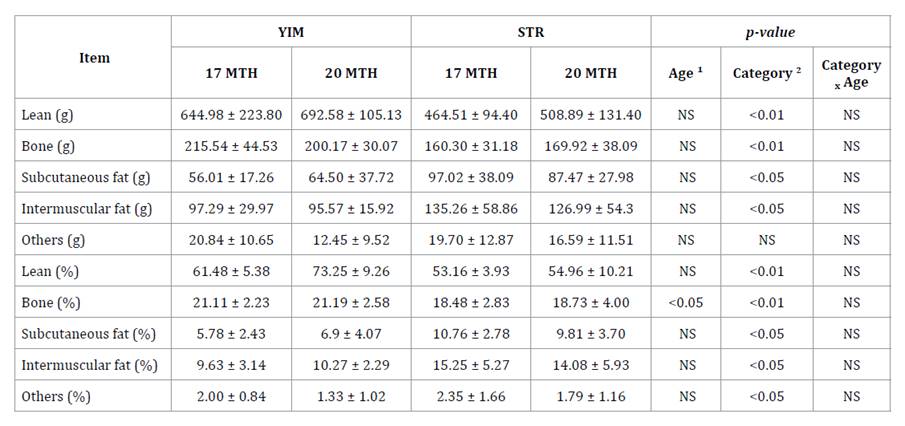
Table 2, presents the results of the study on the tissue composition of the 10th rib, where the percentages of different tissue components in both category and slaughter age were determined.
Table 2. Tissue composition of the 10th rib (mean ± SD) of young intact males (YIM) and steers (STR) at two slaughter ages, 17 and 20 months, in a pastoral system with supplementation.
Tabla 2. Composición tisular de la 10ª costilla (media ± DE) de machos enteros jóvenes (MEJ) y novillos con dos edades de faena, 17 y 20 meses, en sistema pastoril con suplementación.
¹ effect of slaughter age, 17 or 20 months. / ² effect of animal category, YIM or STR NS: Non-Significant. / NS: No Significativo.
¹ efecto de la edad de faena, 17 o 20 meses de edad / ² efecto de la categoría de animal, MEJ o novillo.
YIM had a greater percentage of lean (p <0.05) and a lower percentage of subcutaneous and intermuscular fat, providing a larger amount of meat than that of castrated animals. However, between categories, bone quantity was significantly different (p <0.05). Slaughter age affected the percentage of bone (p <0.05) (annex Table 2).
Variation in muscle-to-fat ratio is important because it influences the proportion of marketable meat in cuts. YIM had a higher percentage of muscle and a lower proportion of subcutaneous and intermuscular fat, resulting in a higher muscle-to-fat ratio than that of castrated animals.
Meat Quality
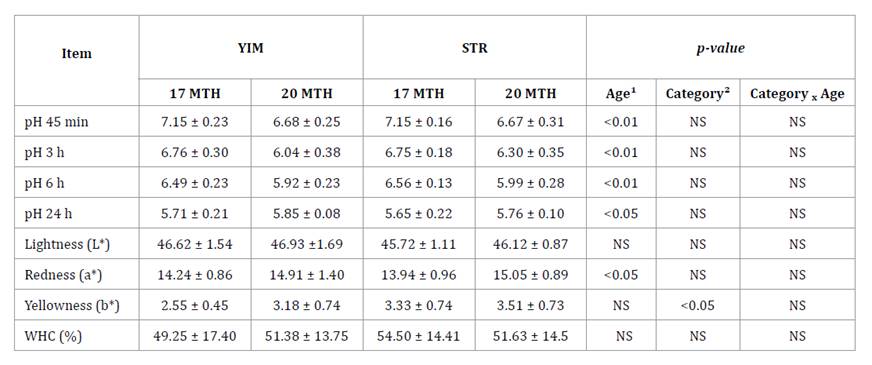
Table 3 shows the physicochemical parameters (pH, color, WHC) corresponding to LT muscle in both categories and slaughter age.
Table 3. Characteristics of the meat (mean ± SD) of young intact males (YIM) and steers (STR) at two slaughter ages, 17 and 20 months, in a pastoral system with supplementation.
Tabla 3. Características de la carne (media ± DE) de machos enteros jóvenes (MEJ) y novillos con dos edades de faena, 17 y 20 meses, en sistema pastoril con suplementación.
¹ effect of slaughter age, 17 or 20 months. / ² effect of animal category, YIM or STR NS: Non-Significant. / NS: No Significativo.
¹ efecto de la edad de faena, 17 o 20 meses de edad / ² efecto de la categoría de animal, MEJ o novillo.
In this study, significant differences (p <0.05) were found for pH at 45 min, 3 h, 6 h and 24 h between the two slaughter ages, but not between animal categories (YIM and STR) (annex Figure 2). As shown in table 3, the effect of category on meat color fell in the blue-yellow coordinate b*. The meat of 20-month-old animals was redder than that of 17-month-old animals. No differences were observed due to the factors studied in the other parameters evaluated (L* and WHC) (annex Table 3).
Texture of Meat
Meat TPA corresponding to LT and ST muscles in both categories and slaughter age are presented in table 4.
Table 4. Texture parameters (mean ± SD) in Longissimus Thoracis (LT) and Semitendinosus (ST) muscles, aged 3 and 15 days, of young intact males (YIM) and steers (STR) at two slaughter ages, 17 and 20 months, in a pastoral system with supplementation.
Tabla 4. Parámetros de textura (media ± DE) de los músculos Longissimus thoracis (LT) y Semitendinosus (ST), madurados 3 y 15 días, de machos enteros jóvenes (MEJ) y novillos con dos edades de faena, 17 y 20 meses, en sistema pastoril con suplementación.
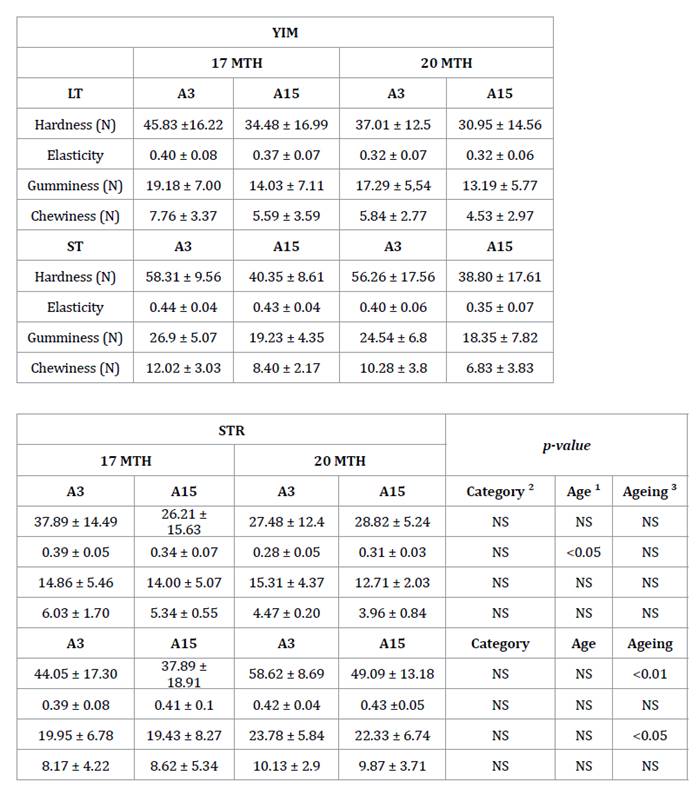
The hardness and elasticity of ST muscle showed an interaction between slaughter age and category. Significant differences (p <0.05) were found in the elasticity of LT muscle between the two ages of slaughter, but not between animal categories (YIM and STR). Meat elasticity decreased with increasing animal age. Significant differences (p <0.05) were also found in hardness and gumminess of ST muscle between ageing time of 3 and 15 days, concluding that as ageing progressed, meat became less hard and gummy.
Discussion
The effect of castration on the quality parameters of carcass and meat agrees with previous studies in terms of the advantages shown by the YIM category in the products it generates (carcass and meat), which do not generally differ from those obtained from the STR category.
Carcass Weight, BW, Yield, LTA, SFT
Significant differences (p <0.05) were observed in the final BW and carcass yield between YIM and STR (table 1). Our results are consistent with previous research showing that YIM produces heavier carcasses than those of steers (23, 25, 28). While carcass yield differed notably between the two categories, no variation was found in slaughter age (table 1). Galo González et al. (2012) reported no significant difference in the dressing percentage between intact and castrated males in feedlots (average 51.3%). However, in our pastoral system, the percentages of carcass yield ranged from 56% to 60%, consistent with previous findings (10). Additionally, YIM under two feeding systems (pasture and stabled) exhibited similar dressing percentages, while YIM produced 1% more leg yield than steers (6).
Classification and Grading
YIM showed better scores in conformation and fatness, mainly in the second slaughter (20 months). Our results agree with those reported by other authors (1, 31), where the dressing percentage of YIM was very high, and the conformation of the carcass was excellent. In the European grading system (S-EUROP), Piedmontese carcasses are positioned within the acronyms S and E, with scores equivalent to those reported in our study, i.e., type A for YIM. In other studies (9, 10) involving YIM slaughtered at 21 months and fed with two different diets, animals obtained grade 1 covering fat and were classified in category “V” including young steers, steers, heifers and young cows, consistent with our findings. French et al. (2000) found similar values of dressing percentage and fat thickness in steers fed on pasture supplemented with concentrates and slaughtered at the same age.
Tissue Composition
The superiority of YIM carcass over that of STR in the proportion of lean tissue should be considered across different segments of the beef chain, even though YIM produce carcasses with higher cut dressing but lower fat content. The values reported for this parameter agree with those found by Cuvelier et al. (2006) in the YIM of Limousin, Aberdeen Angus and Belgian Blue breeds fed with concentrates. Results reported by Blanco et al. (2010) who worked on grass-based fattening systems and concentrates also showed similarity. Seideman et al. (1982) obtained results similar to those found in this study linked to the subcutaneous and intermuscular fat content of both categories. Marcondes et al. (2012) developed prediction equations based on the dissection of the 10th rib of Nelore and Guzerah YIM of 20-24 months of age compared with STR. Their results confirmed higher lean values and lower fat values due to sex, in agreement with the findings in our work.
Instrumental Quality of Meat
pH
The present study did not show effects of castration on pH values. However, no positive effects of the slaughter age were noted, which could be attributed to different events with different transport and handling conditions. Consistent with this study, several authors (5, 13, 33) reported similar pH values in YIM fed in a stable. On the other hand, Marti et al. (2010) found higher final pH values in YIM than in castrated animals, attributing this difference to the greater susceptibility of intact animals to stress and to the mounting activity of bulls. This explains why bulls have higher pH values and darker meat than steers (24). Marino et al. (2006) and Mounier et al. (2006) studied the final pH of YIM meat in the handling and waiting time before slaughter. They observed that high pH levels are associated with handling, travel duration and lairage time at the slaughter plant. In the present work, the effect of slaughter age on meat pH was observed. However, these values were within the normal range for bovine meat. It is concluded that correcting management methods, such as composition of YIM social groups and lairage times, can help achieve normal ultimate pH values.
Color
In this study, we found effects of slaughter age on redness (a*), with meat appearing redder in older animals than in younger ones. Additionally, there was an effect of category on yellowness (b*), with lower values observed in YIM than in STR. In agreement with our study, Sanchez et al. (2005) cited values for parameter a* in young Nelore bulls (14.62 ± 0.66) similar to those of YIM in our study (14.24 ± 0.86). Likewise, other studies (13, 34) reported similar values for lightness (L*) and redness (a*) in beef from young bulls. The results of our study are generally consistent with those of several authors who found no differences between categories (33, 42). Yet, previous studies (11, 49) reported that STR meat was redder (a*) and lighter (L*) than YIM meat. Similarly, Picallo et al. (2012) reported that YIM meat was less clear (L*) and showed lower a* and b* values than STR meat. It is generally accepted that castrated animals have lighter flesh color than intact males (46) due to greater aerobic muscular activity (27).
WHC
WHC showed no effect of castration or slaughter age, in agreement with the findings of several authors (44, 49). However, Crews et al. (2003) observed lower WHC values for YIM than for STR. Despite this, the WHC values found in our study exceeded those reported by Sanchez et al. (2005) who identified values of 25.8 % to 27 % for Nelore and Rubia Gallega young bulls, respectively. Similarly, by Guerrero et al. (2011), who worked with Gasconne YIM under semi-intensive and extensive productive systems, reported WHC values of 23.5% and 21.4%, respectively.
Instrumental Texture of Meat
The TPA presented in table 4, shows an effect (p <0.05) of slaughter age on the elasticity of LT muscle, but not on category. In ST muscle, an interaction category x slaughter age was observed (p <0.05) for hardness and elasticity (annex Table 4). Regarding the hardness and gumminess of ST muscle, only the effect of ageing time was found. In agreement with our study, several authors (16, 42, 44, 48) found no differences in meat tenderness between YIM and other categories, such as cows and STR. However, Steen et al. (2003) observed higher values of compression parameters for YIM than for STR. Relatively, few studies performed TPA in both categories, as much of the literature reports results of the resistance to cutting stress measured through Warner Bratzler shear force (WBSF) (41, 48). In cooked meat, hardness was better predicted by the TPA method than by the WB method (R2 = 0.23, p <0.008 and R2 = 0.09, p <0.04, respectively) (43).
Conclusions
YIM achieved higher final BW and lower SFT levels than STR under the system of this study. In terms of the meat quality parameters evaluated, YIM presented a similar quality to that of STR, positioning the YIM category as a high-quality product for the beef industry. This could potentially lead to a shift in management practices on a production scale, avoiding unnecessary animal castration (a practice questioned by Animal Welfare standards) under the premise that they produce better-quality meat. Note the significant differences in SFT, with STR showing significantly higher levels in the second age of slaughter, while in YIM, it did not vary significantly between the first and second slaughter age. Muscle color showed differences in redness (a*) between the two slaughter ages and yellowness (b*) between animal categories. Note the interaction category x slaughter age for hardness and elasticity in ST muscle. This category should be further studied under different feeding systems to determine how they influence the yield and quality of each cut, providing insights into the improvement of meat production.
1. Albertí, P.; Lahoz, F.; Tena, R.; Jaime, S.; Sañudo, C.; Olleta, J. L.; Campo, M. M.; Panea, B.; Pardos, J. J. 2001. Producción y rendimiento carnicero de siete razas bovinas españolas faenadas a distintos pesos. Informaciones Técnicas. 101: 1-16.
2. AMSA. 1995. Research guidelines for cookery, sensory evaluation and instrumental tenderness measurements of fresh meat. American Meat Science Association. Chicago. IL.
3. Bautista-Martínez, Y.; Granados-Rivera, L. D.; Jimenez-Ocampo, R.; Maldonado-Jáquez, J. A. 2024. Morphostructural composition and meat quality in local goat kids from the northeastern region of Mexico. Revista de la Facultad de Ciencias Agrarias. Universidad Nacional de Cuyo. Mendoza. Argentina. 56(1): 127-137. DOI: https://doi.org/10.48162/rev.39.129
4. Benedetto, A.; Pezzolato, M.; Biasibetti, E.; & Bozzetta, E. 2021. Omics applications in the fight against abuse of anabolic substances in cattle: challenges, perspectives and opportunities. Current Opinion in Food Science. 40: 112-120. doi: 10.1016/j.cofs.2021.03.001
5. Blanco, M.; Casasús, I.; Ripoll, G.; Panea, B.; Albertí, P.; Joy, M. 2010. Lucerne grazing compared with concentrate-feeding slightly modifies carcass and meat quality of young bulls. Meat Science. 84: 545-552. doi.org/10.1016/j.meatsci.2009.10.010
6. Brännäng, E. 1971. Studies on monozigous cattle twins XVIII. The effect of castration and age of castration on the development of single muscles, bones and special sex characters. Part II. Swedish Journal of Agricultural Research. 1: 69-78.
7. Cámara de la Industria y Comercio de Carnes y Derivados de la República Argentina (CICCRA). 2023. Informe 279b. https://ciccra.com.ar/(Date of consultation 27/09/2023).
8. Cañeque, V.; Sañudo, C. 2005. Estandarización de las metodologías para evaluar la calidad del producto (animal vivo, canal, carne y grasa) en los rumiantes. Monografías INIA. Serie Ganadera. 3: 216-225.
9. Catrileo, A. S.; Rojas, C. G. 2012. A beef production system from dairy bulls under pasture in the south of Chile. Chilean Journal of Agricultural and Animal Science. 28(1): 41-50.
10. Catrileo, A.; Morales, R.; Rojas, C.; Cancino, D. 2014. Beef production from dairy bulls under two different production systems and its effect on the fatty acid profile and beef quality. Chilean Journal of Agricultural Research. 74(3): 366–370. doi:10.4067/S0718-58392014000300017
11. Cervieri, V.; Cossu, M. E.; Castro, L. 2012. Características cualitativas del macho entero joven. Revista Argentina de Producción Animal. 32(Supl.1): 223-263.
12. Crews Jr, D. H.; Pollak, E. J.; Weaber, R. L.; Quaas, R. L.; Lipsey, R. J. 2003. Genetic parameters for carcass traits and their live animal indicators in Simmental cattle. Journal of Animal Science. 81(6): 1427-1433. doi.org/10.2527/2003.8161427x
13. Cuvelier, C.; Clinquart, A.; Hocquette, J. F.; Cabaraux, J. F.; Dusfrasne, I.; Istasse, L.; Hornick, J. L. 2006. Comparison of composition and quality traits of meat from young finishing bulls from Belgian Blue, Limousin and Aberdeen Angus breeds. Meat Science. 74: 522-531. doi.org/10.1016/j.meatsci.2006.04.032
14. Dieguez Cameroni, F.; Hornick, J. L.; Cabaraux, J. F.; Istasse, L.; Dufrasne, I. 2006. Less intensified grazing management with growing fattening bulls. Animal Research. 55: 105-120. doi: 10.1051/animres:2006007
15. Di Rienzo, J. A.; Casanoves, F.; Balzarini, M. G.; Gonzalez, L.; Tablada, M.; Robledo, C. W. InfoStat versión 2020. Centro de Transferencia InfoStat. FCA. Universidad Nacional de Córdoba. (Date of consultation 21/04/23).
16. Dransfield, E.; Martin, J. F.; Bauchart, D.; Abouelkaram, S.; Lepetit, J.; Culioli, J.; Jurie, C.; Picard, B. 2003. Meat quality and composition of three muscles from French cull cows and young bulls. Animal Science. 76(3): 387-399. doi:10.1017/S1357729800058616
17. Finneran, E.; Crosson, P.; O’Kiely, P.; Shalloo, L.; Forristal, D.; Wallace, M. 2011. Stochastic modelling of the yield and input price risk affecting home produced ruminant feed cost. Journal of Agricultural Science. 150: 123-139. doi:10.1017/S002185961100061X
18. French, P.; O’Riordan, E. G.; Monahan, F. J.; Caffrey, P. J.; Vidal, M.; Mooney, M. T.; Troy, D. J.; Moloney, A. P. 2000. Meat quality of steers finished on autumn grass, grass silage or concentratebased diets. Meat Science. 56(2): 173-180. doi.org/10.1016/S0309-1740(00)00037-1
19. Galo González, P. A.; Paniagua Alcaraz, P. L.; Ocampos Olmedo, D. A.; Dueck, J.; González Balbuena, J. M. 2012. Desempeño productivo de bovinos macho enteros y castrados en un sistema de engorde a corral en el Departamento de Boquerón-Chaco Central. Investigación Agraria. 14(2): 101-106.
20. García-Torres, M.; Espejo, M.; López Parra, M.; Izquierdo, J. A.; Mendizábal, M., Purroy, A. 2005. Conformación, engrasamiento y sistemas de clasificación de la canal bovina. En; Estandarización de las metodologías para evaluar la calidad del producto (animal vivo, canal, carne y grasa) en los rumiantes. INIA. Serie Ganadera 3: 243-250.
21. Gregoretti, G.; Baudracco, J.; Dimundo, C.; Lazzarini, B.; Scarel, J.; Alesso, A.; Machado, C. 2024. Traditional cow-calf systems of the northern region of Santa Fe, Argentina: current situation and improvement opportunities. Revista de la Facultad de Ciencias Agrarias. Universidad Nacional de Cuyo. Mendoza. Argentina. 56(1): 106-116. DOI: https://doi.org/10.48162/rev.39.127
22. Guerrero, A.; Alberti, P.; Sañudo, C.; Campo, M. M.; Olleta, J. L.; Panea, B.; Ripoll, G.; Monge, P.; Santolaria, P. 2011. Efecto del sistema de producción previo al cebo sobre la calidad instrumental de la carne de vacuno. Asociación Interprofesional para el Desarrollo Agrario XIV Jornadas de Producción Animal, Tomo II: 661-663.
23. Jones, S. D. M.; Price, M. A.; Berg, R. T.; Hardin, R. T. 1981. The influence of dietary roughage level on efficiency of growth and muscle deposition in bulls and steers. Canadian Journal of Animal Science. 61(2): 369-374. doi.org/10.4141/cjas81-045
24. Katz, L. S. 2007. Sexual behavior of domesticated ruminants. Hormones and Behavior. 52: 56-63. doi.org/10.1016/j.yhbeh.2007.03.012
25. Knight, T. W.; Cosgrove, G. P.; Death, A. F.; Anderson, C. B. 2010. Effect of age of pre- and post-pubertal castration of bulls on growth rates and carcass quality. New Zealand Journal of Agricultural Research. 43: 585-588. doi.org/10.1080/00288233.2000.9513455
26. Koohmaraie, M., & Geesink, G. H. 2006. Contribution of postmortem muscle biochemistry to the delivery of consistent meat quality with particular focus on the calpain system. Meat science. 74(1): 34-43. doi.org/10.1016/j.meatsci.2006.04.025
27. Lawrie, R. A.; Ledward, D. A. 2006. Chemical and biochemical constitution of muscle. In R. A. Lawrie & D. A. Ledward (Eds.). Lawrie’s Meat Science. Washington, DC. Woodhead Publishing. (p. 105). doi.org/10.1533/9781845691615.75
28. Maggioni, D.; Arques, J. A.; Rotta, P. P.; Perotto, D.; Ducatti, T.; Visentainer, J. V.; Prado, I. N. 2010. Animal performance and meat quality of crossbred young bulls. Livestock Science. 127: 176-182. doi.org/10.1016/j.livsci.2009.09.006
29. Maldonado-Jáquez, J. A.; Torres-Hernández, G.; Hernández-Mendo, O.; Gallegos-Sánchez, J.; Mora-Flores, J. S.; Granados-Rivera, L. D. 2025. Long-term Supplementation Affects the Production, Composition and Lactation Curve of Local Grazing Goats. Revista de la Facultad de Ciencias Agrarias. Universidad Nacional de Cuyo. Mendoza. Argentina. 57(2): 155-164. DOI: https://doi.org/10.48162/rev.39.179
30. Marcondes, M. I.; Tedeschi, L. O.; Valadares Filho, S. C.; Chizzotti, M. L. 2012. Prediction of physical and chemical body compositions of purebred and crossbred Nellore cattle using the composition of a rib section. Journal of Animal Science. 90: 1280-1290. doi: 10.2527/jas.2011-3839
31. Marino, R.; Albenzio, M.; Girolami, A.; Muscio, A.; Sevi, A.; Braghieri, A. 2006. Effect of forage to concentrate ratio on growth performance, and on carcass and meat quality of Podolian young bulls. Meat Science. 72(3): 415-424. doi.org/10.1016/j.meatsci.2005.08.007
32. Marti, S.; Velarde, A.; de la Torre, J. L.; Bach, A.; Aris, A; Serrano, A.; Manteca, X.; Devant, M. 2010. Effects of ring castration with local anesthesia and analgesia in Holstein calves at 3 months of age on welfare indicators. Journal of Animal Science. 88: 2789-2796. doi:10.2527/jas.2009-2408
33. Mohan Raj, A. B.; Moss, B, W.; Rice, D. A.; Kilpatrick, D. J.; McCaughey, W. J.; Mc Lauchlan, W. 1992. Effect of mixing male types of cattle on their meat quality and steers related parameters. Meat Science. 32: 367-386. doi.org/10.1016/0309-1740(92)90079-J
34. Moloney, A. P.; Wilson, S. S.; Siphambili, S.; Moran, L.; O’Riordan, E. G.; O’Sullivan, M.G.; Kerry, J. P.; Monahan, F. J.; McGee, M. 2022. The Colour, Composition and Eating Quality of Beef from Late-or Early-Maturing Suckler Bulls Finished at Pasture with or without Concentrate Supplementation. Animals. 12(18): 2417. doi.org/10.3390/ ani12182417
35. Mounier, L.; Dubroeucq, H.; Veissier, I.; Andanson, S. 2006. Variations in meat pH of beef bulls in relation to conditions of transfer to slaughter and previous history of the animals. Journal of Animal Science. 84: 1567-1576. doi: 10.2527/2006.8461567x
36. OCDE/FAO. 2020–2029. Perspectivas Agrícolas. Estadísticas de la OCDE sobre a JA Di. https://openknowledge.fao.org/server/api/core/bitstreams/a7323b78-3837-4081-8745-e13968511c1c/content (Date of consultation 24/3/2024).
37. O’Riordan, E. G.; O’Kiely, P. 1996. Potential of beef production systems based on grass. Irish Grassland and Animal Production Association Journal. 30: 185–217. https://www.cabidigitallibrary.org/doi/full/10.5555/19970710420
38. O’Riordan, E. G.; Crosson, P.; McGee, M. 2011. Finishing male cattle from the beef suckler herd. Irish Grassland and Animal Production Association Journal. 45: 131-146. https://www.irishgrassland.com/docs/Journal%202011.compressed.pdf
39. Picallo, A.; Cossu, M. E.; Fernández Madero, J.; Grigera Naon, J.; Schor, A.; Rozen, F.; Gambetti, P.; Lamanna, M. L.; Colombatto, D.; Von Bernard, H.; Coste, B.; Moisá, S. 2012. Beef quality young bulls vs castrated from the northwest Argentina productive area. 35º Congreso Argentino de Producción Animal.
40. Pla, T. M. 2005. Capacidad de retención de agua. En Cañeque, V.; Sañudo, C. (Eds.). Estandarización de las metodologías para evaluar la calidad del producto (animal vivo, canal, carne y grasa) en los rumiantes. INIA. Serie Ganadera 3: 243-250.
41. Prado, R. M.; Prado, I. N.; Marques, J. A.; Rotta, P. P.; Visentainer, J. V.; Silva, R. R.; Souza, N. E. 2009. Meat quality of the Longissimus muscle of bulls and steers (½ Nellore vs. ½ Simmental) finished in feedlot. Journal of Animal and Feed Science. 18: 221-230. doi.org/10.22358/jafs/66386/2009
42. Ruiz de Huidobro, F.; Miguel, E.; Onega, E.; Blazquez, B. 2003. Changes in meat quality characteristics of bovine meat during the first 6 days’ postmortem. Meat Science. 65: 1439-1446. doi.org/10.1016/S0309-1740(03)00068-8
43. Ruiz de Huidobro, F.; Miguel, E.; Blazquez, M.; Onega, E. 2005. A comparison between two methods (Warner-Bratzler and texture profile analysis) for testing either raw meat or cooked meat. Meat Science. 69(3): 527-536. doi: 10.1016/j.meatsci.2004.09.008
44. Sánchez, L.; Carballo, J. A. Sanchez, B. Monserrat, L. 2005. Características de la canal y de la carne de machos procedentes de la cruza de Rubia Gallega con Nelore. Archivos de Zootecnia. 54(206-207): 485-489.
45. Secretaría de Agricultura, Ganadería y Pesca. 2018. Normas de tipificación de carnes en Argentina. https://www.argentina.gob.ar/agricultura/tipificacion.carneshttps://www.magyp.gob.ar/sitio/areas/tipificacion. (Date of consultation 03/03/2024).
46. Seideman, S. C.; Cross, H. R.; Oltjen, R. R.; Schanbacher, B. D. 1982. Utilization of the intact male for red meat production: a review. Journal of Animal Science. 55(4): 826-840. doi.org/10.2527/ jas1982.554826x
47. Steen, R. W. J.; Lavery, N. P.; Kilpatrick, D. J.; Porter, M. G. 2003. Effects of pasture and high-concentrate diets on the performance of beef cattle, carcass composition at equal growth rates, and the fatty acid composition of beef. New Zealand Journal of Agricultural Research. 46(2): 69-81. doi=10.1080/00288233.2003.9513533
48. Vásquez, R. E.; Ballesteros, H. H.; Muñoz, C. A. 2007. Factores asociados con la calidad de la carne. I Parte: la terneza de la carne bovina en 40 empresas ganaderas de la Región Caribe y el Magdalena Medio. Revista Corpoica-Ciencia y Tecnología Agropecuaria. 8(2): 60-65.
49. Zea Salgueiro, J.; Díaz Díaz, M. D.; Carballo Santaolalla, J. A. 2007. El efecto del sistema de producción y del sexo en la calidad de la carne de vacuno joven. Archivos de Zootecnia. 56(216): 817-828.
https://drive.google.com/file/d/13I5vx-OsN14U8wXH44UCifxiNUUlLJk-/view?usp=sharing