Rev. FCA UNCuyo | 2026 | 58(2) | ISSN 1853-8665
Plant protection
https://doi.org/10.48162/rev.39.226
Resistance to Puccinia graminis f. sp. avenae in Oat Genotypes and Challenges for Genetic Breeding in Argentina
Resistencia a Puccinia graminis f. sp. avenae en genotipos de avena y desafíos para el mejoramiento genético en Argentina
Laura Victoria Da Silva 1, 2, 3,
Pablo Campos 3
1 Universidad Nacional de La Plata. Facultad de Ciencias Agrarias y Forestales. Cerealicultura. Av. 60 y 119. La Plata. Argentina.
2 Consejo Nacional de Investigaciones Científicas y Técnicas (CONICET) Argentina.
3 Instituto Nacional de Tecnología Agropecuaria (INTA). EEA Bordenave CC44. C. P. 8187. Ruta 76 km 36. Bordenave. Buenos Aires. Argentina.
* dietz.juan@inta.gob.ar
Abstract
Oat stem rust caused by Puccinia graminis f. sp. avenae (Pg) significantly threatens oat cultivation globally and in some areas of Argentina, emphasizing the importance of studying local germplasm resistance. We evaluated 38 Argentine oat cultivars (16 old, 22 modern) and 20 breeding lines against prevalent Pg races (2005, 2021, 2022, and 2023) in both seedlings (greenhouse) and adult plants (field trials). We postulate several candidate genes (Pg3, Pg9, Pg10, Pg15, and Pga) in the tested germplasm. Seedling assays revealed a shift in cultivar resistance, with older cultivars becoming increasingly susceptible to recent Pg populations. Modern cultivars and lines exhibited limited seedling resistance, highlighting the vulnerability of current germplasm. Adult plant results showed variations in disease severity in some genotypes among years, suggesting shifts in Pg race prevalence and virulence. Resistance observed in cultivars such as Milagros, Payé, Aikén, and Yapa to specific races at the seedling stage may explain their favorable performance in certain seasons. Moreover, cultivars such as Máxima, Tucana, Polaris, U16, Maná, La Plata FA, and some lines showed severity values below 20% in the field. The findings provide useful insights into oat breeding programs and crop management strategies.
Keywords: oat stem rust, Pg genes, seedling resistance, Avena sativa, breeding for rust resistance
Resumen
La roya del tallo en avena, causada por Puccinia graminis f. sp. avenae (Pg) es una amenaza para el cultivo a nivel mundial, y recientemente ha afectado algunas áreas de Argentina, destacando la importancia de estudiar la resistencia del germoplasma local. En este trabajo, evaluamos 38 cultivares argentinos de avena (16 antiguos, 22 modernos) y 20 líneas contra razas prevalentes de Pg (2005, 2021, 2022 y 2023) en plántula (invernadero) y planta adulta (campo). Este trabajo permitió postular la presencia de varios genes (Pg3, Pg9, Pg10, Pg15 y Pga) en el germoplasma testeado. Los resultados en plántula mostraron mayor susceptibilidad en los cultivares antiguos frente a las nuevas poblaciones Pg. Asimismo, cultivares modernos y líneas mostraron limitada resistencia, exhibiendo la vulnerabilidad del germoplasma actual. En planta adulta, la severidad varió entre genotipos y años, sugiriendo fluctuaciones en la prevalencia y virulencia de razas Pg. Nuestros resultados revelan que la resistencia en plántula de cultivares como Milagros, Payé, Aikén, y Yapa a razas específicas en invernadero, podría explicar su buen comportamiento a campo. Cultivares como Máxima, Tucana, Polaris, U16, Maná, La Plata FA y algunas líneas presentaron severidad menor al 20% en planta adulta. La información aquí obtenida es valiosa para los programas de mejoramiento de avena y manejo del cultivo.
Palabras claves: roya del tallo en avena, genes pg, resistencia en plántula, Avena sativa, mejoramiento de la resistencia a royas
Originals: Received: 23/06/2024 - Accepted: 26/05/2026
Introduction
Oats (Avena sativa L.) are a widely cultivated cereal crop for both forage and grain. It is the sixth most important cereal in grain production, with approximately 23 million t growing around 10 million hectares (15). In Argentina, the crop covers 1.5 million hectares approximately, mainly for forage production (25). The crop is technically and economically viable, especially in livestock systems, due to its multiple uses: grain, forage, preserved forage (hay and silage), dual purpose (forage-grain), and use of stubble (9). Argentine oat genotypes have been extensively studied for key agronomic parameters like photoperiodic and vernalization responses, as well as the critical period for yield determination under optimal climatic conditions (11, 14). Furthermore, advances in understanding the nutritional quality of oat grain (20) and the health benefits of its consumption (17, 33) have revalued its use in human nutrition (2), leading to an increase in demand for oat-based products and driving oat cultivation for grain (1).
Oat stem rust, caused by Puccinia graminis f. sp. avenae Erikss and Henning (Pg), is globally recognized for its destructive potential under favorable conditions (27, 34). Van Niekerk et al. (2001) have reported yield losses of up to 85%, and a 45% decrease in test weight in susceptible materials after a stem rust epidemic, while Leyva et al. (2004) documented drops of up to 70% in grain yield. In Argentina, stem rust has been considered a minor disease, appearing sporadically toward the end of the crop cycle and affecting mostly grain production. Consequently, most research efforts in the country have focused on crown rust (Puccinia coronata f. sp. avenae (Pc)), particularly in resistance breeding and disease management (5, 9, 10, 12), while stem rust has received less attention. Although earlier reports (6, 39) describe occurrences of stem rust in certain seasons with low levels of disease among susceptible genotypes, more recent observation data (2021-2023) from field trials and farmers’ fields across several locations in Argentina (Reconquista, La Plata, Barrow, and Bordenave) indicate increasing disease severity (Dietz, non-published data). For example, in Reconquista (Santa Fe province) during the 2023 growing season, many Argentine materials exhibited near 100% severity, stem breakage, and panicle retention. These observations suggest the possible emergence of new biotypes with broader virulence spectra.
The populations of Pg, as well as the populations of Pc demonstrate extensive race diversity and ongoing evolution (5, 12, 13, 26), which makes maintaining stable resistance in oat cultivars over time especially challenging (28). In this context, Campos & Giménez (2011) reported high variability among 83 Pg isolates collected between 2007 and 2009, demonstrating that most Argentine oat cultivars exhibit low seedling resistance. Wehrhahne & Storm (2014) observed that short-cycle cultivars (e.g., Bonaerense INTA (B.I.) Maná, B.I. Calén, and B.I. Maja) suffer less diseases severity than long-cycle cultivars (Carlota INTA, Marita INTA, and Violeta INTA). However, additional studies are required to determine whether these differences are attributable to genetic associations between resistance and days to heading or if they result from environmental or epidemiological factors.
Genetic improvement is the most effective strategy for disease management (16, 21, 24, 38). However, only 16 stem rust resistance genes have been described worldwide (16), indicating that the genetic resources available for developing oat varieties resistant to this disease are limited. Most of these known genes are race-specific (major genes), which confer hypersensitive responses via incompatible host–pathogen interactions. They are generally effective from the seedling stage and confer resistance reactions even in adult plants, although only to certain races or pathotypes. Gene postulation in host genotypes using a set of differential races with distinct virulence/avirulence profiles (i.e., pathotypes) is a standard phenotypic method for identifying resistance genes based on infection types (IT). In Argentina, several Pc resistance genes have been postulated in oat cultivars (5, 9), but to date, no Pg genes have been reported. Identifying and characterizing Pg genes in Argentine germplasm is essential to elucidate the genetic basis of resistance, to understand the performance of local cultivars, and to support targeted breeding programs.
The oat seed market in Argentina is much smaller than for wheat, reflected in fewer breeding programs and a limited catalog of commercial oat cultivars, often composed of older varieties. The long-term widespread use of a relatively small number of cultivars over many years may influence pathogen populations, such as those of Puccinia coronata (12). In fact, this practice has been suggested as one of the causes of shifts in race populations for Pc and Pg, and of increasing disease incidence in oat crops.
Given the diverse uses of oats in Argentina and the increasing disease pressure in many regions, this study aims to postulate Pg genes and evaluate resistance in advanced breeding lines and commercial varieties at both seedling and adult plant stages. Dissemination of these findings will enable oat breeders and producers to make informed decisions about germplasm deployment.
We hypothesize that the Pg population in Argentina has recently shifted, resulting in the emergence of races with expanded virulence spectra; and that most commercially available oat cultivars are vulnerable to these more virulent races.
Material and Methods
Plant Materials and Experimental Design
A total of 38 commercial Argentine oat cultivars (16 old and 22 modern) and 20 advanced breeding lines from different breeding programs (Universidad Nacional de La Plata, Instituto Nacional de Tecnología Agropecuaria (INTA) Bordenave, and INTA Barrow) were evaluated against different Pg races. Evaluations were conducted at the seedling stage (Experiment 1) and in field trials across two environments (Experiment 2).
Experiment 1: Greenhouse Studies of Seedling Resistance to Stem Rust
Seedling tests were carried out at the Rust laboratory of INTA Bordenave, Argentina (37°52’ LS; 63°01’ LW). A split-plot design was used, with each race as the main plot and genotypes as subplots, with two replications. All genotypes were tested against twelve races of Pg collected during the 2021, 2022, and 2023 growing seasons from different locations of Argentina [Supplementary Table S2]. These races were selected based on their high frequency in national surveys [e.g. Pg 21-7-(2), Pg 21-16-(1), Pg 22-1-(1), and Pg 23-10-(5)], and the rest representing different combinations in the virulence/avirulence patterns useful for discriminating resistance Pg genes in seedlings. Furthermore, this study analysed a dataset from a trial conducted on the 16 old cultivars in 2006 using 10 predominant Pg races collected in 2005. This analysis considers potential changes in cultivar responses over time. The Pg races were previously characterized on a set of 11 differential oat lines (Pg1, Pg2, Pg3, Pg4, Pg8, Pg9, Pg10, Pg13, Pg15, Pg16 and Pga), each line carrying a single race-specific Pg gene (19). This differential set is standard in Argentina for Pg population studies (6). Eight to ten seeds of each genotype were sown in 200 cm³ pots containing fertile loam soil. At twelve days after sowing, when seedlings had reached growth stage GS12 (two fully expanded leaves) (40)], plants were inoculated with freshly collected urediniospores of the selected races (Supplementary Table S1). For inoculation, a subsample of 2 mg of each Pg isolate was suspended in Soltrol ® 170 mineral oil (diluted to 50 mg total volume) loaded into gelatin capsules (at 1/25 weight concentration), and sprayed onto plants using an air compressor with a spray nozzle. After inoculation, plants were placed in a dark chamber at 100% relative humidity and 20 +/-1°C for 20 h to allow spore germination and leaf penetration. They were then transferred to greenhouse benches maintained at 20 +/-1°C.
Disease reactions were scored 15 days post-inoculation using a 0-4 infection type (IT) scale, where 0 = no uredia or other macroscopic infection symptoms, 1 = small uredia surrounded by chlorosis or necrosis, 2 = small to medium size uredia surrounded by chlorosis, 3 = medium size uredia in a chlorotic area, and 4 = large uredia without chlorosis or necrosis (35). Seedlings showing IT of 0, 0;, 1, and 2 (including modifications such as 1+, 11+, 22+ T... etc.) were classified as resistant, and ITs of 3 or 4, as susceptible. Because the experiment was observational and the race × genotype interaction is deterministic, no formal statistical analysis was carried out. The presence of Pg seedling resistance genes in the Argentine germplasm was postulated by comparing the IT responses of cultivars and breeding lines to those of the differential set.
Experiment 2: Field Studies of Adult Plant Resistance to Stem Rust
Adult plant resistance of the genotypes was evaluated under field conditions against natural infections of Pg at the J. Hirschhörn Experimental Station, Los Hornos (34°52’ S; 57°58’ W; Universidad Nacional de La Plata, Argentina), during the 2022 and 2023 growing seasons. The trials were conducted using a randomized complete block design, with environments (years) and genotypes as factors, and two replications. Sowing was performed in June under conventional tillage. Genotypes were arranged in 2 m rows, spaced 20 cm apart, at a target density of 200 plants.m-2. Every five genotypes, two border rows of the susceptible cultivar ¨Boyera FA¨ were included to promote inoculum build-up. Disease severity (expressed as the percentage of diseased stem area, including the peduncle) was assessed using the modified Cobb scale (32) at GS75 [medium milky grain stage (40)], after grouping genotypes by phenological cycle. Data were analyzed by ANOVA using InfoGen software (3), and means were compared using the LSD test (p=0.05).
Results
Seedling Resistance in Old Cultivars
The seedling responses of commercial oat cultivars released over 20 years to the ten races identified in 2005, and the twelve races of the 2021-2023 population are presented in table 1 and table 2. Against the 2005 Pg population, most cultivars exhibited resistance to the majority of races, except Millauquén INTA and Pilar INTA, which were entirely susceptible (table 1). Cultivars such as Rocío INTA and B.I. Payé were resistant to all ten races; Máxima INTA, INIA Polaris; Aurora INTA, INIA Tucana, B.I. Canaí, U16, Milagros INTA, and Graciela INTA exhibited resistance to nine races; whereas B.I. Maja, B.I. Calén, Cristal INTA, and Violeta INTA were resistant to six races. In contrast, when these cultivars were tested against the twelve races of the 2021-2023 Pg population, their resistance was substantially reduced. B.I. Maja and B.I. Calén showed resistance against three races; while Máxima INTA, Rocío INTA, and B.I. Payé resisted two races. Additionally, Aurora INTA, B.I. Canaí, INIA Tucana, INIA Polaris, U16, Milagros INTA, and Graciela INTA cultivars each resisted one race, while the remaining genotypes were completely susceptible.
Table 1. Seedling response of old Argentine cultivars against ten races of Puccinia graminis identified in Argentina in 2005.
Tabla 1. Respuesta en plántula de antiguos cultivares argentinos frente a diez razas de Puccinia graminis identificadas en Argentina en 2005.
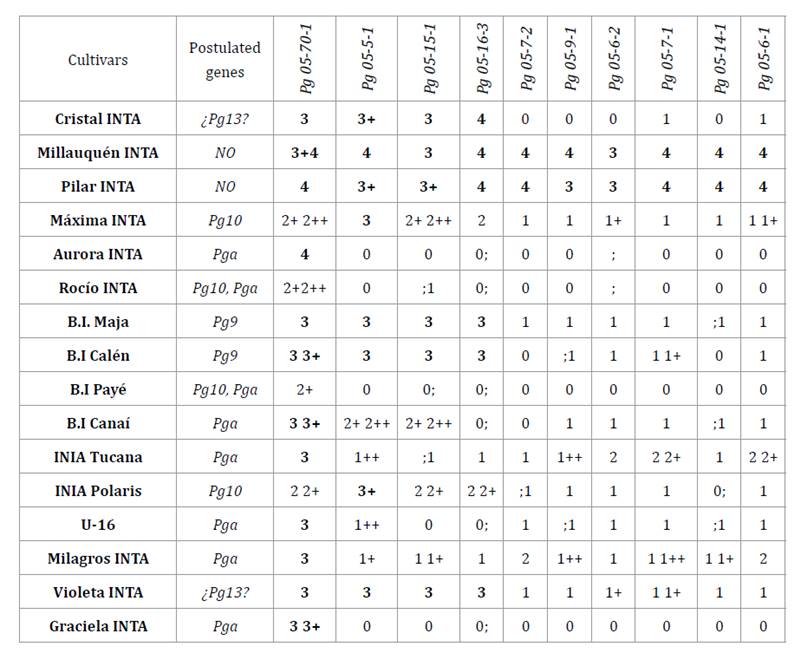
* *B.I.: Bonaerense INTA. * Seedlings showing infection types (IT) of 0, 0;, 1, and 2 and their modifications (;1+, 11+, 22+ T... etc.) are classified as resistant, while those with ITs of 3 or 4 are considered susceptible. Cells highlighted in bold represent susceptible IT.
*Las plántulas que muestran tipos de infección (IT) 0, 0;, 1 y 2 y sus modificaciones (;1+, 11+, 22+ T... etc.) se clasifican como resistentes, mientras que aquellas con IT de 3 o 4 se consideran susceptibles. Las celdas resaltadas en negrita representan los tipos de infección susceptibles.
Table 2. Seedling response of old Argentine cultivars against twelve races of Puccinia graminis identified in 2021, 2022 and 2023 in Argentina.
Tabla 2. Respuesta en plántula de antiguos cultivares argentinos frente a doce razas de Puccinia graminis identificadas en 2021, 2022 y 2023 en Argentina.
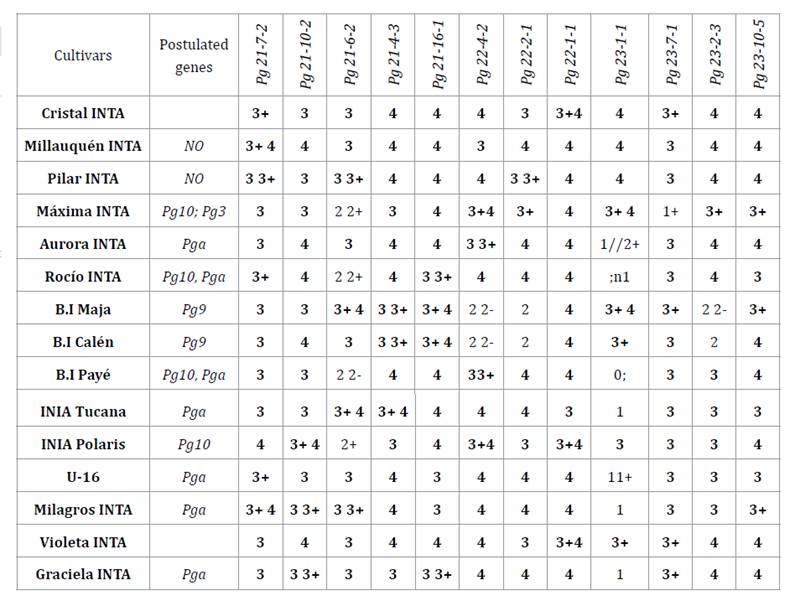
* *B.I.: Bonaerense INTA. * Seedlings showing infection types of 0, 0;, 1, and 2 and their modifications (;1+, 11+, 22+ T... etc.) are classified as resistant, while those with ITs of 3 or 4 are considered susceptible. Cells highlighted in bold represent susceptible IT.
*Las plántulas que muestran tipos de infección (IT) 0, 0;, 1 y 2 y sus modificaciones (;1+, 11+, 22+ T... etc.) se clasifican como resistentes, mientras que aquellas con IT de 3 o 4 se consideran susceptibles. Las celdas resaltadas en negrita representan los tipos de infección susceptibles.
Based on the 2005 race set, resistance gene postulation indicated the presence of Pg10 + Pga in Rocío INTA and B.I. Payé; Pga in Aurora INTA, B.I. Canaí, U16, Milagros INTA, and Graciela INTA; Pg10 in Máxima INTA and INIA Polaris; and Pg9 in B.I. Calén and B.I. Maja. Some cultivars likely carry additional resistance genes, that could not be postulated due to the absence of corresponding virulence in the 2005 Pg population. Furthermore, the twelve races set from the 2021-2023 Pg population confirmed the presence of Pg10, Pga, and Pg9 in these cultivars; Pg3 in Máxima INTA, whereas Pg2, Pg4, Pg8, Pg15, and Pg16 appear to be absent in the older cultivars.
Seedling Resistance in Modern Cultivars and Breeding Lines
The seedling resistance of modern oat cultivars and lines to twelve Pg races identified during 2021-2023 is detailed in table 3, table 4. Out of 264 cultivar × race interactions, 259 (≈98%) were susceptible, indicating that effective seedling resistance is largely absent in modern cultivars (table 3). Only a few cultivar-race combinations showed resistant reactions: Carlota INTA and B.I. Aikén were resistant to race Pg23-1-1, consistent with the presence of the Pga resistance complex, while Liliana INTA, María INTA, and B.I. Lola were resistant to Pg21-16-2, suggesting that they may carry Pg10. The remaining cultivars were susceptible to all races.
Table 3. Seedling response of modern Argentine cultivars against races of Puccinia graminis identified in 2021, 2022 and 2023 in Argentina.
Tabla 3. Respuesta en plántula de nuevos cultivares argentinos frente a doce razas de Puccinia graminis identificadas en 2021, 2022 y 2023 en Argentina.
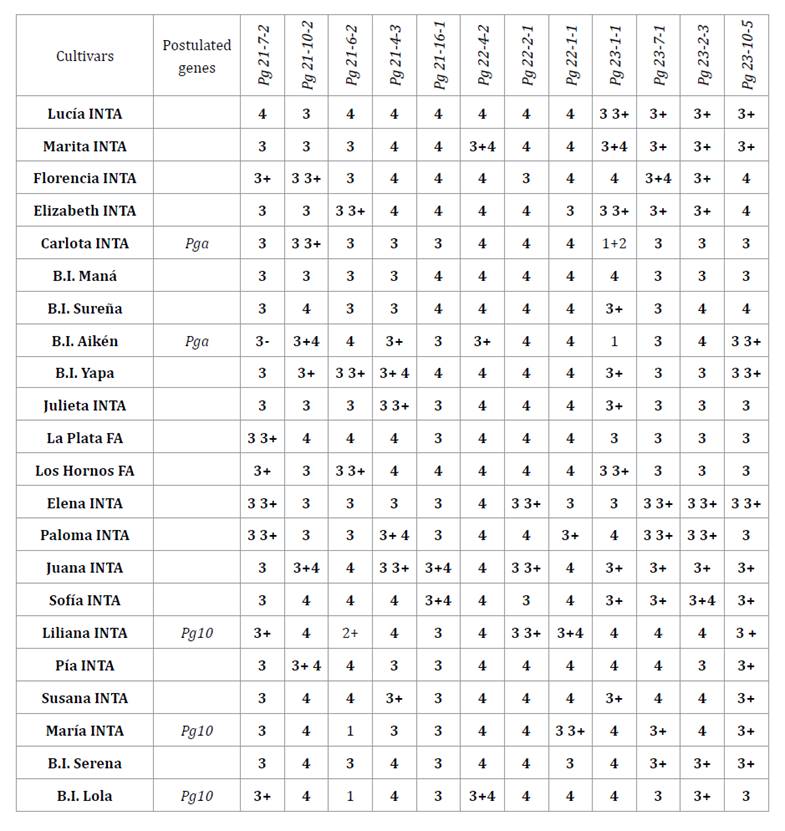
* *B.I.: Bonaerense INTA. Seedlings showing infection types of 0, 0;, 1, and 2 and their modifications (;1+, 11+, 22+ T... etc.) are classified as resistant, while those with ITs of 3 or 4 are considered susceptible. Cells highlighted in bold represent susceptible IT.
*Las plántulas que muestran tipos de infección (IT) 0, 0;, 1 y 2 y sus modificaciones (;1+, 11+, 22+ T... etc.) se clasifican como resistentes, mientras que aquellas con IT de 3 o 4 se consideran susceptibles. Las celdas resaltadas en negrita representan los tipos de infección susceptibles.
Among the tested lines, 221 of 240 interactions (≈ 92 %) were susceptible (table 4). However, some lines exhibited race-specific resistance. The FA45 line displayed the broadest resistance, being effective against four of the twelve races, followed by Bv99-19, Bv131-19, FA19, Bw16-15, and Bw15-108, which each showed resistance to two races. Based on the resistance spectra and known differential reactions, we postulate that the genes Pg10, Pga, Pg9, and Pg15 are present in certain breeding lines.
Table 4. Seedling response of oat lines against races of Puccinia graminis identified in 2021, 2022 and 2023 in Argentina.
Tabla 4. Respuesta en plántula de líneas avanzadas de avena frente a doce razas de Puccinia graminis identificadas en 2021, 2022 y 2023 en Argentina.
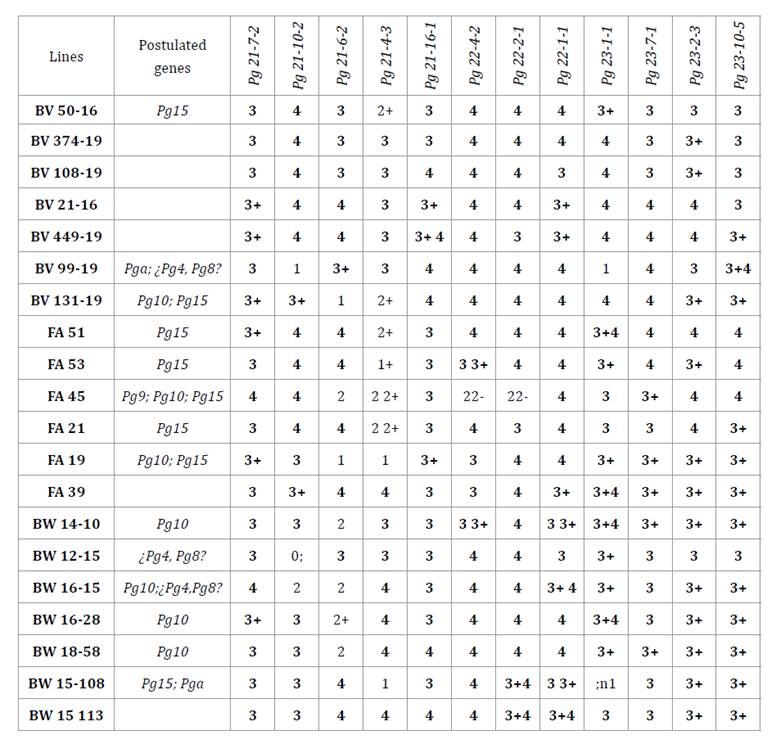
* Seedlings showing infection types (IT) of 0, 0;, 1, and 2 and their modifications (;1+, 11+, 22+ T... etc.) are classified as resistant, while those with ITs of 3 or 4 are considered susceptible. Cells highlighted in bold represent susceptible IT.
*Las plántulas que muestran tipos de infección (IT) 0, 0;, 1 y 2 y sus modificaciones (;1+, 11+, 22+ T... etc.) se clasifican como resistentes, mientras que aquellas con IT de 3 o 4 se consideran susceptibles. Las celdas resaltadas en negrita representan los tipos de infección susceptibles.
Adult Plant Resistance
The ANOVA results revealed highly significant effects of years (p<0.0001) and genotypes (p<0.0001) treatments, and the year x genotype interaction (p<0.0001). The coefficient of variation was 10.2% (Supplementary Table S3). Mean disease severity was higher in 2023 (33.4%) than in 2022 (26.7%) (LSD= 0.78; ANOVA not shown), with severity values ranging from 2.5 to 95%, and 10 to 60% for 2023 and 2022, respectively (table 5 and table 6). The year x genotype interaction was explained by contrasting responses across genotypes. Some genotypes (e.g., Milagros: 60% in 2022 vs. 15% in 2023; Payé: 50% vs. 15%; Aikén: 30% vs. 15%; Yapa: 20% vs. 5%; Lucía: 27.5% vs 20%), and lines such as Bv449-19 (60% vs. 32.5%), and FA51 (22.5% vs. 2.5%), exhibited lower severity in 2023 than in 2022. By contrast, other genotypes-Aurora (22.5% vs. 50%), Carlota (22.5% vs. 80%), Liliana (37.5% vs. 80%), Serena (35% vs 80%), and Lola (20% vs. 80%)-displayed significantly greater severity in 2023 compared to 2022. Additionally, some cultivars (e.g., María: 60% in 2022 and 95% in 2023; Pía: 60% and 80%; Violeta: 60% and 80%) reached the highest severity levels in both years. In contrast, cultivars such as Máxima, Tucana, Polaris, U16, Maná, La Plata FA, and the lines Bv50-16 and Bv108-18 showed no significant differences between years and consistently maintained severity values below 20%. Some genotypes performed favorably only in a single year: Rocío (10%) and Juana (15%) in 2022, and Calén (20%) and Lucía (20%) in 2023. Moreover, Los Hornos FA and La Plata FA exhibited consistently low severity values (20-30%) across both years.
Table 5. Severity (%) in Argentine oat cultivars against natural Puccinia graminis infections in 2022 and 2023, at the J. Hirschhörn Experimental Station, Los Hornos, Argentina.
Tabla 5. Severidad (%) en cultivares argentinos de avena frente a infecciones naturales de Puccinia graminis en 2022 y 2023, en la Estación Experimental J. Hirschhörn, Los Hornos, Argentina.
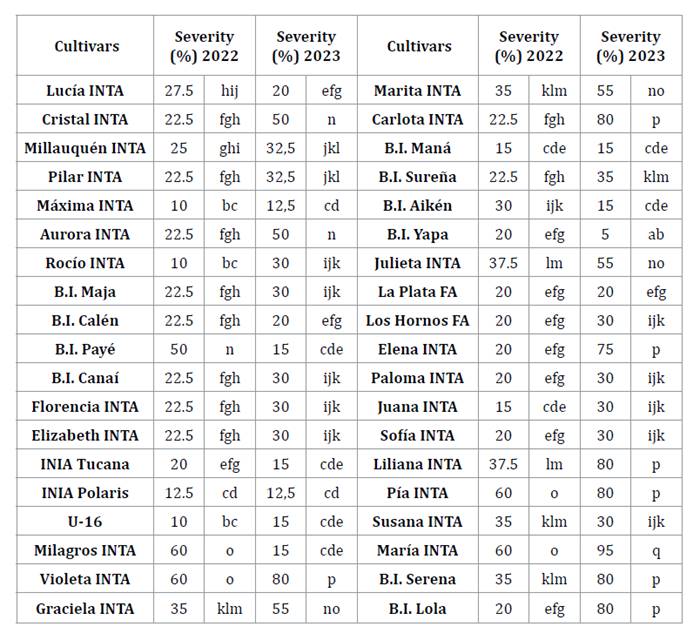
*Different letters show significant differences in severity between the years and genotypes treatments, LSD P<0.05.
* Letras diferentes muestran diferencias significativas en severidad entre los años y genotipos de tratamiento, LSD P<0,05.
Table 6. Severity (%) in Argentine oat lines against natural Puccinia graminis infections in 2022 and 2023, at the J. Hirschhörn Experimental Station, Los Hornos, Argentina.
Tabla 6. Severidad (%) en líneas argentinas de avena frente a infecciones naturales de Puccinia graminis en 2022 y 2023, en la Estación Experimental J. Hirschhörn, Los Hornos, Argentina.
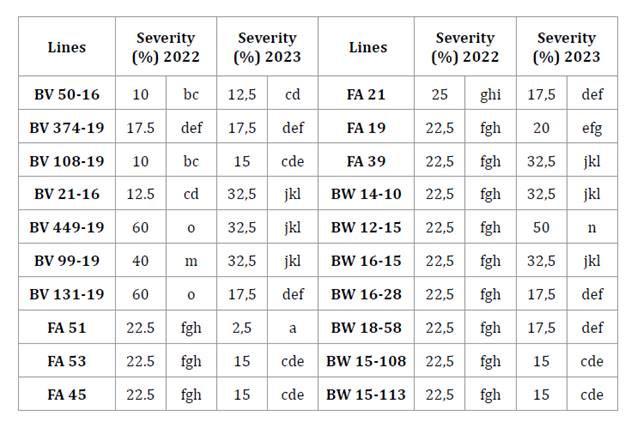
*Different letters show significant differences in severity between the years and genotypes treatments, LSD P<0.05.
* Letras diferentes muestran diferencias significativas en severidad entre los años y genotipos de tratamiento, LSD P<0,05.
Discussion
Oat stem rust is a destructive disease that has recently emerged as a significant threat to oat cultivation in some areas of Argentina, making a comprehensive evaluation of local germplasm crucial for resistance breeding programs and effective disease management strategies. This study assessed 58 Argentine oat genotypes against the prevalent Pg races identified in Argentina during 2021, 2022, and 2023. Resistance gene postulation revealed the presence of Pg10+Pga in Rocío INTA and B.I. Payé, Pg10+Pg3 in Máxima INTA; Pga in Aurora INTA, B.I. Canaí, U16, Milagros INTA, Graciela INTA, Carlota INTA and B.I. Aikén; Pg10 in INIA Polaris, Liliana INTA, María INTA and B.I. Lola; and Pg9 in B.I. Calén and B.I. Maja. Notably, Pg2, Pg4, Pg8, Pg15, and Pg16 were not detected in any of the cultivars. Moreover, the use of races from the current Pg population confirmed the presence of Pg10, Pga, Pg9, and Pg15 in breeding lines. Identifying and characterizing these resistance genes in Argentine genotypes is valuable for understanding the genetic resources within the national germplasm and for establishing optimal breeding strategies. By examining the genes present in breeding germplasm, breeders can identify sources of resistance with diverse genetic backgrounds, thereby enhancing genetic diversity and improving the resilience of oat cultivars against evolving Pg races. However, our findings suggest that certain genotypes harbor resistance genes that could not be fully characterized using the current set of Pg differential lines available in Argentina, underscoring the need for further research to determine whether these factors correspond to previously described genes or represent novel resistance mechanisms. In this context, given the proven effectiveness of Pg6 in China (24) and its success in Brazil (18), future studies should evaluate its effectiveness against local Pg races in Argentina and its potential use in oat breeding programs. Furthermore, we evaluated the seedling resistance of commercial oat cultivars released over more than 20 years ago against Pg populations, and the results reveal a notable temporal shift in oat cultivar resistance. In 2005, most oat cultivars exhibited resistance to the majority of Pg races, with Rocío INTA and B.I. Payé resisting all ten races tested, and others resisting to between six and nine races. However, when tested against the 2021-2023 Pg population (twelve races selected based on their high frequency in Argentine surveys), the resistance of these older cultivars declined markedly. Only cultivars, such as B.I. Maja and B.I. Calén, retained resistance to a limited number of races, while others increased susceptibility, with Violeta INTA and Cristal INTA becoming completely susceptible to all tested races. These findings confirm a clear shift in Pg population dynamics, whereby newly emergent races have overcome resistance genes (e.g. Pg9, Pg10, Pga) that were once effective, rendering older cultivars vulnerable. We suggest that reliance on a narrow set of cultivars or resistance genes in Argentine germplasm has promoted the continuous selection of Pg phenotypes virulent to those genes, a pattern also reported in Puccinia coronata populations (Dietz et al. 2023). Likewise, Meldrum and Oates (1997) documented that the release of oat cultivars carrying the Pg12 gene (also known as Pga) in Australia during the early 1990s resulted in the emergence and increased frequency of isolates virulent to this gene. In South Africa, the deployment of cultivars with certain Pg genes increased the frequency of isolates virulent to Pg9 and led to the first report of virulence to Pg13 (4). In Argentina, the introduction and widespread adoption of genotypes carrying Pg genes, sourced from the Quaker Oat Nursery, either as cultivars or parental lines in germplasm, combined with large-scale cultivation, likely promoted cycles of selection and displacement of virulence phenotypes, consistent with Person’s conceptual model (31). This phenomenon of directional selection occurs when pathogen isolates virulent to deployed resistance genes gain a selective advantage (survival, reproduction, spread), increasing their frequency in the population and ultimately leading to the breakdown of previously effective resistance genes (7, 8, 12).
The results of seedling resistance testing against the current Pg population indicate that modern oat cultivars possess limited resistance: in fact, 98% of host-pathogen interactions showed susceptible reactions, highlighting the vulnerability of current oat germplasm to stem rust. Similarly, resistance was generally low among the tested lines, except for line FA 45, which exhibited resistance to four Pg races.
Moreover, this study evaluated resistance under field conditions against natural Pg infections in 2022-2023. We observed differences in disease levels between those years, manifested in varying severity values. Environmental conditions play a critical role in disease development, with factors such as temperature, humidity, and rainfall influencing pathogen propagation and host susceptibility (30). Differences in weather patterns between 2022 and 2023 may have contributed to the higher disease pressure observed in 2023, thereby leading to greater severity levels. Despite higher precipitation in 2023, mean temperatures were substantially higher at the end of the growing cycle in 2022, which may explain why differences in mean severity between both years were modest.
The year × genotype interaction reflected differential performance of cultivars between 2022 and 2023. For example, Milagros INTA, B.I. Payé, B.I. Aikén, B.I. Yapa, and Lucía INTA showed higher severity in 2022, whereas Aurora INTA, Carlota INTA, Liliana INTA, B.I. Serena, and B.I. Lola exhibited significantly higher severity in 2023. These results suggest shifts in Pg race prevalence and virulence between the two years. It is plausible that certain oat cultivars may display higher susceptibility to the prevalent races each year leading to differences in disease severity. Additionally, the emergence of new pathogen races with distinct virulence profiles in 2023 could have further exacerbated disease severity for some genotypes, as they may lack effective resistance mechanisms against these novel races. Our findings also indicate that resistance observed in some genotypes at the seedling stage under greenhouse conditions may explain their favorable behavior in certain growing seasons.
Cultivars such as María (60 and 95% severity in 2022 and 2023), Pía INTA (60 and 80%), and Violeta INTA (60 and 80%) exhibited the highest severity levels across both years. In contrast, cultivars such as Máxima INTA, INIA Tucana, INIA Polaris, U16, B.I. Maná, La Plata FA, and lines Bv50-16 and Bv108-18 consistently showed severity levels below 20%, highlighting their potential value under Argentine agronomic conditions. Their demonstrated resistance suggests the presence of inherent genetic traits conferring durable protection against stem rust, consistent with the concept of non–race specific resistance or adult plant resistance (APR). Unlike race-specific resistance, APR offers a broader and more durable spectrum of protection against pathogens (22). Although the sources of stem rust include Pg11 and Pg17 (16), genotypes carrying Pg17 have been reported to exhibit high disease severity levels (70-90%) in field trials conducted in Canada (36). Given the complex nature of disease resistance (shaped by genetic, environmental, and pathogen factors) continued multi-environment evaluations are recommended to assess the stability and performance of resistance traits under diverse conditions.
Conclusion
This study provides new insights into the response of oat genotypes under stem rust pressure in Argentina and identifies promising cultivars and lines. Such information is critical for breeding programs and integrated crop management strategies. Moreover, our findings underscore the need to expand efforts to discover new resistance genes and to deepen understanding of the APR genetic mechanisms underlying resistance to stem rust in oats.
Acknowledgements
We wish to thank Mauro Desch and Jesús Asencio, staff from the rust laboratory belonging to the National Institute for Agricultural Technology (INTA) in Bordenave, Argentina.
1. Ahmad, A.; Anjum, F. M.; Zahoor, T.; Nawaz, H.; Ahmed, Z. 2010. Extraction and characterization of β-glucan from oat for industrial utilization. International Journal of Biological Macromolecules. 46: 304-309.
2. Anderson, J. W.; Baird, P.; Davis, R. H.; Ferreri, S.; Knudtson, M.; Koraym, A.; Walters, V.; Williams, C. L. 2009. Health benefits of dietary fiber. Nutrition reviews. 67:188-205.
3. Balzarini, M. G.; Di Rienzo, J. A. 2016. InfoGen versión 2016. FCA. Universidad Nacional de Córdoba. Argentina. https://www.info-gen.com.ar/
4. Boshoff, W. H.; Visser, B.; Terefe, T.; Pretorius, Z. A. 2019. Diversity in Puccinia graminis f. sp. avenae and its impact on oat cultivar response in South Africa. European journal of plant pathology. 155: 1165-1177.
5. Campos, P.; Gimenez, F.; Tomaso, J.; Brach, A. 2008. Caracterización de la población patógena de Puccinia coronata (Roya de la hoja de la avena), en las campañas 2004-05-06 y comportamiento de cultivares frente al patógeno. VII Congreso Nacional de Trigo. V Simposio Nacional de Cereales de Siembra Otoño-Invernal. I Encuentro del MERCOSUR. Santa Rosa. La Pampa. p. SO4. https://www.researchgate.net/publication/371632340_Caracterizacion_de_la_poblacion_patogena_de_Puccinia_coronata_roya_de_la_hoja_de_la_avena_en_las_campanas_2004-05-06_y_comportamiento_de_cultivares_frente_al_patogeno
6. Campos, P.; Gimenez, F. 2011. Caracterización de la población patógena de Puccinia graminis f.sp. avenae, agente causal de roya del tallo de avena en Argentina en los años 2007-2008 y 2009. Actas del 2º Congreso Argentino de Fitopatología. p. 198. https://aafitopatologos.com.ar/wp/wp-content/uploads/2014/11/Libro-de-res%C3%BAmenes-2%C2%B0-CAF.pdf
7. Carson, M. L. 2011. Virulence in oat crown rust (Puccinia coronata f. sp. avenae) in the United States from 2006 through 2009. Plant Disease. 95:1528-1534. https://doi.org/10.1094/PDIS-09-10-0639
8. Chong, J.; Gruenke, J.; Dueck, R.; Mayert, W.; Fetch, J. M.; Mccartney, C. 2011. Virulence of Puccinia coronata f sp. avenae in the Eastern Prairie Region of Canada during 2007-2009. Canadian Journal of Plant Pathology. 33: 77-87.
9. Dietz, J. I. 2018. Características de sanidad, rendimiento y calidad en genotipos de avena en filiales avanzadas de un programa de mejoramiento. Trabajo final de Maestría en Protección vegetal. Universidad Nacional de La Plata. 153p. https://doi.org/10.35537/10915/68021
10. Dietz, J. I.; Schierenbeck, M.; Simón, M. R. 2019. Impact of foliar diseases and its interaction with nitrogen fertilization and fungicides mixtures on green leaf area dynamics and yield in oat genotypes with different resistance. Crop Protection. 121: 80-88. https://doi.org/10.1016/j.cropro.2019.03.017
11. Dietz, J. I.; Da Silva, L.; Schierenbeck, M.; Simón, M. R. 2022. Shading in the late stem elongation period generate the greatest grain yield reduction in oat (Avena sativa L.). Archives of Agronomy and Soil Science. 69(10): 1906-1919. https://doi.org/10.1080/03650340.2022.2126458
12. Dietz, J. I.; Da Silva, L. V.; Simón, M. R.; Campos, P. 2023. Evolution of the Puccinia coronata population in Argentina and identification of resistance genes useful in oat breeding programs. European Journal of Plant Pathology. https://doi.org/10.1007/s10658-023-02775-z
13. Dietz, J. I.; Da Silva, L. V.; Simón, M. R.; Campos, P. 2025a. Virulence characterization of Puccinia graminis f. sp. avenae in Argentina. European Journal of Plant Pathology. 172: 305-314. https://doi.org/10.1007/s10658-025-03004-5
14. Dietz, J. I.; Da Silva, L. V.; Schierenbeck, M.; Pardi, M.; Simón, M. R. 2025b. Photoperiod and vernalization requirements in Argentinian oat genotypes. Agronomy Journal. 117(3): e70078. https://doi.org/10.1002/agj2.70078
15. FAO (Food and Agriculture Organization of the United Nations). 2024. Food and agriculture data. http://www.fao.org/
16. Fetch, T. G.; Jin, Y. 2007. Letter code system of nomenclature for Puccinia graminis f.sp. avenae. Plant Disease. 91: 763-766. https://doi.org/10.1094/PDIS-91-6-0763
17. Gallaher, D. D. 2000. Dietary fiber and its physiological effects. In: M Schmidt & T Labuza (eds) Essentials of functional foods. Aspen Publishers, Inc. 271-292.
18. Gnocato, F. S. 2017. Ferrugem do colmo da aveia: fatores genéticos da virulência do patógeno e da resistência do hospedeiro. Tesis de Doctorado en Fitotecnia. Universidade Federal Do Rio Grande Do Sul. 113p. http://hdl.handle.net/10183/163923
19. Harder, D. 1994. Identification of new races of Puccinia graminis f.sp. avenae. Plant Disease. 78: 367-368.
20. Head, D. S.; Cenkowski, S.; Arntfield, S.; Henderson, K. 2010. Superheated steam processing of oat groats. LWT. Food Science Technology. 43: 690-694.
21. Huerta-Espino, J.; Ramírez-Ramírez, E. E.; Leyva-Mir, S. G.; Villaseñor-Mir, H. E.; Santa-Rosa, R. H.; Martínez-Cruz, E.; Rodríguez-García, M. F. 2022. Resistance evaluation of oat genotypes to stem rust (Puccinia graminis f. sp. avenae). Mexican Journal of Phytopathology. 40: 221-229. https://doi.org/10.18781/R.MEX.FIT.2202-1
22. Leonard, K. J. 2002. Oat lines with effective adult plant resistance to crown rust. Plant Disease, 86: 593-598.
23. Leyva, M. S.; Espitia, R. E.; Villaseñor, M. H. E.; Huerta, E. J. 2004. Pérdidas ocasionadas por Puccinia graminis f. sp. avenae Ericks. & Henn., causante de la roya del tallo en seis cultivares de avena (Avena sativa L.) en Valles Altos de México. Revista Mexicana de Fitopatología. 22:166-171. https://www.redalyc.org/pdf/612/61222202.pd
24. Li, T.; Xu, Y.; Zhang, X.; Wu, X.; Zhang, Y.; Xuan, Y.; Wang S. 2022. Virulence Characterization of Puccinia graminis f. sp. avenae and Resistance of Oat Cultivars in China. Plant Disease. 106: 901-905. https://doi.org/10.1094/PDIS-06-21-1239-RESECTIONSABSTRACTPDFSUPPLEMENTAL
25. MAGyP (Ministerio de Agricultura, Ganadería y Pesca). 2024. Estimaciones agrícolas. http://datosestimaciones.magyp.gob.ar/reportes.php?reporte=Estimaciones
26. Mariscal, A. L.; Huerta, E. J.; Villaseñor, M. H.; Leyva, M. S.; Sandoval, I. J.; Benítez, R. I. 2011. Selección de genotipos de avena para la identificación de razas de roya del tallo. Revista Mexicana de Ciencias Agrícolas. 2: 593-600. https://doi.org/10.29312/remexca.v2i4.1646
27. Martens, J. 1985. Oat stem rust. In: The cereal rusts. Roelfs A & Bushnell W (eds). Elsevier. 103-129.
28. Martinelli, J. 2000. Major diseases on oats in South America. In: Proc. VI International Oat Conference. Canterburry. p. 277-283.
29. Meldrum, S.; Oates, J. D. 1997. Oat stem rust. Annual report, Cereal Rust Survey 1996-97. Cobbity, University of Sydney. Camden: Plant Breeding Institute. p. 11-13.
30. Mideksa, T.; Fininsa, C.; Hundie, B. 2018. Analysis of climate variability effects on wheat stem rust (Puccinia graminis f. sp tritici) epidemics in Bale and Arsi Zones of Oromia Regional State, Ethiopia. American Journal of Biological and Environmental Statistics, 4: 49-65.
31. Person, C. 1966. Genetic polymorphism in parasitic systems. Nature. 212: 266-267.
32. Peterson, R.; Campbell, A.; Hannah, A. 1948. A diagrammatic scale for estimating rust intensity on leaves and stems of cereals. Canadian Journal of Research. 26: 496-500. https://doi.org/10.1139/cjr48c-033
33. Rasane, P.; Jha, A.; Sabikhi, L.; Kumar, A.; Unnikrishnan, V. S. 2015. Nutritional advantages of oats and opportunities for its processing as value added foods-a review. Journal of food science and technology. 52: 662-675.
34. Roelfs, A. P.; Long, D. L. 1980. Analysis of recent oat stem rust epidemics. Phytopathology. 70: 436-440.
35. Stakman, E. C.; Stewart, D. M.; Loegering, W. Q. 1962. Identification of physiologic races of Puccinia graminis var. tritici. Agricultural Research Service Technical Bulletin. No. E-617.
36. Steinberg, J. G.; Fetch, J. M.; Fetch Jr., T.G. 2005. Evaluation of Avena spp. accessions for resistance to oat stem rust. Plant disease. 89: 521-525.
37. Van Niekerk, B. D.; Pretorius, Z. A.; Boshoff, W. H. P. 2001. Potential yield losses caused by barley leaf rust and oat leaf and stem rust to South African barley and oat cultivars. South African Journal of Plant and Soil. 18: 108-113.
38. Villaseñor, M. H.; Huerta, E. J.; Rodríguez, G. M.; Hortelano, S. R.; Espitia, R. E.; Martínez, C. E. 2021. Mejoramiento genético de avena en México. Revista Mexicana de Ciencias Agrícolas. Publicación especial. 25: 21-25. https://doi.org/10.29312/remexca.v12i25.2808
39. Wehrhahne, L.; Storm, A. 2014. Evaluación de avena para producción de grano. http://inta.gob.ar/sites/default/files/script-tmp-inta_barrow_-_evaluacin_de_avena
40. Zadoks, J. C.; Chang, T.; Konzak, C. 1974. A decimal code for the growth stages of cereals. Weed Research. 14: 415-421.
Statements and declarations
The authors declare that they do not have any actual or potential conflict of interest.
Funding
This study was funded by projects from ANPCyT (PICT-2021-I-A-00770), UNLP (A352-19 and A 393-25), and CICPBA (RESO 2022-517-GDEBA-CIC).
https://drive.google.com/file/d/1hXxUiB2ctCdVh7X8Vgkuj9axoxLutjDY/view?usp=sharing