Rev. FCA UNCuyo | 2026 | 58(2) | ISSN 1853-8665
Genetics and Plant Breeding
https://doi.org/10.48162/rev.39.222
Analysis of Grain-Anthocyanins in a Population of Maize Zea mays L. “Elotes Occidentales” Selected to Stabilize Color and Increase Anthocyanin Content
Análisis de antocianinas en el grano de una población de maíz Maize Zea mays L. raza elotes occidentales seleccionada para estabilizar el color e incrementar contenido de antocianinas
Gabriela Ballesteros-Martínez 1,
Yolanda Salinas-Moreno 2,
José Luis Ramírez Díaz 2,
Miguel Angel Martínez-Ortiz 2*
1 Universidad de Guadalajara. Instituto de Manejo y Aprovechamiento de Recursos Fitogenéticos (IMAREFI). Centro Universitario de Ciencias Biológicas y Agropecuarias (CUCBA). Departamento de Desarrollo Rural Sustentable Camino Ing. Ramón Padilla Sánchez. N° 2100. Predio Las Agujas. Nextipac. Zapopan. Jalisco. México. C. P. 45510.
2 Instituto Nacional de Investigaciones Forestales, Agrícolas y Pecuarias (INIFAP). Programa de maíz. Campo Experimental Centro Altos de Jalisco. Av. Biodiversidad 2470. Rancho Las cruces. Tepatitlán de Morelos. Jalisco. C. P. 47600.
* martinez.miguel@inifap.gob.mx
Abstract
This study analyzed grain anthocyanin contents of an Elotes Occidentales (EO) maize population subjected to recurrent selection to stabilize grain color and increase anthocyanin content. The original EO population was derived from native varieties collected in Jalisco, Mexico. This original (O) population contributed three subpopulations selected for grain color: a) light (OPL), b) intermediate (OPI), and c) dark (OPD). Recurrent selection cycles of S3 lines within each subpopulation allowed selecting grain color in each selfing generation. Grains of the synthetic populations of each grain color, (FPL, FPI, and FPD) were analyzed for color, size, total anthocyanin content (TAC), and pigment profile. After one cycle of recurrent selection, grains of OPL were lighter, while OPD hue changed from orange-yellow to purple-red. Grain size decreased in all subpopulations, whereas TAC was not significantly affected. The anthocyanin profile was modified for relative proportions of some pigments. Selection cycles stabilized grain color in the subpopulations, decreased grain size, and did not affect anthocyanin content.
Keywords: Zea mays L., recurrent selection, pigments, quality, pozole
Resumen
El grano de la raza de maíz Elotes Occidentales (EO) se consume como elote y pozole, este último es un platillo típico de la cocina mexicana. El objetivo del estudio fue analizar las antocianinas del grano de una población de maíz EO mejorada por selección recurrente para estabilizar el color del grano y aumentar el contenido de antocianinas. La población original EO se formó a partir de variedades nativas colectadas en Jalisco, México. De la población original (O) de EO se seleccionaron, por color de grano, tres subpoblaciones: a) claros (OPL), b) intermedios (OPI), y c) oscuros (OPD). En cada subpoblación se hizo un ciclo de selección recurrente de líneas S3, seleccionando por color de grano en cada generación de autofecundación. El grano de las subpoplaciones finales (F), FPL, FPI y FPD se analizó por color, tamaño, contenido de antocianinas (TAC) y perfil cromatográfico de antocianinas. Al final del ciclo de selección recurrente, el grano de la subpoblación OPL se tornó más claro, en tanto que en la población OPD el tono de color del grano cambió de naranja amarillento a un tono rojo morado. El tamaño del grano se redujo en las tres subpoblaciones, mientras que el TAC no fue afectado. El perfil de antocianinas no se modificó, solo la proporción relativa de algunos de los pigmentos. La selección estabilizó el color en las subpoblaciones, pero disminuyó el tamaño del grano sin aumentar el contenido de antocianinas.
Palabras clave: Zea mays L., selección recurrente, pigmentos, calidad, pozole
Originals: Received: 30/08/2024 - Accepted: 20/04/2026
Introduction
Mexico has a high maize (Zea mays L.) diversity, with 64 documented races (16). This diversity stems from agroecosystemic variation and unique connections between each race and traditional Mexican dishes (32). The Elotes Occidentales race, distributed from 100-to1500 m a. s. l. in the states of Michoacán, Jalisco, Guanajuato, and Nayarit México (31), is primarily used for pozole preparation due to its floury endosperm and large cherry-red grain (30). Although grain color is not a primary consumer preference, deep-red grains are favoured.
Recurrent selection is a cyclical breeding method used to improve quantitative traits by repeatedly selecting superior individuals from a population, intermating them, and selecting again from the progeny (11, 12, 21). This method has successfully increased carotenoid content in orange waxy maize grain (17). Rodríguez et al. (2013) conducted three cycles of recurrent selection on a maize population with red, purple, and blue grains by visually selecting grains with intense color. However, anthocyanin content only increased in the first cycle.
Anthocyanins are water-soluble pigments produced by plants via the phenylalanine pathway (33). In maize, these pigments are in vegetative or reproductive tissues, accumulating in grain pericarp, aleurone layer, or both (25). The number of genes involved in anthocyanin synthesis and accumulation in grain tissues ranges from 15 (5) to 32 (4), including structural, regulatory, and transport/storage genes. Anthocyanin accumulation is a quantitative trait influenced by genetic and environmental factors (22). High altitude and luminosity, and low night temperatures generally enhance pigment accumulation in a genotype-dependent manner. Anthocyanin levels in 34 Elotes Occidentales landraces grown in different locations in Mexico ranged from 39.6 to 266.4 mg pelargonidin 3-glucoside (P3G) equivalents/kg dry weight (DW) (6). A non-conventional hybrid derived from the Elotes Occidentales race showed an anthocyanin content of 160–180 mg cyanidin-3-glucoside equivalents (CGE)/kg DW across two growing cycles (9).
Landraces of Elotes Occidentales maize are cultivated by small farmers in different regions of Mexico. Grains are commercialized in regional markets or in small enterprises. Consumers demand big, deep cherry grains for pozole preparation. However, no variety or cultivar fulfils these requirements, thus this study used the recurrent selection method for stabilizing grain color and increasing anthocyanin content in a population of Elotes Occidentales maize race.
Materials and Methods
Genetic Material
The original germplasm consisted of a population of Elotes Occidentales (EO) maize designated Purple Eight-Row Pozole Maize (PM8H12T), generated in 2009 through genetic recombination of several landraces of the same maize race collected in Jalisco, Mexico. This original population (OP) derived by visual selection of color intensity, in three groups or subpopulations: light (OPL), pale pink to deep purple seeds; intermediate (OPI), cherry red to deep red seeds; and dark (OPD), blue-purple to deep blue seeds.
Genetic Methodology
Maize inheritance of aleurone color involves up to 15 genes, including seven structural genes, six regulatory factors, and two genes for pigment transport (5). Color was fixed and stabilized in the three selected subpopulations via the pedigree method, selecting progenies with the defined color categories (light, intermediate, and dark). Selection was conducted at the experimental station of the Centro Universitario de Ciencias Biológicas y Agropecuarias, de la Universidad de Guadalajara, in Zapopan, Jalisco, Mexico (20°43’ N, 103°23’ W; 1650 m altitude; 18°C average annual temperature; 950 mm annual precipitation).
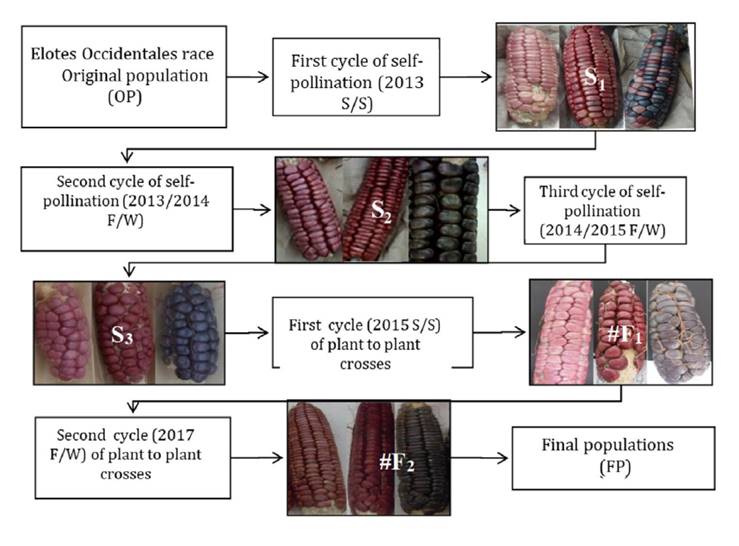
During Spring/Summer 2013 (2013 S/S), 30 plants (S0) of each color category were planted in two-row plots (5 m length, 0.75 m inter-row spacing, 0.33 m plant distance, ≈ 40, 000 plants ha-1). S1 lines were obtained via the pedigree method at flowering. Twenty S1 lines were selected based on color and desirable agronomic traits: plant height, cob height, lodging, and fungal cob damage. During Fall-Winter 2013-2014, the experiments were conducted under greenhouse conditions. The selected S1 families were planted in trays (10 seeds per family). When seedlings reached a height of 15-20 cm, they were transplanted to the field, in the greenhouse, and self-pollinated to obtain the S2 generation, from which 20 families were re-selected. During Fall-Winter 2014-2015 (2014-2015 F/W), these S2 families were grown, self-pollinated, and 20 S3 families with desired color intensity and desirable agronomic traits were again selected per subpopulation.
In the S/S 2015 cycle, the 20 S3 lines from each subpopulation were planted in a greenhouse as described for S1 generation. During flowering, plant-to-plant crosses were performed between families, avoiding intra-family crosses. The resulting F1 from each subpopulation (OPL, OPI, and OPD) was harvested and shelled in masse. In the Fall/Winter 2017 cycle (2017 F/W), F1 seed samples from each population were sown in the greenhouse, followed by plant-to-plant crosses within each population, obtaining F2 seeds. This completed the first selection cycle (C1) derived from the S3 OPL, OPI, and OPD populations, designated as FPL, FPI, and FPD, respectively (“F” indicating the populations). Figure 1, summarizes the self-pollination and plant-to-plant cross processes.
S/S: Spring:Summer, F/W: Fall:Winter.
S/S: primavera:verano, F/W: otoño:invierno.
Figure 1. Schematic stages followed from the original population of Elotes Occidentales maize to obtain the final selected population.
Figura 1: Esquema de las etapas seguidas desde la población original de maíz de la raza Elotes Occidentales, para llegar a la población final seleccionada.
Grain Variables by Color Subgroups of the Original and Selected Final Populations Grain Color
Grain color was measured with a colorimeter (Hunter Lab MiniScan XE Plus Model 45/0-L), on a Cielab scale with illuminant D/65 and 10°angle. Readings were taken on grain surfaces. Grains were placed on a gray plasticine base to simulate their real position in the cob (28). Parameters were: Luminosity (L *), a*, and b*. The L* indicates the capacity to reflect light, from zero for black to 100% for perfect white. The “a*” measures red in positive values (+ a*) and green in negative values (-a*). The “b*” varies from yellow on the positive side (+ b *) and blue on the negative side (-b*). Both a* and b*were used to calculate tone angle or tint “hue” (h°) expressed in degrees, and color saturation or color purity “chroma” (chroma), dimensionless. These variables were calculated according to McGuire (1992).
Weight of 100 Seeds
One hundred grains were manually counted and weighed on a semi-analytical balance (Sartorius, model BL610), in triplicate for each subgroup of the original and final populations.
Total Anthocyanins Content (TAC)
A sample of 25 grains from each color subgroup, from the original and final populations, was crushed and defatted using petroleum benzene in a Soxhlet system for 8 hours. The defatted samples were oven-dried at 37 ± 2°C for 14-16 hours, ground to 0.5 mm to determine moisture content. For anthocyanin extraction, 1 g of flour was mixed with 20 mL of methanol acidified with 1% trifluoroacetic acid (TFA), sonicated for 15 minutes, refrigerated for 105 minutes, and centrifuged. The supernatant was filtered and stored at -20°C. Total anthocyanin content (TAC) was measured using a spectrophotometer at 520 nm with a pelargonidin 3-glucoside (P3G) standard curve. Results were expressed in mg P3G equivalents per 100 g of dry weight (DW). Both extraction and quantification were done in duplicate.
HPLC Anthocyanin Analysis
Anthocyanin extracts were concentrated in a rotary evaporator (R-215 BUCHI, SW) and purified on an Amberlite XAD-7 resin column (Sigma-Aldrich, MN, USA). The resin was activated with methanol for 24 hours under refrigeration before use. The anthocyanin sample was applied to the column and washed repeatedly with 5% acetic acid. The column was then eluted with 5% methanol acidified with acetic acid. Before to HPLC analysis, the purified extract was concentrated with nitrogen gas and filtered with a 0.45 μm Millex filter (Millipore Corporation, M.A.). We used a Perkin Elmer series 200 (USA) equipped with a quaternary pump, degasser, UV-Vis detector with diode array (DAD), and autosampler, controlled by the TotalChrom® program. A Hypersil ODS-2 analytical column (250 x 46 mm) with 5 μm particle size, was used. Analysis followed the method described by Fossen et al. (2001), adjusted by Salinas et al. (2005). We applied a gradient system with two solvents: phase A: formic acid-water (HCOOH/H2O), in a 1:9 (v/v) ratio, and phase B: formic acid-water-methanol (HCOOH/H2O/MeOH), in a 1:4:5 (v/v/v) ratio. A linear gradient from 10% B to 100% B for 17 min was used, an isocratic elution for 4 min (100% B), and a linear gradient from 100% B to 10% B for 1 min. We used 20 μL samples, 1.2 mL min-1 flow rate, and 21 min run time. Column temperature was maintained at 25°C. This analysis was run in duplicate.
Commercial standards of cyanidin 3-glucoside (C3G), P3G, peonidin 3-glucoside (P3G), and malvidin 3-glucoside (M3G) (Polyphenols, Nw) were used for anthocyanin identification by comparing retention times with commercial standards. Spectra were obtained with the diode array detector and checked with previously reported information (14, 22, 35).
Statistical Analysis
A paired means analysis was carried out (t-Student, p≤0.05) with grain color, weight of 100 seeds, and total anthocyanin content from original and final populations, considering three replicates. Analyses were performed with Statistical Analysis System, SAS 9.2.
Results and Discussion
Grain Color and Weight of 100 Seeds
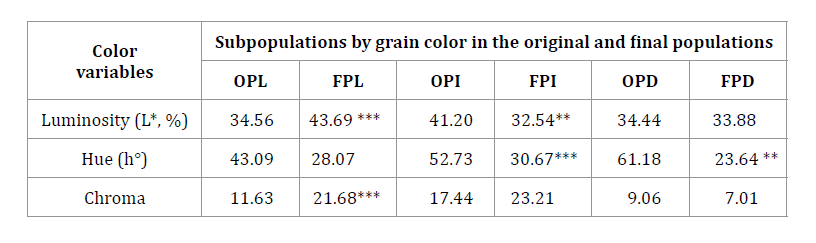
Table 1 shows color parameters of the original and final subpopulations of EO maize. In the light-colored subpopulations (OPL), luminosity (L*) and chroma increased after the selection cycle, indicating that FPL grains were lighter than those of the original population. Hue angle (h°) differences were not statistically significant.
Table 1. Student’s t-test for paired means of grain color in light (PL), intermediate (PI), and dark (PD) subpopulations of the original (OP) and final (FP) maize populations of Elotes Occidentales.
Tabla 1. Prueba t-Student para medias pareadas para color del grano en las subpoblaciones de color claro (PL), intermedio (PI) y oscuro (PD) de las poblaciones original (OP) y final (FP) de maíz de la raza Elotes Occidentales.
L: luminosity, h: hue angle or tone of color. Student’s t-test for paired means, p ≤ 0.05; ***, p ≤ 0.1;**.
L: luminosidad; h: ángulo de matiz o tono de color. Prueba t de Student para medias pareadas, p ≤ 0,05; ***, p ≤ 0,1; **.
In the intermediate-colored subpopulation (OPI), both L* and h° significantly decreased. These changes indicate that FPI grains were darker, with hue turned from orange (52.73°) to red-orange (30.67°). Selection cycles in the dark subpopulation (OPD), did not significantly affect L* or chroma, but decreased h° to a red-purple tone.
After selection, color was visually evaluated. All subpopulations achieved color stabilization. Color parameters in the light colored subpopulations with respect the OP are typical of the Elotes Occidentales maize race. García-Cruz et al. (2023) reported L* values ranging from 41.9 to 49.9%, h° from 51.4 to 65.0°, and chroma between 12.1 and 17.8 for grains of non-conventional maize hybrids of this race. In contrast, h° obtained for color subgroups of the FP were lower than those reported (9), indicating a more reddish grain tone in the studied hybrids.
Figure 2, shows visual grain-color changes among the three subgroups of OP and FP. Interestingly, in FPI only the pericarp was brick-orange, whereas the aleurone retained its characteristic cherry red of Elotes Occidentales. Even though this result is not relevant for pozole preparation -the process includes pericarp removal- the color perceived by consumers combines aleurone and pericarp colors. Grain reddish tones in FPI (figure 2) are not appreciated by consumers.
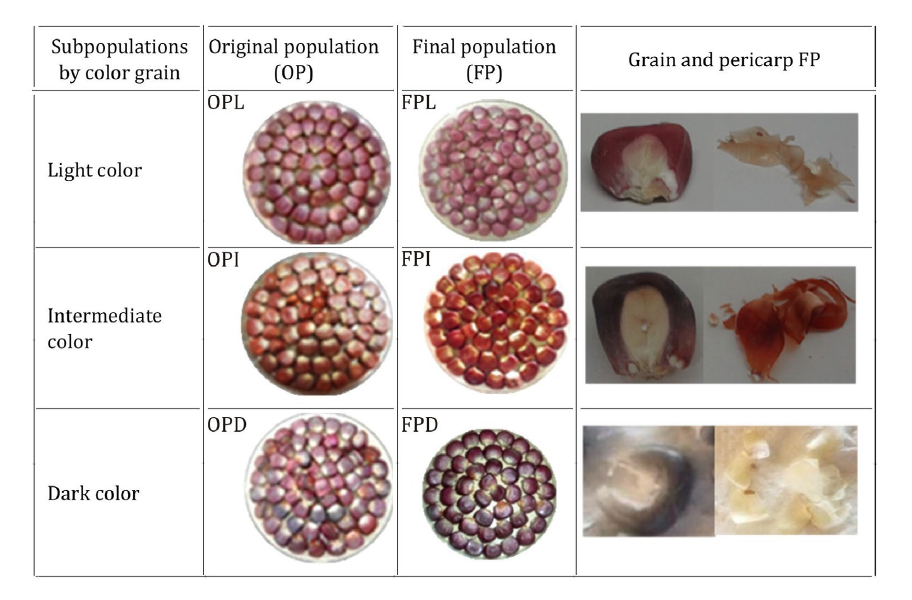
Figure 2. Different grain color subpopulations in the original (OPL, OPI, and OPD) and final populations (FPL, FPI, and FPD) of Elotes Occidentales race, and grain and pericarp of final subpopulations (FP).
Figura 2. Fotografías de las diferentes subpoblaciones por color de grano de maíz en las poblaciones originales (OPL, OPI y OPD) y finales (FPL, FPI y FPD) de la raza Elotes Occidentales y grano y pericarpio en los granos de las subpoblaciones finales (FP).
The 100-seed weight (100SW) was affected by the selection cycle, stabilizing grain color. In the OP, 100SW was similar among the three grain color subpopulations, averaging 60 g, similar to pevious reports Vázquez-Carrillo et al. (2024). Grain size of the three FP, was smaller than in OP (figure 3). This reduction likely occurred because visual selection of color intensity indirectly favored smaller grains, since the pigment is located in the aleurone, where higher anthocyanin content produces a more intense color. Grain size differences between OP and FP were greater in the intermediate and dark grain groups.
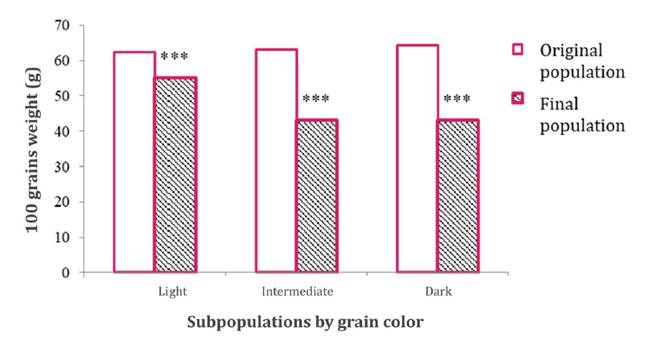
Figure 3. Weight of 100 grains in the color subpopulations of the original and final populations of the Elotes Occidentales maize race.
Figura 3. Peso de 100 granos en las subpoblaciones por color de grano de las poblaciones original y final de la raza de maíz Elotes Occidentales.
In maize, grain size is mainly controlled by genetic factors, particularly from the maternal parent (34). However, environmental factors such as plant density, fertilizer rate, and irrigation also influence grain size (1). We minimized this influence by conducting all experiments under standardized conditions.
The primary culinary use of the Elotes Occidentales maize race in western Mexico is for pozole, a traditional Mexican dish. Large grains are highly valued for an earlier “grain flowering” during cooking (3). Therefore, the reduced 100-seed weight in the subpopulations after inbreeding is an unfavorable outcome. Since our study included only two recombination cycles, additional cycles may recover the original grain size.
Total Anthocyanins Content (TAC)
Grain anthocyanins in maize can accumulate in the pericarp, aleurone layer, or both (25). In the cherry-red grains of the EO population used in this study, anthocyanins only accumulate in the aleurone layer. After the selection cycle, no significant differences were observed between paired means of each grain color subpopulation. However, there was a non-significant tendency to reduce total anthocyanin content (TAC) among the subpopulations at the end of the selection cycle (figure 4). The original subpopulations had TAC values by grain color of 28.47, 44.58, and 47.31 mg PGE/100 g DW, for OPL, OPI and OPD, respectively. The final subpopulations had TAC levels of 22.73, 32.79, and 38.34 mg PGE/100 g DW, for FPL, FPI, and FPD, respectively. TAC values observed in the different grain colors of the EO maize subpopulations are similar to those reported for maize with similar pigmentation (6, 22).
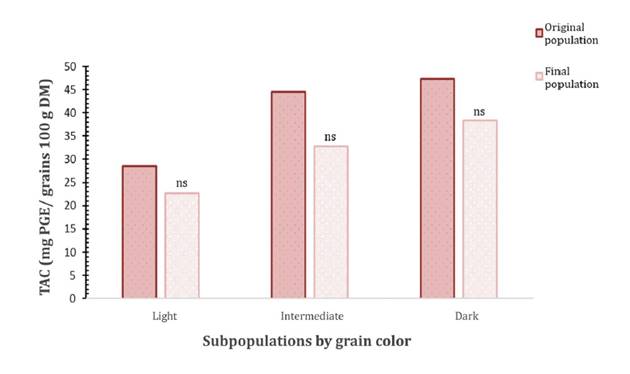
Figure 4. Total grain anthocyanin content (TAC) in the subpopulations with different color intensities in the original and final populations of Elotes Occidentales maize race.
Figura 4. Contenido total de antocianinas (TAC) en el grano de las subpoblaciones con diferentes intensidades de color de las poblaciones originales y finales de la raza de maíz Elotes Occidentales.
During the recurrent selection cycle on the OP, pigment location was maintained in the aleurone layer for the subpopulation with light grain color, characteristic of maize with cherry red grains (22, 25). Maize with anthocyanin accumulation in this tissue (blue/purple and cherry red grains), start anthocyanin synthesis around 20 days after pollination (DAP), with exponential increase until approximately 56 DAP (24). In the intermediate-colored grains of both OP and FP, pigment accumulation was observed in aleurone and pericarp.
References on the use of recurrent selection to increase anthocyanin content in maize are limited. Rodríguez et al. (2013) applied three recurrent selection cycles to a maize population containing a mixture of black, purple, blue, and pink grains. Although pigment location was not specified, it was likely in the aleurone layer, given the grain colors mentioned. They reported increasing anthocyanin contents after the first selection cycle, followed by reductions in the two subsequent cycles.
Eight structural genes (PAL, CHS, CHI, F3H, DFR, ANS, UFGT, and GST) encode key enzymes for anthocyanin biosynthesis, while 36 to 79 transcription factors are involved, depending on the tissue (pericarp or aleurone layer, 19). Recent studies have also highlighted the role of microRNAs modulating transcription factors and affecting gene expression and anthocyanin synthesis and accumulation in plants (33).
The genetic control of anthocyanin accumulation depends on the tissue - pericarp (2n) or aleurone (3n). More genes encode anthocyanin biosynthesis in the aleurone layer (29). Khamphasan et al. (2020) successfully used modified mass selection to increase anthocyanin content in leaves and cob of five purple maize populations. They applied five visual selection cycles, choosing color intensity in the target tissue in each cycle. Consistent increases in anthocyanin content were observed across cycles, attributed to allele fixation and genetic correlation between the target traits.
Anthocyanin accumulation is affected by biotic and abiotic factors. Among abiotic factors, low temperatures increase accumulation, whereas high temperatures decrease anthocyanin concentration in plant tissues. Regarding light, quality is more important than intensity (15). Although our experiments were conducted in the same location across years, those performed during the Summer/Winter season were carried out under greenhouse conditions, which may have affected grain anthocyanin concentration.
Anthocyanins Profile
Figures 5a, 5b, and 5c, show the HPLC chromatograms of the OPL, OPI, and OPD subpopulations of EO maize. The raw OPL chromatogram representing the characteristic anthocyanin profile of EO grain displayed 15 peaks. Peaks 3 and 10 were the most abundant, with relative area percentages of 14.5% and 35.1%, respectively (table 2). These peaks correspond to pelargonidin 3-glucoside (P3G) and pelargonidin 3-malonyl glucoside (P3MG), consistent with prior findings (Paulsmeyer et al., 2017). Barrientos-Ramírez et al. (2018) also reported Pg3G as the predominant non-acylated grain anthocyanin of pink EO maize. However, they identified cyanidin malonyl glucoside as the predominant acylated anthocyanin. Conversely, Paulsmeyer et al. (2017) reported P3MG as the predominant acylated anthocyanin in cherry-red maize grain, agreeing with our results.
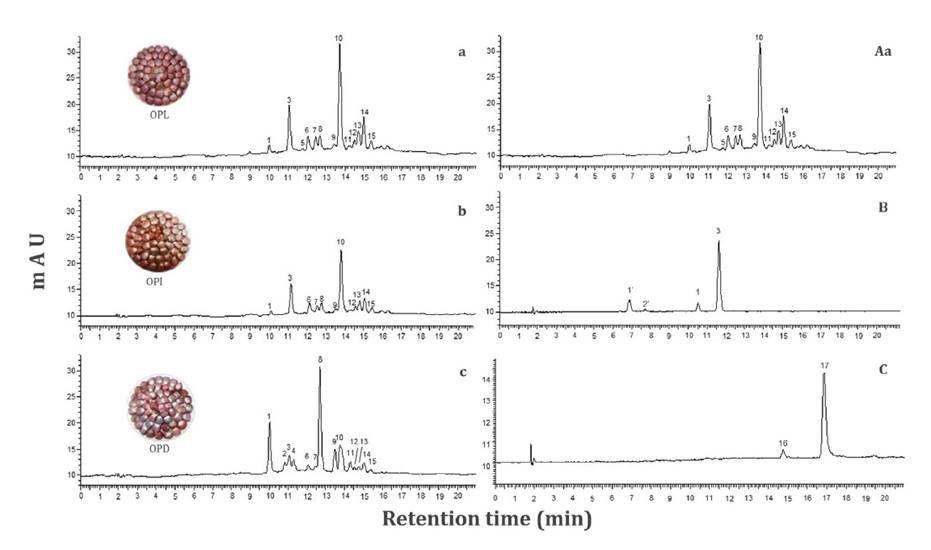
Light color (OPL), intermediate color (OPI), and dark color (OPD) of the Elotes Occidentales race. a) OPL, b) OPI, and c) OPD. Raw extract anthocyanin chromatogram from OPL (Aa), alkaline hydrolysis extract (B), and acid hydrolysis extract (C). Peak identities are: peak 1 = Cy 3-G; 3 = Pg 3-G; 5= Pn 3-G; 2, 4, 8= : isomer of cyanidin malonyl glucoside; 1’, 2’, 6, 7, 11-14= not identified; 16= Cyanidine; 17= Pelargonidine.
Color claro (OPL), color intermedio (OPI) y color oscuro (OPD) de la raza Elotes Occidentales. a) OPL, b) OPI y c) OPD. Cromatograma de antocianinas del extracto crudo de OPL (Aa), del extracto sometido a hidrólisis alcalina (B) y del extracto sometido a hidrólisis ácida (C). Las identidades de los picos son: pico 1 = Cy 3-G; pico 3 = Pg 3-G; pico 5 = Pn 3-G; picos 2, 4 y 8 = isómero de cianidina malonil glucósido; picos 1’, 2’, 6, 7 y 11-14 = no identificados; pico 16 = cianidina; pico 17 = pelargonidina.
Figure 5. HPLC chromatograms of grain anthocyanin extracts of the original subpopulations.
Figura 5. Cromatogramas de HPLC de los extractos de antocianinas del grano de maíz de las subpoblaciones originales.
Table 2. Anthocyanin retention time, area (relative percentage), and identity in grains of the subpopulations.
Tabla 2. Tiempo de retención, porcentaje relativo de área e identidad de las antocianinas presentes en el grano de las subpoblaciones.
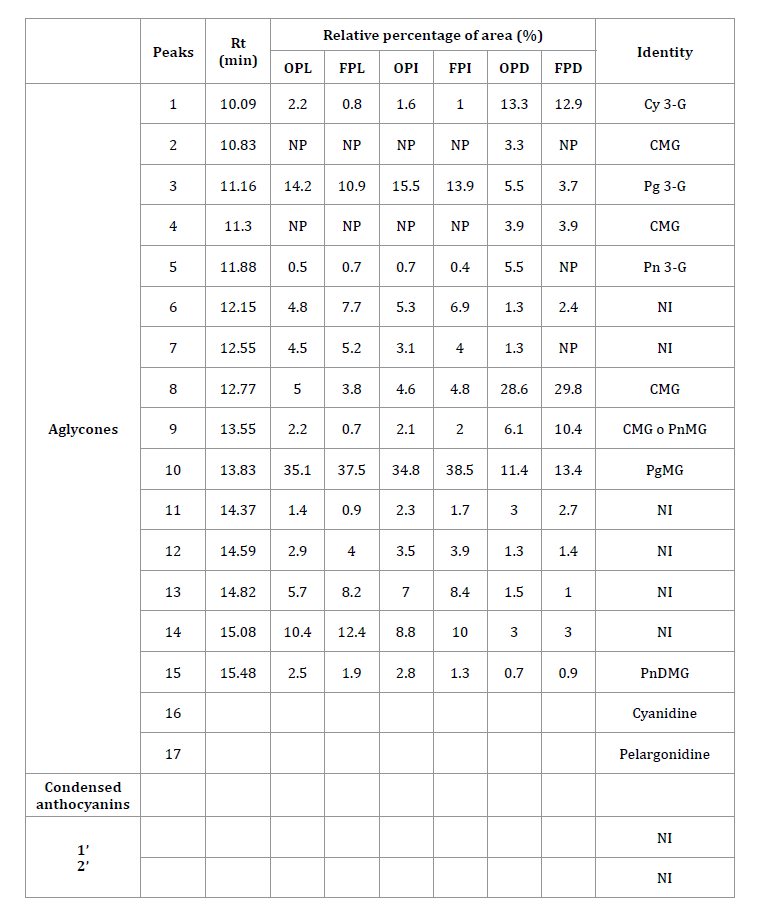
Original population light (OPL), original population intermediate (OPI), and original population dark (OPD), and the corresponding final population light (FPL), final population intermediate (FPI), and final population dark (FPD). Rt: retention time; NP: not presented; NI: not identified, Cy 3-G: cyanidin 3-glucoside, CMG: isomer of cyaniding malonyl glucoside, Pg 3-G: pelargonidin 3-glucoside, Pn 3-G: peonidin 3-glucoside, PnMG: peonidin malonyl glucoside, PgMG: pelargonidin malonyl glucoside, PnDMG: peonidin dimalonyl glucoside.
Población original claros (OPL), población original intermedios (OPI) y población original oscuros (OPD) de la población original y las correspondientes poblaciones finales de claros (FPL), población final de intermedios (FPI) y población final de oscuros (FPD). Rt: tiempo de retención; NP: no presentado; NI: no identificado; Cy 3-G: cianidina 3-glucósido; CMG: isómero de cianidina malonil glucósido; Pg 3-G: pelargonidina 3-glucósido; Pn 3-G: peonidina 3-glucósido; PnMG: peonidina malonil glucósido; PgMG: pelargonidina malonil glucósido; PnDMG: peonidina dimalonil glucósido.
The OPL (figure 5a) and OPI (figure 5b) subpopulations had similar anthocyanin profiles but were different from OPD (figure 5c). OPD had predominant peaks 1 (13.3%) and 8 (28.6%), corresponding to cyanidin 3-glucoside (C3G) and cyanidin 3 malonyl glucoside (C3MG), respectively (table 2).
Anthocyanin profiles of the three subpopulations indicate that native populations represent a complex mixture of genes, expressed in various grain colors as a result of segregation. Mixed-color grain samples yield non-representative chromatograms, as the profile changes with the relative proportion of each color. Anthocyanin profile of OPD grain (figure 5c) corresponds to that reported for blue-purple maize races such as Elotes Cónicos and Chalqueño (27).
We differentiated acylated from non-acylated anthocyanins by treating the raw extract from OPL with KOH 10% (7). The chromatogram of the raw alkaline-treated sample showed four peaks (figure 5b). Missing peaks corresponded to acylated anthocyanins, predominant in cherry red maize grain. Peaks 1 and 3 correspond to C3G and P3G, while peaks 1’ and 2’ may represent condensed forms of anthocyanins (10, 22). These forms could originate from acylated anthocyanins like catechin-(4,8)-pelargonidin-3-ma lonylglucoside-5-glucoside, described in maize aleurone layer (4), losing the acyl radical, but retaining the flavanol moiety (catechin or epicatechin) (10).
Figure 5c, shows the chromatogram of the acid hydrolysis extract of OPL sample, revealing the aglycones or anthocyanidins. In the OPL subpopulation, 90.1% of the total anthocyanins were pelargonidin derivatives, while 9.9% were cyanidin derivatives. Cyanidin, characterized by two OH groups in the B ring, gives a blue-purple hue, whereas pelargonidin, with one OH group, is associated with red hues (13). These results align with findings by Salinas et al. (1999) and Paulsmeyer et al. (2017) for maize grain with pink aleurone.
The HPLC chromatograms of grain from the final subpopulations, grouped by color tone and intensity, are shown in Figure 6. The anthocyanin profile of the FPL (figure 6a) and FPI (figure 6b) subpopulations was similar, despite the visual color differences between them. The brick orange color of the FPI grains originates in the pericarp, and is due to the presence of phlobaphene pigments, while the aleurone remains cherry red (figure 2). Phlobaphenes are polymers of the flavonoids luteoforol and apiforol, which share the same initial precursor, naringenin, in the anthocyanin biosynthetic pathway. These pigments did not appear in the anthocyanins chromatogram because they are insoluble in the solvent used for anthocyanins extraction (4).
Both the FPD (figure 6c) and OPD (figure 5c) subpopulations had similar anthocyanin profiles, only differing in relative percentages of each anthocyanin according to grain color tones of initial and final populations (table 2). Notably, the selection methodology led to predominance of blue/purple grains in the FPD subpopulation, enriched with cyanidin derivatives.
Anthocyanin accumulation in the aleurone layer requires expression of R1 and C1 genes (Sharma et al., 2011). Red or purple aleurone in maize grain is due to cyanidin (purple) or pelargonidin (red) (24), with chemical structures differing by the number of hydroxyl groups controlled by a present Pr1 or absent pr1 allele of a single gene. The expression of pr1 requires the actions of c1 and r1 regulatory genes (29).
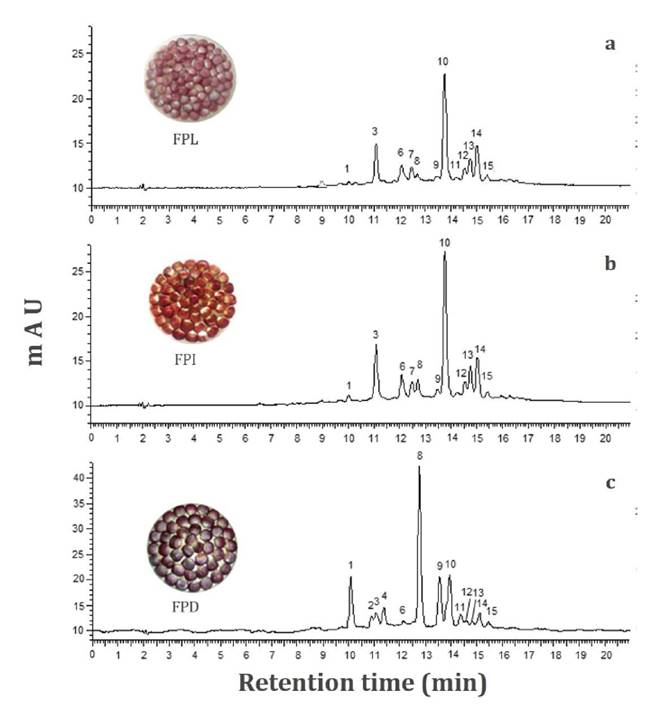
Light (FPL), intermediate (FPI), and dark (FPD) of Elotes Occidentales maize. Peak identities are in table 2.
Color claro (FPL), color intermedio (FPI) y color oscuro (FPD) de la raza Elotes Occidentales. La identidad de los picos se encuentra en la tabla 2.
Figure 6. HPLC chromatograms of the anthocyanin extracts from grains of the final subpopulations.
Figura 6. Cromatogramas de HPLC de los extractos de antocianinas del grano de maíz de las subpoblaciones finales.
Conclusions
After one cycle of recurrent selection of S3 lines for grain color fixation, applied to three subpopulations of the original Elotes Occidentales population, selection favored color fixation with less segregation. Still, it reduced grain size in the three final subpopulations. The selection methodology used did not favor grain cherry red color intensity in the Elotes Occidentales population, which only accumulates anthocyanins in the aleurone layer. After the breeding procedure, the grain anthocyanin concentrations was not augmented and the qualitative anthocyanin profiles were maintained, but the relative abundance of some peaks was modified, particularly in the subpopulation with dark grain color.
1. Badu-Apraku, B.; Oyekunle, M.; Menkir, A.; Obeng-Antwi, K.; Yallou, C. G.; Usman, I. S.; Alidu, H. 2013. Comparative performance of early maturing maize cultivars developed in three eras under drought stress and well-watered environments in West Africa. Crop Sci. 53: 1298-1311.10.2135/cropsci2012.11.0640
2. Barrientos-Ramírez, L.; Ramírez-Salcedo, H. E.; Fernández-Aulis, M. F.; Ruíz-López, M. A.; Navarro-Ocaña, A.; Vargas-Radillo, J. J. 2018. Anthocyanins from rose maize (Zea mays L.) grains. Interciencia. 43(3): 188-192.
3. Bonifacio, V. E. I.; Salinas-Moreno, Y.; Ramos-Rodríguez, A.; Carrillo-Ocampo, A. 2005. Calidad pozolera en colectas de maíz cacahuacintle. Revista Fitotecnia Mexicana. 28(3): 253-260.
4. Chatham, L. A.; Juvik, J. A. 2021. Linking anthocyanin diversity, hue, and genetics in purple corn. G3 Genes|Genomes|Genetics. 11(2):1-18. https://doi.org/10.1093/g3journal/jkaa062
5. Cone, K. C. 2007. Anthocyanin synthesis in maize aleurone tissue. In Endosperm: Developmental and Molecular Biology. Berlin. Springer Berlin Heidelberg. 121-139.
6. Cruz, G. A. 2017. Composición fenólica de accesiones de maíz (Zea mays L.) con grano rojo cereza y rojo ladrillo de razas mexicanas. Tesis de grado de licenciatura. Departamento de Ingeniería Agroindustrial. Universidad Autónoma Chapingo. México. 83 p.
7. de Pascual‐Teresa, S.; Santos‐Buelga, C.; Rivas‐Gonzalo, J. C. 2002. LC-MS analysis of anthocyanins from purple corn cob. Journal of the Science of Food Agriculture. 82(9): 1003-1006.
8. Fossen, T.; Slimestad, R.; Andersen, Ø.M. 2001. Anthocyanins from Maize (Zea mays) and Reed Canarygrass (Phalaris arundinacea). Journal of Agricultural and Food Chemistry. 49: 2318-2321. doi:10.1021/jf001399d.
9. García-Cruz, L.; Vázquez-Carrillo, M. G.; Preciado-Ortiz, R. E. 2023. Flowered grain quality and phytochemical content of non-conventional maize hybrids from the Mexican Subtropics across three growing cycles. Plants. 12(14): 2691. https://doi.org/doi.org/10.3390/plants12142691
10. Gonzalez-Manzano, S.; Perez-Alonso, J. J.; Salinas-Moreno, Y.; Mateus, N.; Silva, A. M.; de Freitas, V.; Santos-Buelga, C. 2008. Flavanol–anthocyanin pigments in corn: NMR characterization and presence in different purple corn varieties. Journal of Food Composition Analysis. 21(7): 521-526. https://doi.org/doi.org/10.1016/j.jfca.2008.05.009
11. Hallauer, A. R., 1992. Recurrent selection in maize. Plant breed rev. Wiley. 9: 115-179.
12. Hallauer, A. L.; Carena, M. J. 2012. Recurrent selection methods to improve germplasm in maize. Maydica. 57(4): 266-283.
13. Harborne, J. B.; Grayer, R. J. 1988. The anthocyanins. In J. B. Harborne (Ed.), The Flavonoids: Advances in Research since 1980. Boston. MA. Springer US. 1-20.
14. Hong, H. T.; Netzel, M. E.; O’Hare, T. J. 2020. Optimisation of extraction procedure and development of LC-DAD-MS methodology for anthocyanin analysis in anthocyanin-pigmented corn kernels. Food Chemistry. 319: 126515. https://doi.org/https://doi.org/10.1016/j.foodchem.2020.126515
15. Hu, K.; Han, K.; Silan, D. 2010. Regulation of Plant Anthocyanin Synthesis and Pigmentation by Environmental Factors. Chinese Bulletin of Botany. 45(03): 307-318.
16. Kato, T. Á.; Mapes, C.; Mera, L. M.; Serratos, J. A.; Bye, R. A. 2009. Origen y diversificación del maíz: una revisión analítica. Universidad Nacional Autónoma de México, Comisión Nacional para el Conocimiento y Uso de la Biodiversidad (CONABIO). México. DF. 116.
17. Khamkoh, W.; Ketthaisong, D.; Lomthaisong, K.; Lertrat, K.; Suriharn, B. 2019. Recurrent selection method for improvement of lutein and zeaxanthin in orange waxy corn populations. Australian Journal of Crop Science. 13(4): 566-573. https://doi.org/doi/10.3316/informit.457650111889237
18. Khamphasan, P.; Lomthaisong, K.; Harakotr, B.; Scott, M. P.; Lertrat, K.; Suriharn, B. 2020. Effects of Mass Selection on Husk and Cob Color in Five Purple Field Corn Populations Segregating for Purple Husks. Agriculture. 10(8): 311. https://doi.org/doi.org/10.3390/agriculture10080311
19. Li, T.; Zhang, W.; Yang, H.; Dong, Q.; Ren, J.; Fan, H.; Zhou, Y. 2019. Comparative transcriptome analysis reveals differentially expressed genes related to the tissue-specific accumulation of anthocyanins in pericarp and aleurone layer for maize. Scientific Reports. 9(1): 2485. https://doi.org/10.1038/s41598-018-37697-y
20. McGuire, R. G. 1992. Reporting of objective color measurements. HortScience. 27(12): 1254-1255.
21. Okporie, E.; Chukwu, S.; Onyishi, G. 2013. Phenotypic recurrent selection for increase yield and chemical constituents of maize (Zea mays L.). World Appl. Sci. J. 21(7): 994-999.
22. Paulsmeyer, M.; Chatham, L.; Becker, T.; West, M.; West, L.; Juvik, J. 2017. Survey of Anthocyanin Composition and Concentration in Diverse Maize Germplasms. Journal of Agricultural and Food Chemistry. 65(21): 4341-4350. https://doi.org/10.1021/acs.jafc.7b00771
23. Rodríguez, V. M.; Soengas, P.; Landa, A.; Ordás, A.; Revilla, P. 2013. Effects of selection for color intensity on antioxidant capacity in maize (Zea mays L.). Euphytica. 193(3): 339-345. https://doi.org/10.1007/s10681-013-0924-0
24. Salinas-Moreno, Y. 2000. Antocianinas en granos de maíces criollos mexicanos. Tesis de grado de doctor. Colegio de Posgraduados. Montecillo. México. 102 p.
25. Salinas, M. Y.; Soto-Hernández, M.; Martínez-Bustos, F.; González-Hernández, V.; Ortega-Paczka, R. 1999. Análisis de antocianinas en maíces de grano azul y rojo provenientes de cuatro razas. Revista Fitotecnia Mexicana. 22(2): 161-161. https://doi.org/doi.org/10.35196/rfm.1999.2.161
26. Salinas-Moreno, Y.; Sánchez, G. S.; Hernández, D. R.; Lobato, N. R. 2005. Characterization of anthocyanin extracts from maize kernels. Journal of Chromatographic Science. 43: 483-487.
27. Salinas-Moreno, Y.; Pérez-Alonso, J. J.; Vázquez-Carrillo, G.; Aragón-Cuevas, F.; Velázquez-Cardelas, G. A. 2012. Antocianinas y actividad antioxidante en maíces (Zea mays L.) de las razas Chalqueño, Elotes Cónicos y Bolita. Agrociencia. 46(7): 693-706.
28. Salinas-Moreno, Y.; Ramírez Díaz, J. L.; Alemán de la Torre, I.; Bautista-Ramírez, E.; Ledesma Miramontes, A. 2021. Evaluación de dos procedimientos de medición de color en granos de maíces pigmentados. Revista mexicana de ciencias agrícolas. 12(7): 1297-1303.
29. Sharma, M.; Cortes-Cruz, M.; Ahern, K. R.; McMullen, M.; Brutnell, T. P.; Chopra, S. 2011. Identification of the Pr1 Gene Product Completes the Anthocyanin Biosynthesis Pathway of Maize. Genetics. 188(1): 69-79. https://doi.org/10.1534/genetics.110.126136
30. Vázquez-Carrillo, M. G.; Hernández-Montes, A.; Palacios-Rojas, N.; García-Cruz, L.; Rosales-Nolasco, A.; Molina, A.; Palacios-Pola, G. 2024. Comparing traditional and commercial nixtamalization of three maize landraces: impact on pozole quality and consumer acceptance. Journal of Ethnic Foods. 11: 11. https://doi.org/10.1186/s42779-024-00227-5
31. Wellhausen, E. J.; Roberts, L. M.; Xolocotzi, E. H. 1951. Razas de maíz en México, su origen, características y distribución. Secretaría de Agricultura y Ganadería. México. Aldina. 5: 237 p.
32. Willcox, M. C.; Castillo-Gonzalez, F.; Aragón-Cuevas, F., & Castro-Garcia, F. H. 2019. Native maize in Mexico: Participatory breeding and connections to culinary markets. In Farmers and Plant Breeding. New York, NY. Routledge. 80-90.
33. Wu, Y.; Han, T.; Lyu, L.; Li, W.; Wu, W. 2023. Research progress in understanding the biosynthesis and regulation of plant anthocyanins. Scientia Horticulturae. 321: 112374. doi.org/10.1016/j.scienta.2023.112374
34. Xia, Z.; Hirsch, C. N.; Sekhon, R. S.; Leon, N. D.; Kaeppler, S. M. 2016. Evidence for maternal control of seed size in maize from phenotypic and transcriptional analysis. J. Exp. Bot. 67: 1907-1917. https://doi.org/10.1093/jxb/erw006
35. Žilić, S; Serpen, A.; Akıllıoğlu, G.; Gökmen, V.; Vančetović, J. 2012. Phenolic Compounds, Carotenoids, Anthocyanins, and Antioxidant Capacity of Colored Maize (Zea mays L.) Kernels. Journal of Agricultural and Food Chemistry. 60: 1224-1231. https://doi.org/10.1021/jf204367z