Rev. FCA UNCuyo | 2026 | 58(1) | ISSN 1853-8665
Production and animal health
https://doi.org/10.48162/rev.39.211
Longevity of Purebred and Triple-Cross Dairy Cows in Entre Rios, Argentina
Longevidad de vacas lecheras razas puras y triples cruzas en un establecimiento de Entre Ríos, Argentina
María Gabriela Molina 3,
María Laura Fischman 4,
Walter Mancuso 5,
1 Universidad Nacional del Chaco Austral. Carrera de Ing. Zootecnista. Comandante Fernández 755. (C. P. 3700). Presidencia Roque Sáenz Peña. Argentina.
2 Facultad de Ciencias Veterinarias (FCV). Universidad Nacional de Rosario (UNR). Doctorando en Ciencias Veterinarias. Ovidio Lagos y Ruta 33. (C. P. 2170). Casilda. Argentina.
3 Universidad Nacional de Córdoba. Facultad de Ciencias Agropecuarias. Juan Filloy s/n. (C. P. 5000). Córdoba. Argentina.
4 Universidad de Buenos Aires. Facultad de Ciencias Veterinarias. INITRA. Chorroarín 280. (C. P. 1427). Ciudad Autónoma de Buenos Aires. Argentina.
5 INTA EEA Paraná. Ruta 11 Km 12,5 (CP 3100) Paraná. Argentina.
* roberto_cheij_2000@hotmail.com
Abstract
This study evaluated animal longevity according to age at first calving of pure and triplecross dairy cows in an establishment in Entre Ríos, Argentina. Retrospective data from 1.498 dairy cows between 2012 and 2021 were analyzed, belonging to a commercial establishment in the center-west of Entre Ríos province, Argentina. Analyzed cows were those discarded (due to sale or death) and with records of their entire productive life. They belonged to five different racial groups, pure Holstein (H), pure Jersey (J) and triple crosses, resulting from the insemination of Holstein x Jersey (F1) cross cows with semen from bulls of the Brown Swiss (P), Guernsey (G) and Montbeliarde (M) breeds, respectively. The cows were grouped into three levels (CAT), according to age at first calving. These categories were: CAT1: < 24 months; CAT2: 24 ≤ CAT2 ≤ 30 months and CAT3: > 30 months. Significant differences were found in survival curves of the productive life variable (p=0.0001) at 50% survival probability. Jersey cows had the lowest longevity (60.4 months) and showed significant differences with Guernsey (72.7 months), Holstein (65.8 months) and Montbeliarde (70 months). Brown Swiss cows (86 months) had the highest longevity compared to the rest (CAT was not considered). In CAT1, Brown Swiss showed significant differences from the rest (p<0.05). In CAT2, Brown Swiss showed significant differences (p<0.05), as J when compared with Guernsey. In CAT3, only Brown Swiss showed significant differences (p<0.05) compared to Guernsey, Jersey and Montbeliarde. Triple-cross Brown Swiss dairy cows had greater longevity. Those having their first calving at a later age showed higher longevity, both in comparison with other genotypes and among the Brown Swiss cows.
Keywords: dairy cow, adaptation, welfare, fertility, grazing system
Resumen
En este trabajo se evaluó la longevidad animal según la edad al primer parto de vacas lecheras puras y triple cruza en un establecimiento de Entre Ríos, Argentina. Se analizaron datos retrospectivos de 1.498 vacas lecheras entre los años 2012 y 2021, pertenecientes a un establecimiento comercial ubicado en el centro-oeste de la provincia de Entre Ríos, Argentina. Las vacas analizadas fueron aquellas descartadas (por venta o muerte) en el establecimiento, vacas con registro de toda su vida productiva. Pertenecían a cinco grupos raciales diferentes, Holstein puras (H), Jersey puras (J) y triple cruzas, resultantes de la inseminación de vacas cruzas Holstein x Jersey (F1) con semen de toros de las razas Pardo Suizo (P), Guernsey (G) y Montbeliarde (M), respectivamente. Las vacas se agruparon en tres niveles (CAT), según la edad al primer parto. Estas categorías fueron: CAT1: < 24 meses; CAT2: 24 ≤ CAT2 ≤ 30 meses y CAT3: > 30 meses. Se encontraron diferencias significativas entre las curvas de supervivencia de la variable vida productiva (p=0,0001) al 50% de probabilidad de supervivencia. Las vacas Jersey presentaron la menor longevidad (60,4 meses) y mostraron diferencias significativas con Guernsey (72,7 meses), Holstein (65,8 meses) y Montbeliarde (70 meses). Las vacas Pardo Suizo (86 meses) presentaron la mayor longevidad respecto del resto (no se consideró CAT). En CAT1, Pardo Suizo presentó diferencias significativas respecto del resto (p<0,05). En CAT2, Pardo Suizo mostró diferencias significativas (p<0,05), al igual que J al compararse con Guernsey. En CAT3, solo Pardo Suizo presentó diferencias significativas (p<0,05) respecto de Guernsey, Jersey y Montbeliarde. Las vacas lecheras triple cruza Pardo Suizo presentaron mayor longevidad. Aquellas que tuvieron su primer parto a una edad más tardía mostraron una mayor longevidad, tanto en comparación con otros genotipos como entre las vacas Pardo Suizo.
Palabras clave: vaca, adaptación, bienestar, fertilidad, sistema de pastoreo
Originales: Recepción: 28/11/2024 - Aceptación: 22/10/2025
Introduction
Recently, dairy cow longevity has gained increasing relevance, primarily due to the consequences of high levels of individual production (3, 33), low fertility (9, 22) and environmental (2, 15, 16) and economic factors (10, 15) associated with a shorter than expected lifespan.
Culling dairy cows in early production stages, before reaching biological maturity, is considered unsustainable (14, 25, 35). The concept of longevity has been linked to animal welfare (31).
Without human intervention, a dairy cow is biologically capable of living up to 20 years. However, average time spent in the herd currently ranges from 4.5 to 5.5 years, or between 2.5 and 3.5 lactations (11). Marini and Di Masso (2019) compared purebred cows and cows with breeding records living together in the same establishment. They found the productive lifespan (measured as the number of births) was 3 (1-8) and 3 (1-10), respectively, with no significant survival difference between groups.
Today, dairy farmers seek to capitalize on the favorable traits of “alternative” dairy breeds to mitigate the negative effects associated with inbreeding and leverage heterosis benefits (30, 32). Many studies have demonstrated increased fertility and survival rates when using crossbred cows compared to purebred Holstein or Holstein-Friesian cows, in pasture-based and high-input confinement systems (5, 27, 34). Economic analyses also indicate improved profitability in these systems, due to lower replacement costs and higher herd productivity (19, 28).
Reducing age at first calving seems to enhance productive lifespan and increase milk production per cow over their lifetime (12). Copas Medina et al. (2022) and Cañete et al. (2025) concluded that Holstein and Brown Swiss cows that calved earlier remained productive longer on the farm and produced more milk over their lifetime.
Information on longevity of dairy cows in grazing systems and its evolution over time is scarce in Argentina. Therefore, the objective of this study was to evaluate longevity of purebred and triple-cross dairy cows based on age at first calving in a farm in Entre Ríos, Argentina.
Materials and Methods
Retrospective data from 1498 dairy cows were analyzed from 2012 to 2021, from a commercial dairy farm located center-west of Entre Ríos (32°00’ South y 59°34’ West), Argentina.
Dairy Herd
The farm has 2,400 cows managed in 5 similar milking units. Average milk yield is 8,800 liters per lactation (24 liters/cow/day), with an average composition of 3.90% fat and 3.70% protein. The production system was grazing with supplementation, consisting of an average diet with 45% pastures for direct consumption, 20% preserved forage (hay and silage) and 35% concentrates. The diet varies according to availability, based on climatic conditions or feed prices. The pastures used for direct grazing during the evaluation period consisted of polyphytic meadows based on alfalfa (Medicago sativa L.), mixed with fescue (Lolium arundinaceum Schreb. Darbysh), white clover (Trifolium repens L.) and native barley (Bromus catharticus Vahl). Also, monophytic winter greens of oats (Avena sativa L.) and annual ryegrass (Lolium multiflorum L.), depending on the season and availability of standing forage. Additionally, they were provided with preserved forage, including corn silage (Zea mays L.), hay from pastures, and concentrates. The concentrates were formulated onsite using grains, by-products from agro-industry and mineral salts, according to the needs of balanced diets and/or forage supply for milking cows. Table 1 shows average dry matter supply per milking cow and seasonal dietary composition.
Table 1. Seasonal average (kg/cow and day) and percentage composition of ration offered (% on DM).
Tabla 1. Promedio estacional (kg/vaca y día) y composición porcentual de la ración ofrecida (% sobre MS).
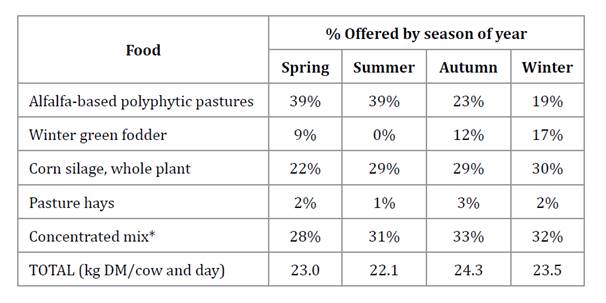
References: * contained variable percentages of corn and/or sorghum grain, soybean expeller, wheat and/or rice bran and mineral salts, depending on availability and season.
Referencias: * Mezcla con porcentajes variables, según disponibilidad y estación, de: grano de maíz y/o sorgo, expeler de soja, afrechillo de trigo y/o arroz y sales minerales.
Database
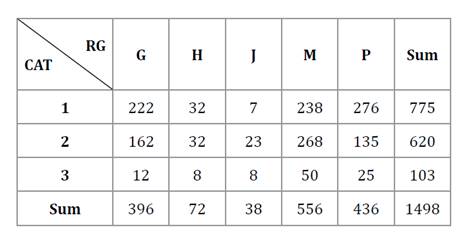
The analyzed cows were those culled (due to sale or death) from the establishment, specifically those with complete productive records belonging to five racial groups (RG), pure Holstein (H) cows (n=72), pure Jersey (J) (n=38) and triple cross cows, resulting from the insemination of Holstein x Jersey (F1) with semen from Brown Swiss (P) (n=436), Guernsey (G)(n=396) and Montbeliarde (M) (n=556) bulls. The cows were grouped into three levels (CAT) according to age at first calving. These categories were CAT1: < 24 months; CAT2: 24 ≤ CAT2 ≤ 30 months and CAT3: > 30 months. The following data were recorded for each cow: Date of birth (DB); Date of calving (DCP); Date of culling or death (FDM); Longevity (L) in days (FN - FDM); Number of calvings (NP); Age at first calving (AFC) in days (DC - CP); Culling (C). A cow was considered culled when it died or was sold for different reasons. Records containing incomplete or missing data were excluded from the analysis. Table 2, shows the final number of animals analyzed, classified by category and racial group.
Table 2. Number of animals analyzed per category of age at first calving (CAT) and racial group (RG), after removing incomplete records.
Tabla 2. Número de animales analizados por categoría de edad al primer parto (CAT) y grupo racial (GR), después de eliminar los registros incompletos.
Statistical Analysis
Longevity of purebred and triple-cross dairy cows was evaluated by Age at First Calving. Two survival models were used, each with a particular purpose and focus.
Overall Survival Model: In the first analysis, a Kaplan-Meier survival model assessed longevity of the different GRs, not considering age at first calving as a stratifying factor. This model allowed comparing GRs’ survival curves throughout their productive life.
Survival Model Stratified by Age at First Calving (AFC): A stratified survival model used CAT-adjusted log-rank test. This approach was chosen to control potential heterogeneity caused by age at first birth. Stratification by AFC allowed a precise assessment of survival differences between RG, considering variability introduced by AFC.
Using these two approaches was based on the first model, on the need to identify overall differences in longevity between breeds and crosses, providing a general performance overview of the different RG throughout their productive life. Considering the stratified model, the effect of age at first calving on longevity was isolated, providing a more detailed understanding of how these variables influence survival, allowing specific conclusions in the context of age at first calving.
Both analyses were carried out using the statistical software R (2023). The survival library was used to fit the models and estimate survival curves. In both survival models, the event of interest was the cow leaving the herd (due to culling by death or sale), and the analyzed time was longevity, measured in days from calving until culling date (sale or death). The general survival model (Kaplan-Meier) involved survival curves generated by the survfit function from the survival package in R. Differences between survival curves were evaluated using the Long-rank test, implemented via the survfit function from the same package, considering racial group (RG) as the sole predictor factor. The survival model stratified by age at first calving (AFC) reutilized the survfit function, including the argument strata = CAT (category of age at first calving), controlling heterogeneity introduced by age and accurately evaluating differences in survival among breed groups within each stratum. Age at first calving (CAT) was categorized into three levels (CAT1: <24 months; CAT2: between 24 and 30 months; CAT3: >30 months). This stratified model assessed survival differences among breed groups adjusted by the defined AFC categories.
Results
Figure 1, shows the Kaplan-Meier survival curves of purebred H, J cows, and triple-crossbreds, P, G and M cows, not accounting for age effects. Significant differences were found between the survival curves of the productive lifespan variable (p=0.0001) at 50% probability of survival. J cows had the shortest longevity (60.4 months), showing significant differences with G (72.7), H (65.8) and M (70 months). The P cows (86 months) presented the longest longevity, 86 months.
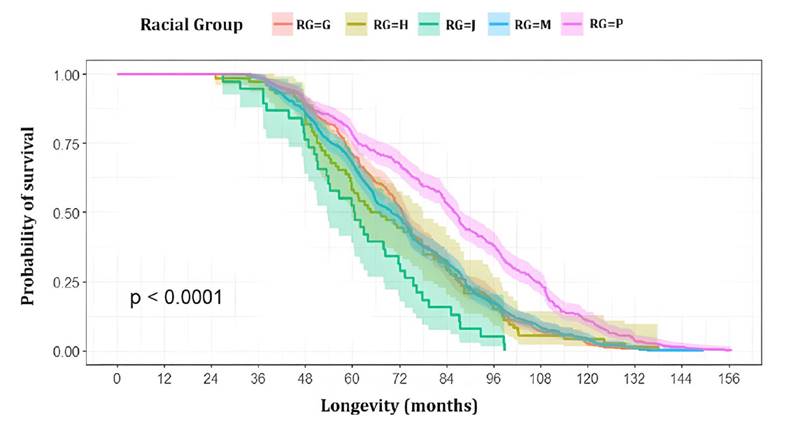
Figure 1. Survival analysis for longevity of purebred and crossbred dairy cows.
Figura 1. Análisis de supervivencia para la longevidad de vacas lecheras puras y cruzas.
Table 3 shows culling risk for each analyzed genotype, with differences in survival patterns. Considering 60 months of age as a comparison point, 71% of individuals in RG G, 58.3% in RG H, 52.6% in RG J, 68% in RG M and 78% in RG P reached this threshold, confirming survival trends observed in figure 1.
Table 3. Proportion of cows under culling risk.
Tabla 3. Proporción de vacas en riesgo de ser descartada.
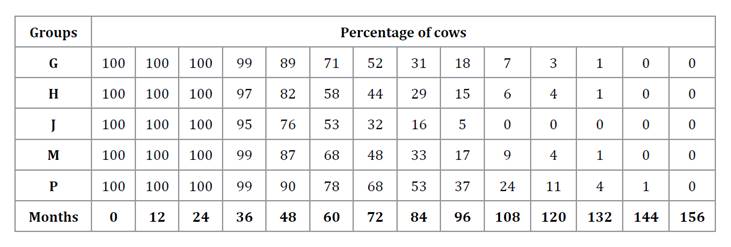
Note: Holstein (H), Jersey (J) and triple crosses, resulting from the insemination of Holstein x Jersey (F1) cross cows with semen from bulls of the Brown Swiss (P), Guernsey (G) and Montbeliarde (M) breeds.
Nota: Holstein (H), Jersey (J) y triples cruzas, resultantes de la inseminación de vacas cruza Holstein x Jersey (F1) con semen de toros de las razas Pardo Suizo (P), Guernsey (G) y Montbeliarde (M).
In the AFC Stratified Model, the chi-square statistic was 90.7 (with 4 degrees of freedom, p<2e-16). This result indicates significant differences in survival among the evaluated groups when considering age at first birth. Pairwise comparisons within each category are detailed in table 4.
Table 4. Median months of life by age category at first calving.
Tabla 4. Medianas de los meses de vida por categoría de edad al primer parto.
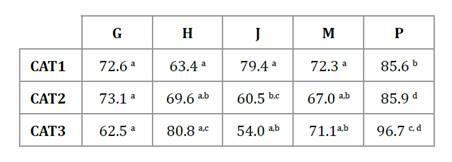
In CAT1, RG P shows significant differences compared to the other groups (p<0.05). In CAT2, P shows significant differences (p<0.05) against any other group. In CAT3, only P has significant differences (p<0.05) with G, J and M (figure 2).
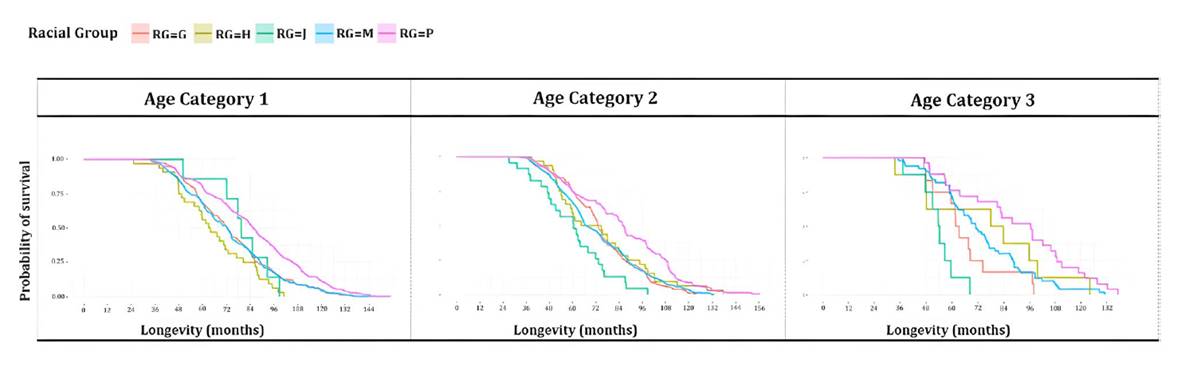
Figure 2. Survival probability according to age at first calving and RG.
Figura 2. Probabilidad de supervivencia según edad al primer parto y GR.
Discussion
In recent decades, dairy cows have achieved significant advancements in individual milk production (within a limited number of breeds). However, this progress has been accompanied by considerable drawbacks, including a loss of genetic diversity and a decline in health, resilience, robustness, welfare and longevity (4). Moreover, Piccardi et al. (2014) and Pipino et al. (2023) reported that Swedish Red x Holstein crossbred cows were superior in longevity compared to pure Holstein cows, with higher survival rates across successive lactations.
In dairy systems under grazing with supplementation, Frana-Bisang et al. (2023) found no significant differences in survival curves for the productive life variable analyzed for purebred Holstein (HO) cows, and HO x Jersey (F1), F1 x Montbeliarde (M) and M x Holstein (XB) crosses. However, although no differences were found in the productive life variable, when survival to subsequent births was analyzed, all crosses exhibited greater persistence in the second and third calvings compared to pure HO cows. An earlier study in the same establishment examined purebred, crossbred and triple-crossbred cows (23). Studying Holstein, Holstein x Jersey, (Holstein x Jersey) x Brown Swiss and (Holstein x Jersey) x Guernsey genotypes, these authors found survival curves with 50% probability that individuals from all genotypes would reach the end of their first lactation before 1100 days of age for the event of completion of the first lactation. Furthermore, there was a 90% probability of Brown Swiss cows finishing their first lactation before 1.200 days of age, while Guernsey, Holstein x Jersey and Holstein cows required an additional 150 days to achieve the same probability. Differences between survival curves for the different genotypes were statistically significant.
Likewise, our results show that crossbred cows have a longer lifespan than the studied purebred. In turn, among the crossbred cows, P cows had the longest lifespan (figure 1). This aligns with Andersen (2008), who indicated that Brown Swiss showed comparative advantages in longevity, especially in adverse ecosystems for Holstein. Dairy farms employing this type of crossbreeding could achieve a herd structure with older cows producing more milk, butterfat, and protein, with a lower replacement rate. Consequently, the crossbred studied would improve survival expectancy in grazing-based production systems, particularly when supplemented strategically with bulk and concentrated feeds (table 1). Previous studies by Kargo et al. (2012) and Buckley et al. (2014) demonstrated that crossbred cows exhibited higher fertility and survival rates compared to pure Holstein cows, using a variety of modern breeds in high-input (confined production) and low-cost (grazing-based) systems.
Hazel et al. (2017) suggested that using only two breeds for crossbreeding does not fully exploit heterosis, and rotational crossbreeding involving three breeds better enhances reproductive aspects. Similarly, considering longevity, crossbreeding among three breeds would have the same weight, showing that triple crosses are longer-lived (figure 1).
This study also examined whether age at first calving influences final life expectancy, a topic not extensively discussed. In this sense, P cows showed the greatest longevity regardless of age at first calving. However, P cows with the oldest age at first calving had the greatest longevity (compared to the other genotypes) and higher values in median life months, compared to the P of CAT1 and CAT2 (table 2). However, Copas Medina et al. (2022) showed that, in tropical systems, pure Holstein and Brown Swiss cows that gave birth at an early age (<36 months) lived longer, remained productive for a longer period within the system and had higher overall milk production throughout their lives. Similarly, Casanova et al. (2011) found that cows calving for the first time at an older age (40 months) had a 23% higher risk of being culled than those calving at 30 months. Marini and Di Masso (2019), comparing purebred cows and cows with breeding records, in the same establishment, could not find an association between age at first calving and calving number. However, a significant association was observed in those with breeding records, indicating that the older the age at first calving, the lower the total number of calvings.
Mean longevity of Brown Swiss cows first calving at a younger age (<2.5 years) was shorter than that of cows calving for the first time at an older age. However, as for Holstein cows, Brown Swiss cows calving at a younger age had more days in production and more lifetime milk production than those calving later (9).
Few studies have analyzed the association between age at first calving and longevity; therefore, the impact of reduced age at first calving on long-term performance remains unclear (21). Haworth et al. (2008) reported that cows between 24 and 29 months at first calving had greater longevity and productivity than those calving at 30 months or older. This finding aligns with a retrospective study on Holstein herds that calve younger (24-25 months), demonstrating better survival rates and higher productivity (8).
Based on these findings, crossbreeding would be a relevant alternative to counteract the current challenge of low longevity of dairy cows in herds corresponding to these regions (11). To effectively overcome this issue, comprehensive measures are needed.
Conclusions
This study confirms that crossbred dairy cows, especially triple P crossbreds, have greater longevity compared to the studied purebred. This finding suggests that dairy farms implementing crossbreeding, like for P cows, could benefit from a herd structure with older cows. This could lead to increased total production of milk, butterfat, and protein throughout their productive lifespan, while reducing replacement needs in the herd.
Age at first calving constitutes a significant factor influencing cow longevity. Although P-crossed cows showed general greater longevity, we observed that those first calving at a later age showed greater longevity, compared to other genotypes and among themselves. These results support the idea that an adequate age at first calving can benefit longevity throughout cow life.
Applying global and stratified survival models allowed effective evaluation of the genetic and management factors on dairy cows longevity. This suggests that a selection strategy considering age at first calving and genotype could optimize longevity and productivity in grazing dairy production systems, leading to long-term economic and productive benefits.
Considering the study used information from commercial herds in grazing production systems with supplementation, rather than from experimental herds, our results hold importance for the Humid Pampas – Argentina, and other temperate climates worldwide.
Declaration of Funding and Acknowledgments
The authors would like to thank Brandi, Santiago and the members of the El Caraguatá S.A. establishment who made this work possible.
To the Secretariat of Research, Science and Technology of the National University of Chaco Austral for financing the PhD student Roberto Cheij, through a postgraduate scholarship (SICyT-UNCAUS).
1. Andersen, H. 2008. Alternativas genéticas para la ganadería lechera intensiva. Manual de ganadería lechera. Capítulo 1.3. http://handresen.perulactea.com/manual-de-ganaderia-lechera/
2. Bergea, H.; Roth, A.; Emanuelson, U.; Agenas, S. 2016. Farmer awareness of cow longevity and implications for decision-making at farm level. Acta Agriculturae Scandinavica, Section A- Animal Science. 66(1): 25-34. DOI: https://doi.org/10.1080/09064702.2016.1196726
3. Bobadilla, P. E.; López-Villalobos, N.; Sotelo, F.; Damián, J. P. 2024. Dairy cow longevity is affected by dam parity and age. Dairy. 5(4): 590-597. DOI: https://doi.org/10.3390/dairy5040044
4. Brito, L. F.; Bedere, N.; Douhard, F.; Oliveira, H. R.; Arnal, M.; Peñagaricano, F.; Schinckel, A. P.; Baes, C. F.; Miglior, F. 2021. Review: Genetic selection of high-yielding dairy cattle toward sustainable farming systems in a rapidly changing world. Animal. The international journal of animal biosciences. 15(1). DOI: https://doi.org/10.1016/j.animal.2021.100292
5. Buckley, F.; Lopez-Villalobos, N.; Heins, J. B. 2014. Crossbreeding: Implications for dairy cow fertility and survival. Animal. 8(1): 122-133. DOI: https://doi.org/10.1017/S1751731114000901
6. Casanova, D; Schneider, M. P.; Andere, C. I.; Rodriguez, E. M.; Rubio, N. E.; Juliarena, M.; Diaz, C.; Carabaño, M. J. 2011. Análisis de la longevidad funcional de la raza Holando Argentino. Revista Taurus, Buenos Aires. 13(51): 21-29
7. Cañete, V.; Lazzarini, B.; Alesso, A.; Baudracco, J.; Marini, P. R. 2025. Milk Production, Age at First Calving, and Calving-to-Conception Interval in Holstein, Brown Swiss, and Holstein x Brown Swiss Cows. Revista de la Facultad de Ciencias Agrarias. Universidad Nacional de Cuyo. Mendoza. Argentina. 57(2): 148-154.. DOI: https://doi.org/10.48162/rev.39.178
8. Cooke, J. S.; Cheng, Z.; Bourne, N. E.; Wathes, D. C. 2013. Association between growth rates, age at first calving and subsequent fertility, milk production and survival in Holstein-Friesian heifers. Open Journal of Animal Sciences. 3(1): 1-12. DOI: https://doi.org/10.4236/ojas.2013.31001
9. Copas Medina, K. A.; Valladares Rodas, M.; Baeza Rodríguez, J. J.; Magaña Monforte, J. G.; Segura Correa, J. C. 2022. Effect of early age at first calving on longevity, number of days in production and lifetime milk yield of Holstein and Brown Swiss dairy cows in Honduras. Revista Mexicana de Ciencias Pecuarias. 13(1): 163-174. DOI: https://doi.org/10.22319/rmcp.v13i1.5444
10. Dallago, G. M.; Wade, K. M.; Cue, R. I.; McClure, J. T.; Lacroix, R.; Pellerin, D.; Vasseur, E. 2021. Keeping dairy cows for longer: A critical literature review on dairy cow longevity in high milk-producing countries. Animals. 11(10). DOI: https://doi.org/10.3390/ ani11030808
11. De Vries, A.; Marcondes, M. I. 2020. Review: Overview of factors affecting productive lifespan of dairy cows. Animal. 14(1): 155-164. DOI: https://doi.org/10.1017/S1751731119003264
12. Eastham, N. T.; Caots, A.; Cripps, P.; Richardson, H.; Smith, R.; Oikonomou, G. 2018. Association between age at first calving and subsequent lactation performance in UK Holstein and Holstein-Friesian dairy cows. PloS ONE. 13(6): eo197764. DOI: https://doi.org/10.1371/journal.pone.0197764
13. Frana Bisang, E.; Quercia, E.; Pipino, D.; Piccardi, M.; Marini, P. R. 2023. Vida productiva, supervivencia, descartes y muertes de vacas en diferentes cruzamientos de razas lecheras en un sistema a pastoreo. Revista Veterinaria, Facultad de Ciencias Veterinarias-UNNE. 34(2): 76-80. DOI: https://doi.org/10.30972/vet.3427047
14. Gambonini, A. P.; Hadrich, J. C.; Roberts, A. R. 2022. Estimation and analysis of cow-level cumulative lifetime break-even on financial resiliency. Journal of Dairy Science. 105(1): 4653-4668. DOI: https://doi.org/10.3168/jds.2021-20644
15. Grandl, F.; Furger, M.; Kreuzer, M.; Zehetmeier, M. 2019. Impact of longevity on greenhouse gas emissions and profitability of individual dairy cows analysed with different system boundaries. Animal. 13(1): 198-208. DOI: https://doi.org/10.1017/S175173111800112X
16. Gregoretti, G.; Baudracco, J.; Dimundo, C.; Lazzarini, B.; Scarel, J.; Alesso, A.; Machado, C. 2024. Traditional cow-calf systems of the northern region of Santa Fe, Argentina: current situation and improvement opportunities. Revista de la Facultad de Ciencias Agrarias. Universidad Nacional de Cuyo. Mendoza. Argentina. 56(1): 106-116. DOI: https://doi.org/10.48162/rev.39.127
17. Haworth, G. M.; Tranter, W. P.; Chuck, J. N.; Cheng, Z.; Wathes, D. C. 2008. Relationships between age at first calving and first lactation milk yield, and lifetime productivity and longevity in dairy cows. Veterinary Record. 162(20): 643-647. DOI: https://doi.org/10.1136/vr.162.20.643
18. Hazel, A. R.; Heins, B. J.; Hansen, L. B. 2017. Fertility, survival, and conformation of Montbeliarde x Holstein and Viking Red x Holstein crossbred cows compared with pure Holstein cows during first lactation in 8 commercial dairy herds. Journal of Dairy Science. 100(11): 9447-9458. DOI: https://doi.org/10.3168/jds.2017-12824
19. Hazel, A. R.; Heins, B. J.; Hansen, L. B. 2020. Herd life, lifetime production, and profitability of Viking Red-sired and Montbeliarde-sired crossbred cows compared with their Holstein herdmates. Journal of Dairy Science. 104(3): 3261-3277. DOI: https://doi.org/10.3168/jds.2020-19137
20. Kargo, M.; Madsen, P.; Norberg, E. 2012. Short communication: Is crossbreeding only beneficial in herds with low management level? Journal of Dairy Science. 95(2): 925-928. DOI: https://doi.org/10.3168/jds.2011-4707
21. Kusaka, H.; Yamazaki, T.; Sakaguchi, M. 2023. Association of age at first calving with longevity, milk yield, and fertility up to the third lactation in a herd of Holstein dairy cows in Japan. Journal of Reproduction and Development. 69(6): 291-297. DOI: https://doi.org/10.1262/jrd.2023-012
22. López Parra, J. C.; Marini, P. R.; Macagno, A. J.; Bó, G. A. 2024. Effect of three different fixed-time AI protocols on follicular dynamics and pregnancy rates in suckled, dual-purpose cows in the Ecuadorian Amazon. Revista de la Facultad de Ciencias Agrarias. Universidad Nacional de Cuyo. Mendoza. Argentina. 56(1): 138-148. DOI: https://doi.org/10.48162/rev.39.130
23. Mancuso, W. A.; Barbona, I.; Marini, P. R. 2015. Survival curves to evaluate age of end of lactation in dairy cows from different genotypes. Asian Journal of Agriculture and Food Sciences. 3(5): 514-521. https://ajouronline.com/index.php/AJAFS/article/view/3043
24. Marini, P. R.; Di Masso, R. J. 2019. Edad al primer parto e indicadores de eficiencia en vacas lecheras con diferente potencialidad productividad en sistemas a pastoreo. La Granja: Revista de Ciencias de la Vida. 29(1): 84-96. DOI: http://doi.org/10.53588/alpa.320502
25. Marini, P. R. 2024. Crossbreeding: a device to improve the longevity of dairy cows. Archivos Latinoamericanos de Producción Animal. V Congreso Internacional de Producción Animal Especializada en Bovinos. 32(1): 9-18. DOI: http://doi.org/10.17163/lgr.n29.2019.07
26. Piccardi, M.; Pipino, D.; Bó, G. A.; Balzarini, M. 2014. Productive and reproductive performance of first lactation pure-bred Holstein versus Swedish red & white x Holstein in central Argentina. Livestock Science. 165(1): 37-41. DOI: http://doi.org/10.1016/j.livsci.2014.04.025
27. Pipino, D.; Piccardi, M.; Lopez-Villalobos, N.; Hickson, R. E.; Vázquez, M. I. 2023. Fertility and survival of Swedish Red and White x Holstein crossbred cows and purebred Holstein cows. Journal of Dairy Science. 106(4): 2475-2486. DOI: https://doi.org/10.3168/jds.2022-22403
28. Pipino, D.; Lopez-Villalobos, N.; Hickson, R.; Cabrera, V.; Balzarini, M.; Piccardi, M. 2024. Profitability of Swedish Red and White × Holstein crossbred cows compared with purebred Holstein cows. J. Dairy Sci. 108: 1602-1614. https://doi.org/10.3168/jds.2024-25260
29. R Core Team. 2023. R: A Language and Environment for Statistical Computing. R Foundation for Statistical Computing, Vienna, Austria. https://www.R-project.org/
30. Rinell, E.; Heringstad, B. 2018. The effects of crossbreeding with Norwegian Red dairy cattle on common postpartum diseases, fertility and body condition score. Animal. 12(12): 2619-2626. DOI: https://doi.org/10.1017/S175173111800037X
31. Rocklinsberg, H.; Gamborg, C.; Gjerris, M.; Rydhmer, L.; Tjarnstrom, E.; Wallenbeck, A. 2016. Understanding Swedish dairy farmers’ view on breeding goals - ethical aspects of longevity. Food futures: ethics, science and culture. DOI: https://doi.org/10.3920/978-90-8686-834-6_7
32. Sørensen, M. K.; Norberg, E.; Pedersen, J.; Christensen, L. G. 2008. Crossbreeding in dairy cattle: a Danish perspective. Journal of Dairy Science. 91(11): 4116-4128. DOI: https://doi.org/10.3168/jds.2008-1273
33. Turiello, M. P.; Vissio, C. 2026. Transition management and dairy cow performance: insights from dairy farms in Argentina. Revista de la Facultad de Ciencias Agrarias. Universidad Nacional de Cuyo. Mendoza. Argentina. 58(1): e8540. DOI: https://doi.org/10.48162/rev.39.199
34. Vance, E. R.; Ferris, C. P.; Elliott, C. T.; McGettrick, S. A.; Kilpatrick, D. J. 2012. Food intake, milk production performance, and tissue changes of Holstein-Friesian and Jersey x Holstein- Friesian dairy cows within a medium-input grazing system and a high input total confinement system. Journal of Dairy Science. 95(3): 1527-1544. DOI: https://doi.org/10.3168/jds.2011-4410
35. Vredenberg, I.; Han, R.; Mourits, M.; Hogeveen, H.; Steeneveld, W. 2021. An empirical analysis on the longevity of dairy cows in relation to economic herd performance. Frontiers in Veterinary Science. 8. DOI: https://doi.org/10.3389/fvets.2021.646672
Author Contributions
CR, PRM, WM: Conceptualization, Writing - review & editing; CR, PRM, MMG, Supervision, Methodology, Writing; MMG: Data curation, PRM, MW, FML: Writing, review & editing.
Conflicts of Interest
The authors declare no conflicts of interest.
A Data Availability Statement
The data that supports this study will be shared upon reasonable request to the corresponding author.