Rev. FCA UNCuyo | 2026 | 58(2) | ISSN 1853-8665
Natural Resources and Environment
https://doi.org/10.48162/rev.39.219
Four Decades of Soil Fertility Change in Turkey’s Thrace Region: Rising Acidity, Phosphorus Accumulation, and Persistent Organic Matter Depletion
Cuatro décadas de cambios en la fertilidad del suelo en la Región de Tracia de Turquía: aumento de la acidez, acumulación de fósforo y degradación persistente de materia orgánica
Mehmet Ali Gürbüz 1*,
Emel Kayali 1,
Erdem Bahar 2,
Tuğçe Ayşe Kardeş 3,
Volkan Atav 1,
Fatih Konukcu 4
1 Atatürk Soil. Water and Agricultural Meteorology Research Institute Directorate. 39000 Kırklareli. Türkiye.
2 Çanakkale Provincial Directorate of Agriculture and Forestry. Barbaros Neighborhood. Atatürk Street No: 215. 17100 Çanakkale, Türkiye.
3 Toprak. Fertilizer and Water Resources Central Research Institute Directorate. Gayret Neighborhood. Fatih Sultan Mehmet Boulevard (İstanbul Road) No: 32. Yenimahalle. Ankara 06170. Türkiye.
4 Tekirdağ Namık Kemal University. Agricultural Faculty. Biosystem Engineering Department. TR 59030 Tekirdağ-Türkiye.
*gurbuzmehmetali@tarimorman.gov.tr
Abstract
Long-term monitoring of soil fertility parameters is critical for evaluating the sustainability of agricultural practices and their environmental impacts. This study investigates soil pH, organic matter, and available phosphorus dynamics over a 34-year period in Turkey’s Thrace Region (Edirne, Kırklareli, Tekirdağ). For each province, soils were classified using the same threshold intervals in 1984 and 2018, and the proportion of samples in each class was compared between years (reported as percentages and percentage-point changes). The results show a marked shift toward soil acidification, with strongly acidic soils (pH < 4.5) emerging for the first time, now accounting for up to 3.1% of sampled soils. The share of neutral soils declined substantially, from 55.5% to 36.7% in Edirne. Soil organic matter levels remained critically low throughout the region, with over 80% of soils containing less than 20 g kg-1organic matter. Meanwhile, excessive phosphorus accumulation was observed: over 70% of soils were classified as “high” or “very high” in available P, indicating long-term over-application of phosphate fertilizers. These changes reflect the cumulative impact of conventional fertilization practices and insufficient organic matter inputs. The findings highlight the urgent need for corrective strategies, such as lime application, balanced fertilization, and organic amendments, to restore soil health and sustain agricultural productivity in the Thrace Region.
Keywords: long-term soil monitoring, nutrient imbalance, sustainable soil management
Resumen
El monitoreo a largo plazo de los parámetros de fertilidad del suelo es fundamental para evaluar la sostenibilidad de las prácticas agrícolas y sus impactos ambientales. Este estudio investiga la dinámica del pH del suelo, la materia orgánica y el fósforo disponible durante un período de 34 años en la región de Tracia, Turquía (Edirne, Kırklareli, Tekirdağ). Para cada provincia, los suelos se clasificaron utilizando los mismos intervalos de clasificación en 1984 y 2018, y se comparó la proporción de muestras en cada clase entre ambos años (expresada como porcentajes y cambios en puntos porcentuales). Los resultados muestran un marcado cambio hacia la acidificación del suelo, con la aparición por primera vez de suelos fuertemente ácidos (pH < 4,5), que ahora representan hasta el 3,1% de los suelos muestreados. La proporción de suelos neutros disminuyó sustancialmente, del 55,5% al 36,7% en Edirne. Los niveles de materia orgánica del suelo se mantuvieron críticamente bajos en toda la región, con más del 80% de los suelos conteniendo menos de 20 g kg-1 de materia orgánica. Paralelamente, se observó una acumulación excesiva de fósforo: más del 70% de los suelos se clasificaron como “altos” o “muy altos” en P disponible, lo que indica una aplicación excesiva a largo plazo de fertilizantes fosfatados. Estos cambios reflejan el impacto acumulativo de las prácticas de fertilización convencional y el aporte insuficiente de materia orgánica. Los hallazgos destacan la urgente necesidad de implementar estrategias correctivas, como la aplicación de cal, la fertilización equilibrada y el uso de enmiendas orgánicas, para restaurar la salud del suelo y sostener la productividad agrícola en la región de Tracia.
Palabras clave: monitoreo a largo plazo del suelo, desequilibrio de nutrientes, manejo sostenible del suelo
Originales: Recepción: 16/10/2025- Aceptación: 14/04/2026
Introduction
Maintaining soil fertility in intensive agricultural systems is a persistent global challenge with implications for food security and environmental sustainability. Overreliance on chemical fertilizers -particularly nitrogen (N) and phosphorus (P)- has been strongly associated with soil degradation processes such as acidification, nutrient imbalances, and organic matter depletion (Wang et al., 2022). These changes diminish soil productivity and threaten long-term agricultural sustainability. Acidifying effects are intensified by ammonium-based fertilizers, which not only lower pH but also increase the solubility of toxic elements like cadmium, particularly under heavy P fertilization (Cassani et al., 2024; Liang et al., 2024; Zeng et al., 2015). Phosphate fertilizers have been recognized as a primary source of cadmium accumulation in European soils (Zeeshan et al., 2024), raising concerns about food safety and human health risks (Savala et al., 2019).
Global crop production depends heavily on phosphate fertilizers derived from finite rock phosphate reserves. Increasing demand, combined with geopolitical constraints and contamination risks, is expected to intensify the “phosphorus crisis” (Sattari et al., 2012; Zhu et al., 2018), threatening future fertilizer supply (Blackwell et al., 2019). Although advancements in phosphorus use efficiency and microbial enhancement strategies have gained attention (Alori et al., 2017; Richardson & Simpson, 2011), P-saving fertilization practices are still limited in large-scale agriculture (Zou et al., 2022). In Türkiye, similar intensification trends are evident, particularly in the Thrace Region, where crops such as sunflower (Helianthus annuus L.), wheat (Triticum aestivum L.), rice (Oryza sativa L.), and maize (Zea mays L.) are cultivated intensively. Farmers often apply excessive amounts of base and top-dress fertilizers to optimize yield, while foliar fertilizers have become more common in recent years, especially in wheat and rice. However, the long-term impact of such practices on soil health remains insufficiently quantified. Soil acidification is one of the most concerning outcomes of fertilization practices. Ammonium-based N fertilizers acidify soil via hydrogen ion release during nitrification, negatively influencing nutrient availability and microbial communities (Atav et al., 2024). In contrast, nitrate-based fertilizers may have an alkalizing effect, highlighting the importance of fertilizer formulation and application method (Goulding, 2016; Yılmaz & Altınbaş, 2019). Soil organic matter (SOM) depletion further aggravates the problem, as SOM plays a central role in soil structure, water retention, nutrient cycling, and carbon sequestration (Arévalo-Aranda et al., 2024; Campbell & Paustian, 2015; Lal, 2004). Unsustainable practices and climate change have turned many soils into net carbon emitters, amplifying degradation risks (Walsh & McDonnell, 2012). National-scale surveys initiated in the 1980s by Turkey’s General Directorate of Soil and Water Resources helped characterize soil fertility and informed provincial fertilizer guidelines based on texture, pH, lime content, SOM, and available P (RTMAFRA, 1984a; RTMAFRA, 1984b; RTMAFRA, 1984c). However, systematic long-term monitoring has been limited, hampering the ability to detect regional degradation trends.
This study evaluates long-term changes in soil pH, SOM, and available P in Edirne, Kırklareli, and Tekirdağ over a 34-year period (1984-2018). The objective is to assess how conventional fertilization practices have shaped the region’s soil fertility trajectory and to support the development of sustainable management strategies grounded in empirical evidence.
Materials and Methods
Study Area and Land Use Characteristics
The study was conducted in the Thrace Region of Türkiye, covering the provinces of Edirne (41.6771° N, 26.5557° E), Kırklareli (41.7351° N, 27.2252° E), and Tekirdağ (40.9780° N, 27.5117° E). The given coordinates represent the city centers of the respective provinces. The region is one of the major agricultural production areas of the country. Field crop production dominates land use, where cereal-sunflower (Helianthus annuus L.) rotations under rainfed conditions are most common, while maize (Zea mays L.) and paddy rice (Oryza sativa L.) are primarily cultivated in irrigated areas (Granados Ortiz et al., 2025). Canola (Brassica napus L.) is also occasionally integrated into rainfed cropping systems. Beyond field crops, vegetable cultivation occupies a significant proportion of the agricultural land, followed by fruit orchards and vineyards. Olive (Olea europaea L.) groves are found mainly in specific districts of Tekirdağ province.
In the Thrace Region, conventional arable farming is generally characterized by repeated cereal-sunflower-dominated rotations, intensive tillage, and periods of continuous monocropping (e.g., rice-rice or maize-maize), together with limited organic matter inputs (Atav et al., 2025; Eyüpoğlu et al., 1999). Among crop residues, cereal straw is often removed from the field for forage or other purposes, while sunflower residues are typically chopped and left in the field. In paddy areas, stubble burning is still practiced, which reduces the return of crop residues to the soil (Alcalá Jáuregui et al., 2025). These management conditions are important for interpreting the long-term changes in soil pH, soil organic matter (SOM), and available P reported in this study.
The spatial distribution of agricultural land use types was assessed using the CORINE Land Cover (CLC2018) database, developed by the European Union and updated in 2020 (European Environment Agency, 2020). This classification system includes categories such as non-irrigated arable land, irrigated land, rice fields, vineyards, fruit trees, pastures, and heterogeneous agricultural areas. Land use data were processed using ArcMap 10.4 (ESRI, USA) to generate maps reflecting the distribution of agricultural activities across the Thrace Region. A general overview of land use distribution is presented in figure 1.
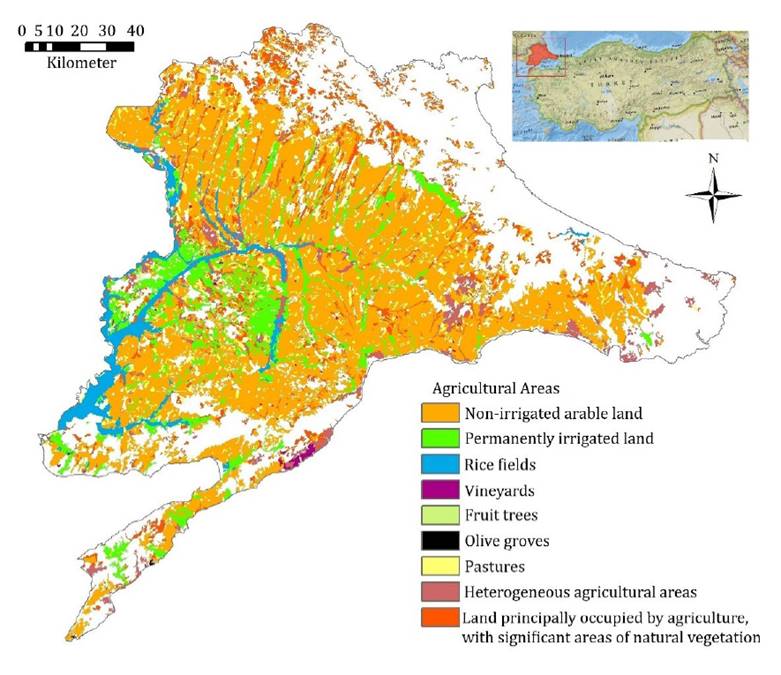
Figure 1. Agricultural lands and crop types in the Thrace Region.
Figura 1. Tierras agrícolas y tipos de cultivos en la Región de Tracia.
Climatically, the region lies in a transition zone between the Mediterranean and continental climates, with long-term annual precipitation ranging from 550 to 650 mm and monthly mean temperatures varying between 2-5°C in January and 23-25°C in July (TSMS, 2014).
Pedologically, the Thrace Region comprises extensive peneplain lowlands shaped by the Meriç and Ergene river basins. According to national soil classification studies, six dominant soil groups are found in the Meriç Basin, including Non-calcareous Brown soils, Brown Forest soils, Vertisols, and Alluvial types. In the Marmara Basin and coastal uplands, additional soil groups such as Rendzina, Red Mediterranean, Red-Yellow Podzolic, and Colluvial soils are observed, reflecting the topographic and climatic heterogeneity of the region (MRAC-GDSW, 1980).
Soil Sampling and Data Sources
To evaluate long-term changes in key soil fertility parameters, two national-scale soil datasets were utilized: the Soil Fertility Inventory (SFI) conducted in 1984 and the Soil Properties Database (SPD) compiled in 2018. In the SFI study, soil sampling was conducted across agricultural lands based on a systematic approach. Surface samples (0-20 cm depth) were collected from five different points within each square kilometer, focusing on areas with similar soil and topographic features. A total of 13,223 soil samples were collected from the three provinces: 5,031 from Edirne, 3,324 from Kırklareli, and 4,868 from Tekirdağ.
The SPD project employed a revised sampling strategy using digitized 1:25,000 scale soil maps. A systematic 2.5 × 2.5 km grid network was superimposed over Turkey’s agricultural lands to determine sampling points. Grid intersections within irrigated and rainfed croplands, vineyards, orchards, and olive groves were included, while locations affected by topographic limitations, soil group transitions, non-agricultural land use, and urban or industrial development were excluded. In total, 1,912 soil samples were collected across the Thrace Region in the SPD study, consisting of 712 from Edirne, 484 from Kırklareli, and 716 from Tekirdağ.
Laboratory Analyses and Data Processing
In both the SFI and SPD studies, soil samples underwent comparable preparation and analysis procedures. Upon arrival at the laboratory, samples were air-dried in shaded conditions after the removal of stones and plant residues. The dried soils were then crushed using wooden mallets and passed through a 2 mm stainless steel sieve for homogenization. Although minor variations in equipment and reagents existed between the two study periods, analytical methodologies were consistent and based on standardized protocols.
pH was measured in a saturated soil paste using a glass-electrode pH meter, following the Methods of ISO 10390 standards. SOM content was determined by the modified Walkley-Black method (Page et al., 1982). Available phosphorus (P2O5) was quantified using the Olsen method and expressed in kg da-1 (Page et al., 1982). To enable temporal comparisons, the classification of pH, SOM, and available P values was standardized based on threshold intervals defined in national guidelines (Ülgen & Yurtsever, 1995). This classification ensured consistency in the evaluation of soil fertility changes over time.
The use of these standardized classification thresholds was critical to ensure methodological consistency and comparability when interpreting long-term changes in soil fertility indicators across the Thrace Region.
For each province and year (1984 and 2018), we calculated the percentage of samples in each fertility class as (n_class / n_total) × 100, where n_class is the number of samples in a given class and n_total is the total number of samples for that province and year. Temporal change was expressed as the percentage-point difference for each class (2018 - 1984). All comparisons were conducted at the province level, and changes were evaluated separately for Edirne, Kırklareli, and Tekirdağ. The results were interpreted based on class proportions and their changes over time.
Land Use Characterization and Mapping
Land use data derived from the CLC2018 classification were integrated with the soil data to support spatial interpretation of soil fertility trends in relation to prevailing agricultural practices. Using ArcMap 10.4 software, spatial distributions of non-irrigated and irrigated croplands, rice fields, vineyards, orchards, pastures, and heterogeneous agricultural areas were mapped for the Thrace Region. These land use maps contributed to evaluating the relationship between soil property changes and land management patterns across the study area.
Results and Discussion
Temporal Changes in Soil pH
Figure 2, illustrates the distribution of soil pH classes across Edirne, Kırklareli, and Tekirdağ based on SFI and SPD data. A consistent acidification trend was observed, with strongly acidic soils (pH < 4.5) emerging in the SPD dataset (2.3-3.1%), despite being absent in the SFI. Moderately acidic soils (pH 4.5-5.5) also increased markedly (from 1.5-7.3% to 12.6-19.9%), while neutral soils (pH 6.6-7.5) declined, especially in Edirne (from 55.5% to 36.7%). These patterns indicate a regional trend toward acidification. Earlier surveys reported predominantly neutral soils in Thrace (Sönmez et al., 2018; Taşova & Akın, 2013), with Eyüpoğlu (1999) noting no strongly acidic soils at the time. However, localized acidity had already been reported in areas like Uzunköprü (Bellitürk, 2011).
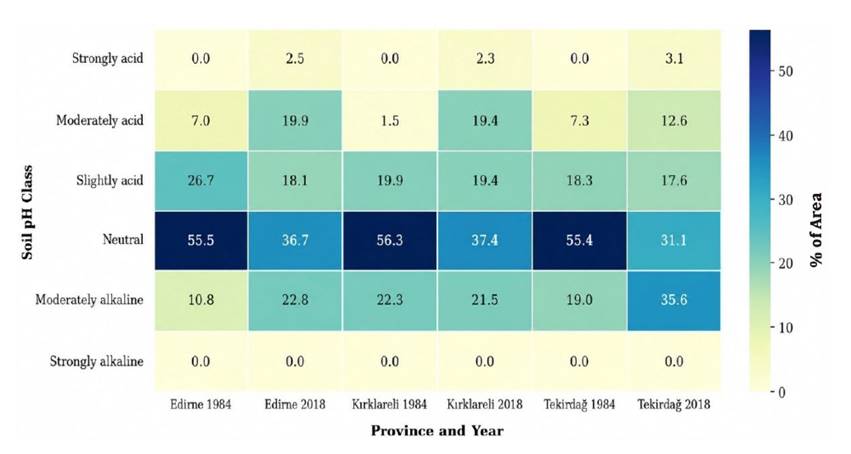
Figure 2. Distribution of soil pH classes across Edirne, Kırklareli, and Tekirdağ based on SFI (1984) and SPD (2018) data.
Figura 2. Distribución de las clases de pH del suelo en Edirne, Kırklareli y Tekirdağ, basada en los datos de SFI (1984) y SPD (2018).
The dominant driver of this trend is prolonged use of ammonium-based N fertilizers, which acidify soils through H⁺ release during nitrification (Hojito, 1998; Zhang et al., 2024). Ammonium sulfate further contributes via sulfuric acid formation (Goulding & Blake, 1998). Widespread use of such fertilizers in cereal, maize, and rice systems has likely intensified the acidification. Additional contributors include uptake of basic cations by crops, H⁺ release by legumes during N fixation (Bolan & Hedley, 2003; Zhao & Shen, 2018), SOM mineralization (Abdi, 2024; Bolan et al., 1999), and possibly acid deposition from industrial emissions (Foy, 1992; Goulding, 2016).
Soil acidification has well-documented negative effects, including increased Al³⁺ solubility and toxicity at pH < 5.5 (Kariuki et al., 2007; Parker et al., 1989), as well as leaching of essential base cations like Ca²⁺ and Mg²⁺ (Fageria & Baligar, 2003). Acidic conditions also impair microbial activity and nutrient cycling (Lewis et al., 2018). Liming is the standard countermeasure (Abdi, 2024; Haynes, 1984), yet its application remains limited in Thrace due to cost and awareness issues (Goulding, 2016). Adjusting lime use to crop-specific pH requirements (Kurşun & Gürbüz, 2010) and adopting integrated practices such as organic amendments and reduced tillage (Campbell & Paustian, 2015) may help mitigate acidification risks.
A long-term trend of acidification is evident over the past 30-40 years in the Thrace Region, driven by chemical fertilization and insufficient corrective practices. Urgent action is needed to counteract further soil degradation and ensure long-term productivity.
Temporal Changes in SOM
Soils with high (>30 g kg-1) or very high (> 40 g kg-1) SOM content constituted less than 5% of samples in both periods and all provinces, indicating persistently low SOM levels in Thrace (figure 3). While “very low” SOM (<10 g kg-1) slightly decreased in Edirne and Kırklareli, it remained stable in Tekirdağ. In contrast, “low” SOM (10-20 g kg-1) increased notably: from 48.2% to 61.9% in Edirne, 43.4% to 58.1% in Kırklareli, and 50.9% to 61.2% in Tekirdağ. Overall, nearly 80% of soils had <20 g kg-1 SOM. These findings align with earlier regional assessments (Eyüpoğlu, 1999; Taşova & Akın, 2013). Although practices like sunflower stalk incorporation and reduced stubble burning have led to minor improvements, they remain insufficient to reverse long-term SOM decline.
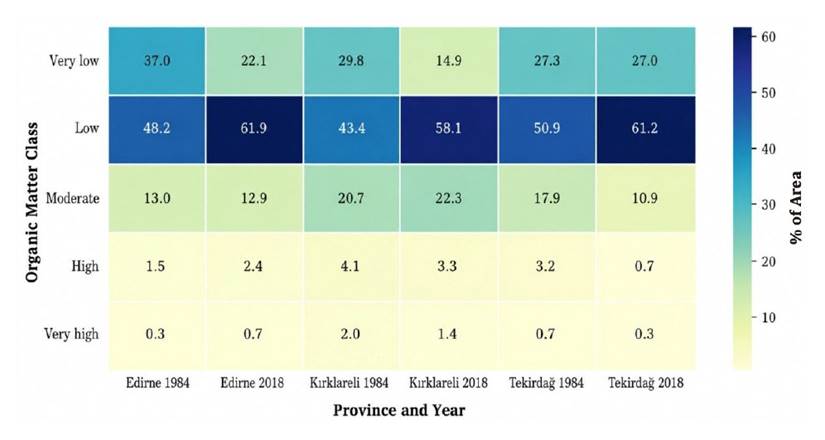
Figure 3. Percentage distribution of SOM classes by province (Edirne, Kırklareli, Tekirdağ) for 1984 (SFI) and 2018 (SPD) datasets.
Figura 3. Distribución porcentual de las clases de MOS por provincia (Edirne, Kırklareli, Tekirdağ) para los conjuntos de datos de 1984 (SFI) y 2018 (SPD).
SOM supports aggregation, water retention, nutrient storage, buffering capacity (İlay & Kavdır, 2021; Okur et al., 2022; Weil & Magdoff, 2004), and microbial activity (Acır & Günal, 2019; Dvořáčková et al., 2022). In Thrace, intensive tillage, continuous cropping, and insufficient organic inputs have driven SOM losses over decades. Similar depletion patterns were observed in long-term trials such as Rothamsted (Johnston et al., 2009). Local trials demonstrate the potential of green manuring. For instance, Gürbüz (2010) found that winter vetch applications raised SOM from 13.4 g kg-1 to 21.7 g kg-1 over three years. Conversely, harvesting vetch for forage or conventional practices produced smaller gains. Comparable trends have been reported globally. In Ethiopia, SOM loss threatens long-term productivity (Woldeamlak & Solomon, 2013), while sub-Saharan Africa has seen 20-83% reductions in original SOC stocks (Lal, 2004). These parallels highlight the global relevance of Thrace’s soil degradation. To rebuild SOM, region-specific strategies must include reduced tillage, cover crops, green manures, compost or manure addition, and elimination of stubble burning. Promoting crop rotations and raising farmer awareness of SOM’s importance are also essential. In summary, despite slight regional gains, SOM levels in Thrace remain critically low. Without major management changes, the risk of further fertility loss and degradation persists.
Temporal Changes in Available P
Available P levels have increased markedly across all provinces. Soils in the “high” and “very high” classes rose to 74.4% in Edirne, 65.7% in Kırklareli, and 71.7% in Tekirdağ, compared to 60.9%, 61.9%, and 56.3% in the 1980s SFI data, respectively. Simultaneously, “very low” and “low” P classes declined notably, with “very low” soils falling to 2-5% from earlier levels of 8-12% (figure 4). These results indicate that over two-thirds of Thrace soils are currently classified as P-sufficient or P-excessive.
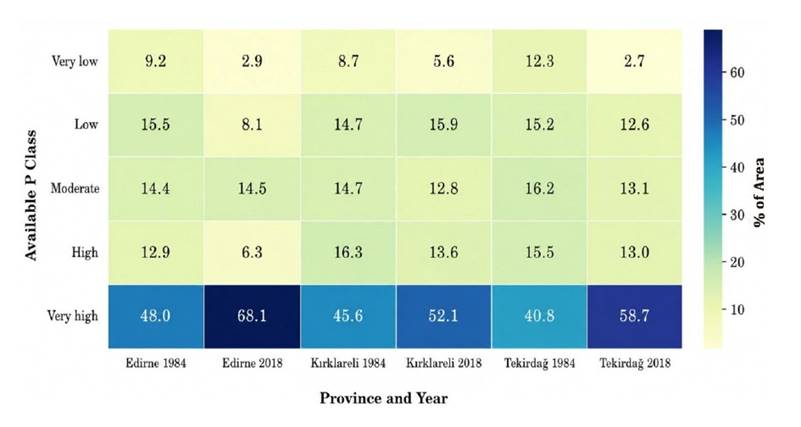
Figure 4. Percentage distribution of available phosphorus (P) classes by province (Edirne, Kırklareli, Tekirdağ) for 1984 (SFI) and 2018 (SPD) datasets.
Figura 4. Distribución porcentual de las clases de fósforo (P) disponible por provincia (Edirne, Kırklareli, Tekirdağ) para los conjuntos de datos de 1984 (SFI) y 2018 (SPD).
This trend aligns with regional studies reporting similarly high P levels (Eyüpoğlu, 1999; Kayalı & Yüksel, 2024; Taşova & Akın, 2013) and indicates long-term overuse of phosphate fertilizers. Farmers commonly apply P regardless of soil test results, leading to accumulation due to P’s low mobility. In Thrace, calcareous soils promote P fixation as calcium phosphates, while acidic soils immobilize P as iron and aluminum phosphates (Goldstein, 2000; Yurdakul & Usta, 2023), limiting short-term availability but contributing to buildup in non-labile forms. While P is vital for plant growth, excessive accumulation can disrupt nutrient balance. High soil P impairs zinc uptake (Ova et al., 2015), and runoff losses can accelerate eutrophication (Withers et al., 2014). For instance, P loading from agricultural fields is suspected to have contributed to recent mucilage events in the Sea of Marmara. These events involve gelatinous organic aggregates linked to algal blooms and are often favored by nutrient enrichment (especially P) under suitable hydro-climatic conditions. Sustainable P management is now critical. Fertilizer rates should be based on soil testing and adjusted according to crop-specific thresholds. Li et al. (2024) found optimal P levels for wheat and maize to be 12.5 and 50 kg P ha-1, respectively. Regional calibration for dominant rotations like wheat-sunflower is needed to guide applications. Organic amendments (compost, manure, microbial inoculants) can improve P availability and reduce fixation (Braschi et al., 2003; Karabatak, 2006). Conservation tillage, cover cropping, and crop rotation support P balance by enhancing uptake and minimizing surplus.
Conclusion
Addressing the observed long-term changes in soil fertility in the Thrace Region requires region-specific corrective and preventive strategies. Priority actions include routine soil testing to guide input decisions, targeted liming to maintain crop-appropriate pH ranges, rebuilding soil organic matter through organic amendments and residue-return practices, and phosphorus management based on calibrated, crop-specific thresholds. Wider adoption of conservation-oriented practices (e.g., reduced tillage, diversified rotations, and cover crops) together with farmer guidance and supportive policies will be essential to sustain soil health and agricultural productivity in the region.
Acknowledgements
This study was supported by the General Directorate of Agricultural Research and Policies (TAGEM) and conducted under the TAGEM project (TAGEM/TSKAD/2020/A12/P-03). The authors also acknowledge the IklimTrak Project (EUROPEAID/170484/ID/ACT/TR) coordinated by Tekirdağ Namık Kemal University for its inspiration. SFI reports are available in print from provincial institutional libraries; SPI project data will be accessible via the national platform (https://tgskcbs.tarim.gov.tr/#/login) once finalized.
Abdi, B. T. (2024). Studies on the effects of liming acidic soil on improving soil physicochemical properties and yield of crops: A review. Middle East Research Journal of Agriculture and Food Science, 4(3), 95-103.
Acır, N., & Günal, H. (2019). Definition of soil quality and its importance for ecosystem functions and sustainable land management. Science and Technology in the 21st Century, 6(11), 19-30. https://doi.org/10.3769/fetek.2019.6.11.19-30
Alcalá Jáuregui, J. A.; Ramírez Cubos, M. F.; Rojas Velázquez, Á.; Diedhiou, I.; Filippini, M. F.; Cónsoli, D.; Martínez Carretero, E.; Rodríguez Ortiz, J. C.; Guillén Castillo, O. I.; Ontivero, M. (2025). Variations of Atmospheric Emissions in the Biomass Burning of Tree Species as an Environmental Indicator. Revista de la Facultad de Ciencias Agrarias. Universidad Nacional de Cuyo. 57(2): 69-86. DOI: https://doi.org/10.48162/rev.39.172
Alori, E. T., Glick, B. R., & Babalola, O. O. (2017). Microbial phosphorus solubilization and its potential for use in sustainable agriculture. Frontiers in Microbiology, 8, 971. https://doi.org/10.3389/fmicb.2017.00971
Arévalo-Aranda, Y., Toribio, E. R., Cordova, L. R., Díaz-Chuquizuta, H., Chávez, E. E. T., Cruz-Luis, J., & Pérez, W. E. (2024). Green manuring and fertilization on rice (Oryza sativa L.): A Peruvian Amazon study. Revista de la Facultad de Ciencias Agrarias. Universidad Nacional de Cuyo, 56(2), 1-13. https://doi.org/10.48162/rev.39.132
Atav, V., Yüksel, O., Namlı, A., & Gürbüz, M. A. (2024). Biogas liquid digestate application: Influence on soil microbial biomass and CO₂ respiration. Journal of Material Cycles and Waste Management, 26(6), 3525-3534. https://doi.org/10.1007/s10163-024-02055-w
Atav, V., Gürbüz, M. A., Kayali, E., & Yalinkiliç, E. (2025). Optimizing Nitrogen Management in Maize (Zea mays L.) Using Urease and Nitrification Inhibitors. Communications in Soil Science and Plant Analysis, 56(4), 528-541. https://doi.org/10.1080/00103624.2024.2424236
Bellitürk, K. (2011). Determination of nutrient status of agricultural soils in Uzunköprü County of Edirne Province. Journal of Tekirdağ Agricultural Faculty, 8(3), 8-15.
Blackwell, M. S. A., Darch, T., & Haslam, R. P. (2019). Phosphorus use efficiency and fertilizers: Future opportunities for improvements. Frontiers of Agricultural Science and Engineering, 6(4), 332-340. https://doi.org/10.15302/J-FASE-2019274
Bolan, N. S., Naidu, R., Syers, J. K., & Tillman, R. W. (1999). Surface charge and solute interactions in soils. Advances in Agronomy, 67, 87-140. https://doi.org/10.1016/S0065-2113(08)60514-3
Bolan, N. S., & Hedley, M. J. (2003). Role of carbon, nitrogen, and sulfur cycles in soil acidification. In Z. Rengel (Ed.), Handbook of Soil Acidity (p. 29–56). https://doi.org/10.1201/9780203912317
Braschi, I., Ciavatta, C., Giovannini, C., & Gessa, C. (2003). Combined effect of water and organic matter on phosphorus availability in calcareous soils. Nutrient Cycling in Agroecosystems, 67, 67-74. https://doi.org/10.1023/A:1025143809825
Campbell, E. E., & Paustian, K. (2015). Current developments in soil organic matter modeling and the expansion of model applications: A review. Environmental Research Letters, 10(12), 123004. https://doi.org/10.1088/1748-9326/10/12/123004
Cassani, M. T., Sabatte, M. L., Perez, S. P., & Massobrio, M. J. (2024). Different scenarios in land suitability assessment for Kernza®-intermediate wheatgrass (Thinopyrum intermedium), a novel perennial grain crop for Argentina. Revista de la Facultad de Ciencias Agrarias. Universidad Nacional de Cuyo. 56(2), 48-61. https://doi.org/10.48162/rev.39.136
Dvořáčková, H., Dvořáček, J., Hueso González, P., & Vlček, V. (2022). Effect of different soil amendments on soil buffering capacity. PLOS ONE, 17(2), e0263456. https://doi.org/10.1371/journal.pone.0263456
European Environment Agency. (2020). CORINE Land Cover 2018 (raster 100 m), Europe, 6-yearly -version 2020_20u1, May 2020 [Data set]. Copernicus Land Monitoring Service. https://doi.org/10.2909/960998c1-1870-4e82-8051-6485205ebbac
Eyüpoğlu, F. (1999). The fertility status of soils in Türkiye. Republic of Türkiye Prime Ministry. General Directorate of Rural Services. General Publication N°: 220, Technical Publication N°: T-67.
Fageria, N. K., & Baligar, V. C. (2003). Fertility management of tropical acid soils for sustainable crop production. In Z. Rengel (Ed.), Handbook of Soil Acidity (p. 359–385). CRC Press. https://doi.org/10.1201/9780203912317-1
Foy, C. D. (1992). Soil Chemical Factors Limiting Plant Root Growth. In: Hatfield, J. L., Stewart, B. A. (eds) Limitations to Plant Root Growth. Advances in Soil Science, vol 19. Springer. https://doi.org/10.1007/978-1-4612-2894-3_5
Goldstein, A. H. (2000). Bioprocessing of rock phosphate ore: Essential technical considerations for the development of a successful commercial technology. In Proceedings of the 4th International Association for Technical Conference (p. 220-242).
Goulding, K. W., & Blake, L. (1998). Land use, liming and the mobilization of potentially toxic metals. Agriculture, Ecosystems & Environment, 67(2-3), 135-144. https://doi.org/10.1016/S0167-8809(97)00111-4
Goulding, K. W. T. (2016). Soil acidification and the importance of liming agricultural soils with particular reference to the United Kingdom. Soil Use and Management, 32(3), 390-399. https://doi.org/10.1111/sum.12270
Granados Ortiz, S. A.; Visentini, F. F.; Panigo, E. S.; Muñoz, F. F.; Malano, J. P.; Derita, M. G.; Daurelio, L. D.; Bouzo, C. A.; Pérez Rubin, A. A.; Céccoli, G. (2025). Green Synthesis and Foliar Application of Copper Nanoparticles in Sunflower (Helianthus annuus L.) to Improve Physiological Parameters and Yield. Revista de la Facultad de Ciencias Agrarias. Universidad Nacional de Cuyo. 57(2): 187-198. DOI: https://doi.org/10.48162/rev.39.182
Gürbüz, M. A. (2010). The effect of including legumes into the wheat–sunflower rotation on soil organic matter and nitrogen content in Thrace. In 1st National Soil and Water Resources Congress (p. 538-546). Türkiye.
Haynes, R. J. (1984). Lime and phosphate in the soil-plant system. Advances in Agronomy, 37, 249-315. https://doi.org/10.1016/S0065-2113(08)60456-3
Hojito, M. (1998). Productivity of acidified grassland caused by acidic nitrogen fertilizer and aluminum tolerance of grasses and legumes. Japan Agricultural Research Quarterly, 32, 87-96.
İlay, R., & Kavdır, Y. (2021). Effects of organic materials from different sources on the physical properties of sandy loam soils. Turkish Journal of Soil Science and Plant Nutrition, 9(1), 30-38. https://doi.org/10.33409/tbbbd.881352
Johnston, A. E., Poulton, P. R., & Coleman, K. (2009). Soil organic matter: Its importance in sustainable agriculture and carbon dioxide fluxes. Advances in Agronomy, 101, 1-57. https://doi.org/10.1016/S0065-2113(08)00801-8
Karabatak, İ. (2006). Effects of organic matter applications on mineral phosphorus fractions in calcareous soils (Master’s thesis, Mustafa Kemal University, Institute of Science).
Kariuki, S. K., Zhang, H., Schroder, J. L., Edwards, J., Payton, M., Carver, B. F., Raun, W. R., & Krenzer, E. G. (2007). Hard red winter wheat cultivar responses to a pH and aluminum concentration gradient. Agronomy Journal, 99(1), 88-98. https://doi.org/10.2134/agronj2006.0128
Kayalı, E., & Yüksel, O. (2024). Fertility status of agricultural soils in İstanbul province. Journal of Tekirdağ Agricultural Faculty, 21(5), 1336-1350. https://doi.org/10.33462/jotaf.1540727
Kurşun, İ., & Gürbüz, M. A. (2010). The effect of lime (CaCO₃) application on sunflower and wheat yield in acidic soils of the Thrace Region. In 1st National Congress on Soil and Water Resources (p. 538). Türkiye.
Lal, R. (2004). Soil carbon sequestration in sub-Saharan Africa: A review. Soil and Tillage Research, 78(1), 1-19. https://doi.org/10.1016/j.still.2004.03.002
Lewis, R. W., Barth, V. P., Coffey, T., McFarland, C., Huggins, D. R., & Sullivan, T. S. (2018). Altered bacterial communities in long-term no-till soils associated with stratification of soluble aluminum and soil pH. Soil Systems, 2(1), 7. https://doi.org/10.3390/soils2010007
Li, S., Chen, X., Wang, Z., Wu, D., Wang, M., Müller, T., Zou, C., Chen, X., & Zhang, W. (2024). Phosphorus fertilizer management for high yields in intensive winter wheat-summer maize rotation system: Integrating phosphorus budget and soil available phosphorus. Field Crops Research, 313, 109410. https://doi.org/10.1016/j.fcr.2024.109410
Liang, H., Tan, Y., Yin, J., Peng, Y., Wei, M., Chen, H., & Chen, Q. (2024). Phosphate fertilizers’ dual role in cadmium-polluted acidic agricultural soils: Dosage dependency and passivation potential. Agronomy, 14(10), 2201. https://doi.org/10.3390/agronomy14102201
Ministry of Rural Affairs and Cooperatives, General Directorate of Soil and Water. (1980). Marmara Basin soils (Publication N° 229, Report Series N° 91).
Okur, B., Yağmur, B., & Okur, N. (2022). Green manuring. In M. A. Özyazıcı & Ö. Ü. Açıkbaş (Eds.), Green Manuring (p. 79-101). IKSAD Publishing House.
Ova, E. A., Kutman, U. B., Öztürk, L., & Cakmak, I. (2015). High phosphorus supply reduced zinc concentration in wheat grown in natural soil but not in autoclaved soil or nutrient solution. Plant and Soil, 393(1-2), 147-162. https://doi.org/10.1007/s11104-015-2483-8
Page, A. L., Miller, R. H., & Keeney, D. R. (Eds.). (1982). Methods of soil analysis. Part 2: Chemical and microbiological properties (2nd ed., Agronomy Monograph N° 9). American Society of Agronomy; Soil Science Society of America.
Parker, D. R., Kinraide, T. B., & Zelazny, L. W. (1989). On the phytotoxicity of polynuclear hydroxyaluminum complexes. Soil Science Society of America Journal, 53(3), 789-796. https://doi. org/10.2136/sssaj1989.03615995005300030027x
Republic of Türkiye Ministry of Agriculture, Forestry and Rural Affairs. (1984a). Productivity Inventory and Fertilizer Requirement Report of Edirne Province (TOVEP Publication N° 14; General Publication N° 742). General Directorate of Topraksu Publications.
Republic of Türkiye Ministry of Agriculture, Forestry and Rural Affairs. (1984b). Productivity Inventory and Fertilizer Requirement Report of Kırklareli Province (TOVEP Publication N° 20; General Publication N° 752). General Directorate of Topraksu Publications.
Republic of Türkiye Ministry of Agriculture, Forestry and Rural Affairs. (1984c). Productivity Inventory and Fertilizer Requirement Report of Tekirdağ Province (TOVEP Publication N° 13; General Publication N° 741). General Directorate of Topraksu Publications.
Richardson, A. E., & Simpson, R. J. (2011). Soil microorganisms mediating phosphorus availability: Update on microbial phosphorus. Plant Physiology, 156(3), 989-996. https://doi.org/10.1104/pp.111.175448
Sattari, S. Z., Bouwman, A. F., Giller, K. E., & van Ittersum, M. K. (2012). Residual soil phosphorus as the missing piece in the global phosphorus crisis puzzle. Proceedings of the National Academy of Sciences, 109(16), 6348-6353. https://doi.org/10.1073/pnas.1113675109
Savala, C. E. N., Ndungu, P. G., Gitari, H. I., & Nyambati, S. Y. (2019). Cadmium contamination and its risk to human health through food chain: A review. International Journal of Environmental Sciences & Natural Resources, 22(2), 1-8. https://doi.org/10.19080/IJESNR.2019.22.556084
Sönmez, B., Özbahçe, A., Akgül, S., & Keçeci, M. (2018). Development of a geographic database for certain fertility parameters and total organic carbon (TOC) content of soils in Türkiye. (Project Final Report, TAGEM/TSKAD/11/A13/P03-Soil, Fertilizer and Water Resources Central Research Institute).
Taşova, H., & Akın, A. (2013). Determining, mapping and creating a database of soil nutrients in Marmara Region. Toprak Su Dergisi, 2(2), 83-95.
Turkish State Meteorological Service (TSMS). (2014). Long-term precipitation and temperature data. Retrieved January 14, 2014. http://www.mgm.gov.tr/veridegerlendirme/yilliktoplamyagis-verileri.aspx
Ülgen, A. N., & Yurtsever, N. (1995). Türkiye gübre ve gübreleme rehberi. Toprak ve Gübre Araştırma Enstitüsü. Ministry of Agriculture Ankara.
Walsh, E., & McDonnell, K. P. (2012). The influence of added organic matter on soil physical, chemical, and biological properties: A small-scale and short-time experiment using straw. Archives of Agronomy and Soil Science, 58(sup1), S201-S205. https://doi.org/10.1080/03650340.2012.697999
Wang, X., Wang, X., Sheng, H., Wang, X., Zhao, H., & Feng, K. (2022). Excessive nitrogen fertilizer application causes rapid degradation of greenhouse soil in China. Polish Journal of Environmental Studies, 31(2). https://doi.org/10.15244/pjoes/142869
Weil, R. R., & Magdoff, F. (2004). Significance of soil organic matter to soil quality and health. In F. Magdoff & R. R. Weil (Eds.), Soil organic matter in sustainable agriculture (p. 1-43). CRC Press. https://doi.org/10.1201/9780203496374.ch1
Withers, P. J. A., Sylvester-Bradley, R., Jones, D. L., Healey, J. R., & Talboys, P. J. (2014). Feed the crop not the soil: Rethinking phosphorus management in the food chain. Environmental Science &Technology, 48(12), 6523-6530. https://doi.org/10.1021/es501670j
Woldeamlak, B., & Solomon, A. (2013). Land-use and land-cover change and its environmental implications in a tropical highland watershed, Ethiopia. International Journal of Environmental Studies, 70(1), 126-139. https://doi.org/10.1080/00207233.2012.755765
Yılmaz, H., & Altınbaş, S. (2019). Use of some materials affecting soil pH in cereal cultivation. Journal of Soil Science and Plant Nutrition, 7(2), 75-82. https://doi.org/10.21657/topraksu.655284
Yurdakul, İ., & Usta, S. (2023). Effects of soil components on some phosphorus fractions. Harran Journal of Agricultural and Food Science, 27(4), 610-623. https://doi.org/10.29050/harranziraat.1357243
Zeeshan, A., Waqas, M., Ramzan, M., Ghafoor, F., Usama, Ibrahim, M., Fatima, N., Rauf, A., Hussain, A., Abbas, M., Zahid, N., & Hanif, S. (2024). From fields to families: Understanding the health impacts of excessive soil fertilization. Journal of Health and Rehabilitation Research, 4(2), 990-995. https://doi.org/10.61919/jhrr.v4i2.955
Zeng, F., Wei, W., Li, M., Huang, R., Yang, F., & Duan, Y. (2015). Heavy metal contamination in rice-producing soils of Hunan Province, China and potential health risks. International Journal of Environmental Research and Public Health, 12(12), 15584-15593. https://doi.org/10.3390/ijerph121215005
Zhang, L., Zhao, Z., Jiang, B., Baoyin, B., Cui, Z., Wang, H., Li, Q., & Cui, J. (2024). Effects of Long- Term Application of Nitrogen Fertilizer on Soil Acidification and Biological Properties in China: A Meta-Analysis. Microorganisms, 12(8), 1683. https://doi.org/10.3390/microorganisms12081683
Zhao, X. Q., & Shen, R. F. (2018). Aluminum–nitrogen interactions in the soil-plant system. Frontiers in Plant Science, 9, 807. https://doi.org/10.3389/fpls.2018.00807
Zhu, Y., Zhang, H., & He, Y. (2018). Soil phosphorus transformation and plant uptake driven by phosphate-solubilizing microorganisms: A review. Geoderma, 337, 111-122. https://doi.org/10.1016/j.geoderma.2018.09.036
Zou, T., Zhang, X., & Davidson, E. A. (2022). Global trends of cropland phosphorus use and sustainability challenges. Nature, 611(7934), 81-87. https://doi.org/10.1038/s41586-022-05272-7