Rev. FCA UNCuyo | 2026 | 58(2) | ISSN 1853-8665
Natural Resources and Environment
https://doi.org/10.48162/rev.39.220
Allergenic Potential of Urban Green Spaces in the City of Corrientes (Argentina)
Potencial alergénico de espacios verdes urbanos en la ciudad de Corrientes (Argentina)
Cristina Reneé Salgado Laurenti 1, 2 , 3
1 Universidad Nacional del Nordeste (FaCENA-UNNE). Facultad de Ciencias Exactas y Naturales y Agrimensura, Av. Libertad 5460. C. P. 3400. Corrientes. Argentina.
2 Universidad Nacional del Nordeste (FCA-UNNE). Facultad de Ciencias Agrarias. Sargento Cabral 2131. C. P. 3400. Corrientes. Argentina.
3 UNNE-CONICET. Instituto de Botánica del Nordeste. Sargento Cabral 2131. c. c. 209. C. P. 3400. Corrientes. Argentina.
* lailammiguel@yahoo.com.ar
Abstract
Urban green spaces provide ecosystem services, including well-being, recreation, improved air quality, and thermal regulation. However, certain species can cause adverse effects, such as pollinosis. This study evaluated the allergenic potential of urban green spaces in Corrientes, Argentina, considering species composition and specific botanical parameters. Fifteen censes were carried out in seven green spaces. For each taxon, habit, geographical status, pollen dispersal type, and whether it is a source of allergenic pollen were determined. Shannon diversity and evenness indices, Berger-Parker dominance, and Potential Allergenic Value (PAV) were calculated. A total of 2,251 individuals representing 40 families, 82 genera, and 77 species were recorded. Tree habit (85%), exotic status (66%), and non-allergenic taxa (60.2%) predominated. The indices indicated moderate diversity, with some species more represented than others, and low species dominance. According to the PAV, individuals with high allergenicity occurred in five green spaces, although individuals with null or unknown allergenic potential predominated. The information generated is intended to reevaluate urban flora and guide species selection by adding a criterion to tree planning to minimize the effects of pollinosis on the sensitive population.
Keywords: allergenicity, evenness and dominance, floristic survey, index of diversity, pollinosis, urban flora
Resumen
Los espacios verdes urbanos ofrecen servicios ecosistémicos, como bienestar, recreación, calidad del aire y regulación térmica. Aunque algunas especies pueden generar efectos adversos, como la polinosis. El objetivo fue evaluar el potencial de alergenicidad de espacios verdes urbanos de Corrientes-Argentina, considerando: composición de especies y parámetros botánicos específicos. Se realizaron 15 censos en siete espacios verdes. Para cada taxón se determinó porte, status geográfico, tipo de dispersión de polen y si es fuente emisora de polen alergénico. Se calcularon índices de diversidad y equitatividad de Shannon, dominancia de Berger-Parker y Valor Potencial Alergénico (VPA). Se registraron 2.251 individuos representando 40 familias, 82 géneros y 77 especies. Predominó el porte arbóreo (85%), el origen exótico (66%) y taxones no alergénicos (60,2%). Los índices indicaron una moderada diversidad, que algunas especies están mejor representadas que otras, y una baja dominancia de especies. Según el VPA, en cinco espacios verdes se encontraron individuos con alta alergenicidad, aunque predominaron individuos con potencial alergénico nulo o desconocido. Con la información generada se pretende revalorizar la flora urbana y orientar la selección de especies, al sumar un criterio en la planificación del arbolado, para minimizar los efectos de la polinosis sobre la población sensible.
Palabras clave: alergenicidad, equitatividad y dominancia, flora urbana, índice de diversidad, polinosis, relevamiento florístico
Originales: Recepción: 16/10/2025- Aceptación: 14/04/2026
Introduction
The value of urban green spaces has increased in recent decades because they are considered part of the historical, social, and cultural heritage of a city (Cariñanos et al., 2014; Ortiz & Luna, 2019). These areas also provide multiple ecosystem services, including conserving nature, offering habitat and food for wildlife, increasing biodiversity, while simultaneously benefiting the public by improving well-being, providing recreational spaces, enhancing air quality, and mitigating noise and ambient temperatures (Dobbs et al., 2011; Escobedo et al., 2011; Lafortezza et al., 2009; Maruani & Amit-Cohen, 2007; Sabariego et al., 2021). Urban vegetation can improve the microclimate and mitigate the heat island effect by reducing air temperatures in summer and creating more comfortable environments (Dimoudi & Nikolopoulou, 2003; Lafortezza et al., 2009; Martinez & Coelho-Duarte, 2023). Accordingly, the World Health Organization recommends between 10 and 15 m²of green space per inhabitant in large cities to maintain healthy living conditions (Gaido et al., 2017), ideally with one tree for every three inhabitants to improve air quality (Peñalosa-Londoño et al., 2017).
However, urban green spaces may cause seasonal allergies, affecting sensitive population (Cariñanos et al., 2014; Thompson & Thompson, 2003). Major allergens originate from pollen released by grasses and trees, as well as fungal hyphae, spores, and house dust mites (D´Amato et al., 2007; Esch et al., 2001; Green et al., 2003; Vara et al., 2016). This represents a global health concern, as allergies and respiratory problems are gradually increasing. Pollen allergy affects up to 40% of the population in industrialized countries (D´Amato et al., 2007), and nearly 30% of asymptomatic individuals are sensitized to one or more fungal allergens (Esch et al., 2001). Given this prevalence, identifying the flora that emits pollen and their flowering dynamics is crucial (Abud Sierra & Latorre, 2020; Latorre, 1999; Olabuenaga et al., 2007).
Owing to the impact of flora on public health, its allergenic potential should be considered. Studies in several European cities have produced the first estimates of the potential allergenicity of urban green spaces (Aerts et al., 2021; Camacho et al., 2024; Cariñanos et al., 2014; 2016; García et al., 2022; Lara et al., 2017; Munuera-Gázquez et al., 2017; Sabariego et al., 2021). These assessments consider biological traits of plant species, including pollination strategy, pollination period, and pollen allergenicity. However, studies in South America remain limited. To date, the Potential Allergenic Value of urban trees has been estimated only in Bogotá (Colombia), Rancagua, and Santiago (Chile) (Escobedo et al., 2023; Flores, 2022; García & Reyes, 2018).
In Argentina, studies on urban vegetation and its relationship with allergies have been conducted in cities with permanent aerobiological sampling, such as San Carlos de Bariloche (Olabuenaga et al., 2007), Mar del Plata (Abud Sierra & Latorre, 2020), La Plata (Nitiu & Mallo, 2002), and Bahía Blanca (Murray et al., 2010). Records of urban allergenic flora are also available for Diamante (Latorre & Sánchez, 2011) and Concepción del Uruguay (Marcó & Pirovani, 2009). Nonetheless, information from northeastern Argentina remains scarce. Preliminary pollen calendars exist for Posadas, Misiones (Paul et al., 1998; 2000) and Corrientes (Cuadrado, 1978; 1979), but none assessed the surrounding urban vegetation.
This study evaluates the allergenic potential of urban green spaces in the city of Corrientes based on plant species composition and species-specific biological parameters.
Materials and Methods
Study Area
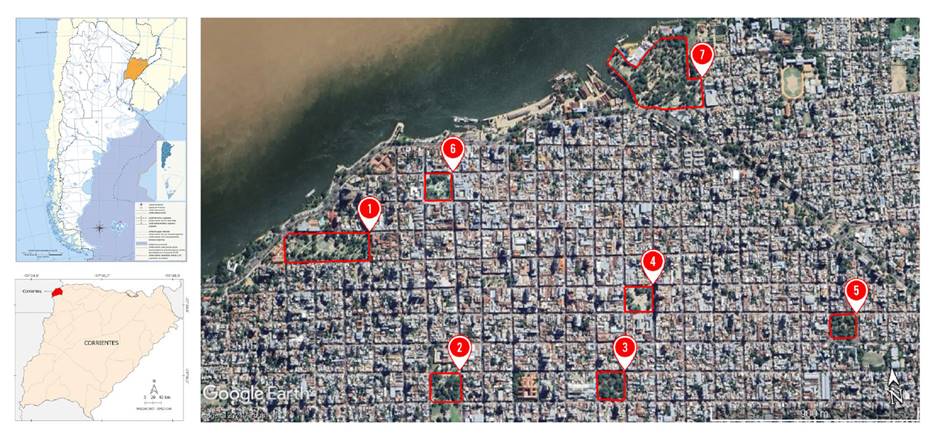
The study was conducted in Corrientes, Argentina (27°29’0” S, 58°49’0” W). The city has a subtropical climate without a dry season and a mean annual temperature of 21°C, with maximum temperatures exceeding 40°C. Annual rainfall ranges from 850 to 2000 mm, with an average of 1400 mm (Contreras et al., 2020). Seven downtown green spaces with high socio-cultural activity were selected: Mitre and Camba Cuá Parks, and 25 de Mayo, Torrent, Sargento Cabral, La Cruz, and Libertad Squares (figure 1).
Source/Fuente: IGN, Google Earth.
The reference maps (left) indicate the Corrientes Province and the homonymous Department, respectively. The satellite image (right) corresponds to the downtown area of Corrientes city and the number of green spaces surveyed. 1: Camba Cuá Park. 2: La Cruz Square. 3: Torrent Square. 4: Sargento Cabral Square. 5: Libertad Square. 6: 25 de Mayo Square. 7. Mitre Park.
Los mapas de referencia (izquierda), indican la provincia de Corrientes y el Departamento homónimo, respectivamente. La imagen satelital (derecha) corresponde al microcentro de la ciudad de Corrientes y los números, los espacios verdes censados. 1: Parque Camba Cuá. 2: Plaza La Cruz. 3: Plaza Torrent. 4: Plaza Sargento Cabral. 5: Plaza Libertad. 6: Plaza 25 de Mayo. 7: Parque Mitre.
Figure 1. Geographical location of the urban green spaces surveyed in the city of Corrientes, Argentina.
Figura 1. Ubicación geográfica de los espacios verdes urbanos censados en la ciudad de Corrientes, Argentina.
Floristic Survey and Botanical Parameters
Tree and shrub species were surveyed through 15 censuses conducted between 2023 and 2024. Individuals were identified by direct observation; when this was not possible, specimens were collected and prepared as herbarium vouchers for later identification and deposited in the CTES Herbarium (IBONE, UNNE/CONICET). Taxa were identified using specialized literature (e.g., Bonjour & Martínez-Carretero, 2020; Lozano & Zapater, 2008; Parodi & Dimitri, 1972). Nomenclature was updated using the databases Flora Argentina (IBODA, 2018) and Catálogo de Plantas Vasculares del Conosur (IBODA, 2024) for native species, and Tropicos (MOBOT, 2024) for exotic species. For each taxon, we recorded growth habit (tree or shrub), origin (native or exotic), pollen dispersal type (anemophilous, entomophilous, or ambophilous), and whether the species produces allergenic pollen. Information on pollen allergenicity was obtained from the databases AllergoMe (2024) and The Pollen Library (2024), as well as specialized literature (e.g., Cariñanos et al., 2014; 2016; Cariñanos & Marinangeli, 2021; Hussain et al., 2013; Mandal et al., 2008; Munuera-Gázquez et al., 2017; Paul et al., 2000; Rodríguez & Leal, 2000; Rojo et al., 2017).
Estimation of Diversity, Evenness, and Species Dominance
To evaluate urban tree and subshrub parameters, we calculated the Shannon Diversity Index (H’), Shannon Evenness (E), and Berger-Parker Dominance Index (d).
Shannon Diversity Index (H’) was calculated as:
H’= Σ[pi.ln(pi)]
where:
pi = ni/N
ni = the number of individuals of species i
N = the total number of individuals
H’ typically ranges from 1.5 to 3.4, occasionally exceeding 4.5 (Ortiz & Luna, 2019). Higher values indicate greater diversity in the community (Magurran, 1988).
Shannon Evenness Index (E) was calculated as E= H’/Hmax, where Hmax = ln N, which represents that all species are equally abundant, with N being the total number of individuals (Magurran, 1988). Values range from 0 to 1, with 1 indicating equal abundance of all species.
Berger-Parker Dominance Index (d) was calculated as d= Nmax/N, where Nmax is the number of individuals of the most abundant species. Values range from 0 to 1, with the highest value indicating dominance by a single species (Magurran, 1988).
Potential Allergenic Values (PAV)
The PAV estimates the allergenic potential of plant species (Cariñanos et al., 2014). It combines three intrinsic parameters:
PAV= api x pei x pppi
where:
api= allergenic potential of the pollen grain
pei = type of pollen emission
pppi = principal pollination period
Parameter values are standardized to facilitate calculation (Cariñanos et al., 2014; 2016; Cariñanos & Marinangeli, 2021). PAV ranges from 0 to 36, classifying species as: None= 0, Low= 1-6, Moderate= 8-12, High= 16-24, or Very High= 27-36. The principal pollination period (pppi) was assigned using Escobedo et al. (2023), who observed that high humidity accelerates pollen deposition. Given the humid subtropical climate of the study area (Köppen-Geiger classification; Kottek et al., 2006), a flowering period of less than 6 weeks was assumed for all taxa.
Results
Floristic Survey and Description of Botanical Parameters
A total of 2,251 individuals were recorded, representing 40 botanical families. The most diverse families were Arecaceae (12 spp.), Fabaceae (12 spp.), Moraceae (6 spp.), Myrtaceae (6 spp.), Apocynaceae (5 spp.), and Bignoniaceae (5 spp.). Overall, 82 genera and 77 species were identified, the most abundant being Handroanthus heptaphyllus (22.44%), Tipuana tipu (9.51%), and Peltophorum dubium (8.26%) (figure 2A, table 1). Eight individuals remained unidentified due to the absence of reproductive structures or other key features during the surveys.
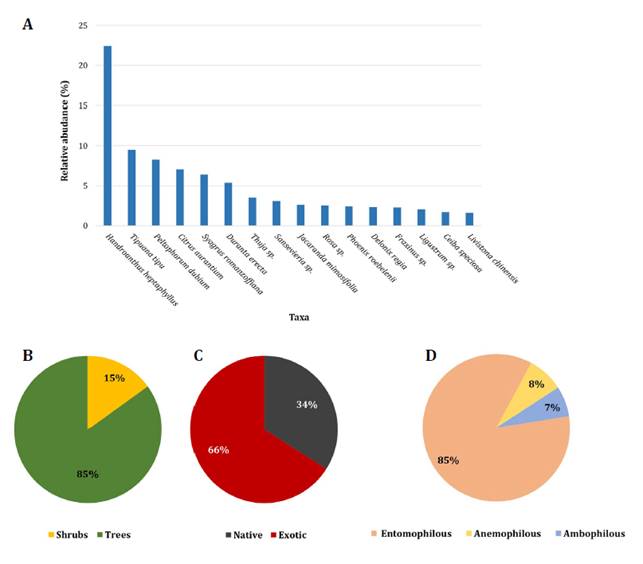
A: Genera and species with relative abundance greater than 1%. B: Percentage of arboreal and shrubby taxa. C: Percentage of taxa according to geographic status. D: Percentage of taxa according to type of pollen dispersal.
A: Géneros y especies con abundancia relativa mayor al 1%. B: Porcentaje de taxones arbóreos y arbustivos. C: Porcentaje de taxones según status geográfico. D: Porcentaje de taxones según tipo de dispersión polínica.
Figure 2. Taxa surveyed in the urban green spaces of the city of Corrientes and botanical parameters.
Figura 2. Taxones relevados en los espacios verdes urbanos de la ciudad de Corrientes y parámetros botánicos.
Table 1. Taxa with relative abundance greater than 1% present in the surveyed green spaces.
Tabla 1. Taxones con abundancia relativa mayor al 1% presentes en los espacios verdes relevados.
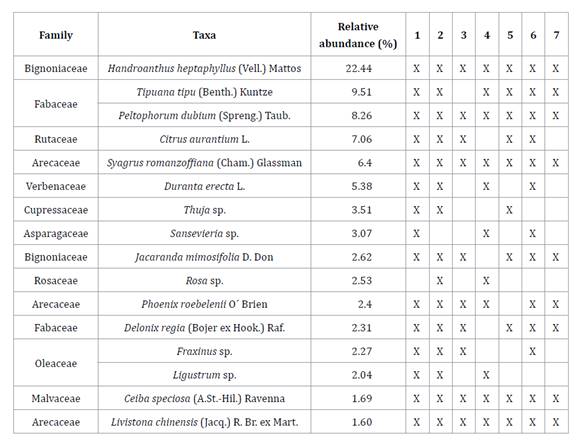
The presence of the taxon is indicated with an X. Urban green spaces are identified by numbers: 1: Mitre Park. 2: Camba Cuá Park. 3: Libertad Square. 4: 25 de Mayo Square. 5: La Cruz Square. 6: Torrent Square. 7: Sargento Cabral Square.
Se indica con X la presencia del taxón. Los espacios verdes urbanos se identifican con números: 1: Parque Mitre. 2: Parque Camba Cuá. 3: Plaza Libertad. 4: Plaza 25 de Mayo. 5: Plaza La Cruz. 6: Plaza Torrent. 7: Plaza Sargento Cabral.
In terms of habit, 85% of taxa were trees and 15% shrubs (figure 2B). Also, 34% of species were native to Argentina, and 66% were exotic (figure 2C). Pollen dispersal types were predominantly entomophilous (85%), followed by anemophilous (8%), and ambophilous (7%) taxa (figure 2D).
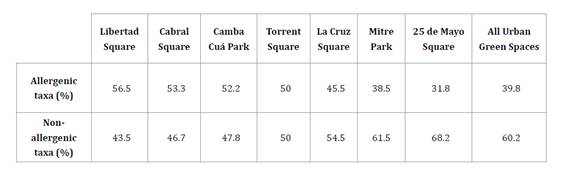
Of the seven urban green spaces, 39.8% of taxa were recorded as producing allergenic pollen, while 60.2% were not (table 2). More than 50% of species in Libertad and Sargento Cabral Squares, and Camba Cuá Park were allergenic. Torrent Square had an equal proportion of allergenic and non-allergenic species, whereas Mitre Park, La Cruz, and 25 de Mayo Squares contained less than 50% allergenic species.
Table 2. Percentage of allergenic and non-allergenic taxa present in the urban green spaces surveyed.
Tabla 2. Porcentaje de taxones alergénicos y no alergénicos presentes en los espacios verdes urbanos relevados.
By combining geographic origin and allergenic status, 30 of the 37 allergenic taxa (81%) were exotic, while 35 of the 61 non-allergenic taxa (57.4%) were exotic (figure 3).
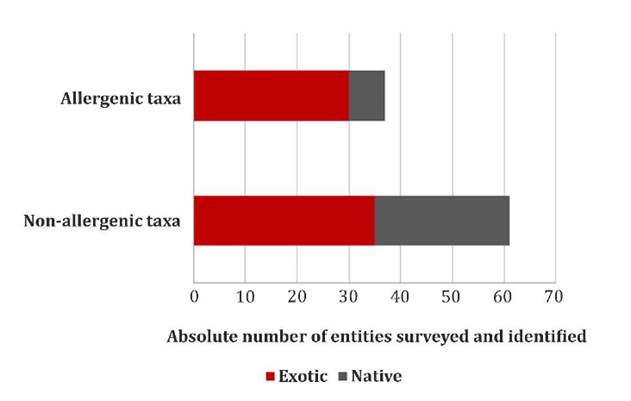
Figure 3. Relationship between the status and the number of allergenic taxa of the urban green spaces surveyed.
Figura 3. Relación entre el status y el número de taxones alergénicos de los espacios verdes urbanos relevados.
Estimation of Diversity, Evenness, and Species Dominance
Shannon Diversity (H’), Shannon Evenness (E), and Berger-Parker Specific Dominance (d) values for each urban green space, along with their averages, are presented in table 3.
Table 3. Values of Indexes of Shannon Diversity, Shannon Evenness, and Berger-Parker’s Specific Dominance estimated in urban green spaces surveyed.
Tabla 3. Valores de los índices de diversidad de Shannon, equitatividad de Shannon y dominancia específica de Berger-Parker estimados para los espacios verdes urbanos censados.
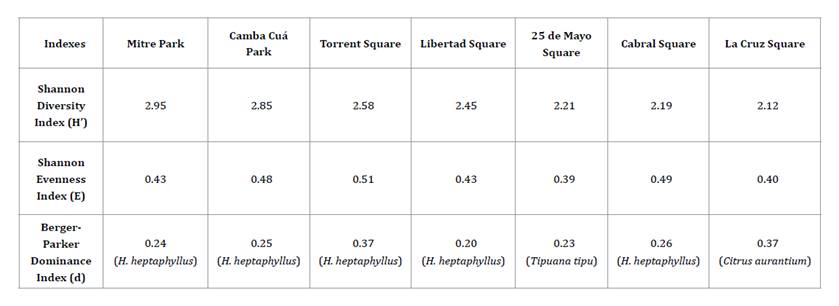
Shannon Diversity (H’) ranged from 2.95 in Mitre Park to 2.12 in La Cruz Square. Shannon Evenness (E) was highest in Torrent Square (0.51) and lowest in 25 de Mayo Square (0.39). Berger-Parker Dominance (d) was highest in Torrent and La Cruz Squares (0.37), with H. heptaphyllus and Citrus aurantium as the most abundant species, respectively. The lowest d value was found in Libertad Square (0.20), where H. heptaphyllus was also the dominant species.
Potential Allergenic Values (PAV)
Five of the seven urban green spaces contained taxa with high allergenic potential. Mitre Park had the highest number of allergenic taxa comprising 236 individuals with low, 49 with moderate, and 90 with high allergenic potential (figure 4). Across all green spaces, roughly 50% of individuals had null or unknown allergenic potential. Individuals with low allergenic potential predominated, but they can still cause allergy symptoms in sensitive populations.
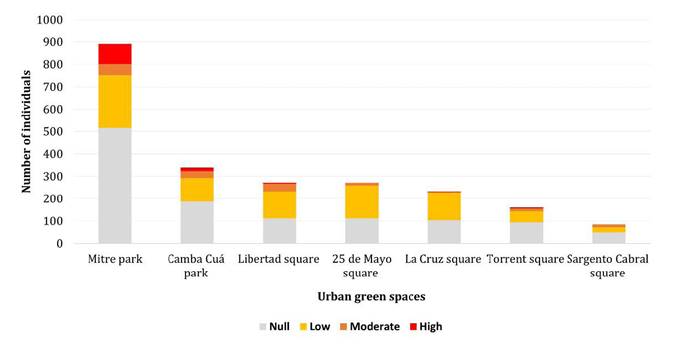
Figure 4. Relationship of total individuals according to PAV category by urban green space surveyed.
Figura 4. Relación de individuos totales según categoría de VPA por espacio verde urbano censado.
Thuja sp. and Fraxinus sp. were both high-PAV taxa occurring in notable numbers in some green spaces. In Mitre Park, Thuja sp. accounted for 8.30% and Fraxinus sp. for 2.23% of individuals. In Camba Cuá Park, Fraxinus sp. was the most frequent taxon with high PAV (6.47%), followed by Thuja sp. (0.58%). In Torrent and Libertad Squares, only Fraxinus sp. was recorded, with relative abundances of 3.73% and 1.47%, respectively. Thuja sp. had the highest PAV in La Cruz Square (1.29%). No high-PAV individuals were recorded in Sargento Cabral and 25 de Mayo Squares (table 4).
Table 4. Allergenic taxa ordered according to PAV category: High (red), Moderate (orange), and Low (yellow).
Tabla 4. Taxones registrados como alergénicos ordenados según la categoría de VPA: Alto (rojo), Moderado (naranja) y Bajo (amarillo).
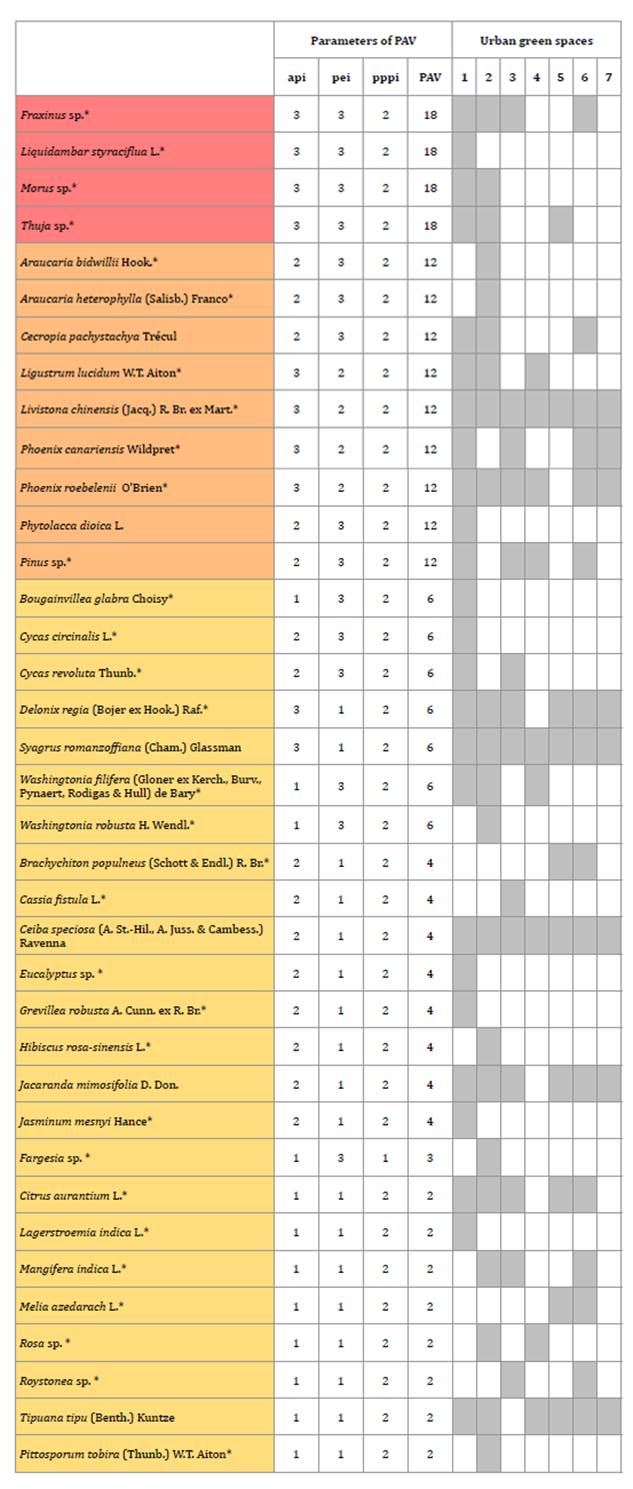
Gray boxes indicate the presence of the taxon in urban green spaces. Exotic taxa are indicated with an asterisk (*). Urban green spaces are numbered: 1: Mitre Park. 2: Camba Cuá Park. 3: Libertad Square. 4: 25 de Mayo Square. 5: La Cruz Square. 6: Torrent Square. 7: Sargento Cabral Square.
Los casilleros en gris indican la presencia del taxón en el espacio verde urbano. Con * (asterisco) se indican los taxones exóticos. Los espacios verdes urbanos se identifican con números: 1: Parque Mitre. 2: Parque Camba Cuá. 3: Plaza Libertad. 4: Plaza 25 de Mayo. 5: Plaza La Cruz. 6: Plaza Torrent. 7: Plaza Sargento Cabral.
Considering all three PAV categories, the most frequent taxa were Fraxinus sp. (high PAV); Livistona chinensis and Phoenix roebelenii (medium PAV); and Delonix regia, Syagrus romanzoffiana, Ceiba speciosa, Jacaranda mimosifolia, and Tipuana tipu (low PAV) (figure 5).
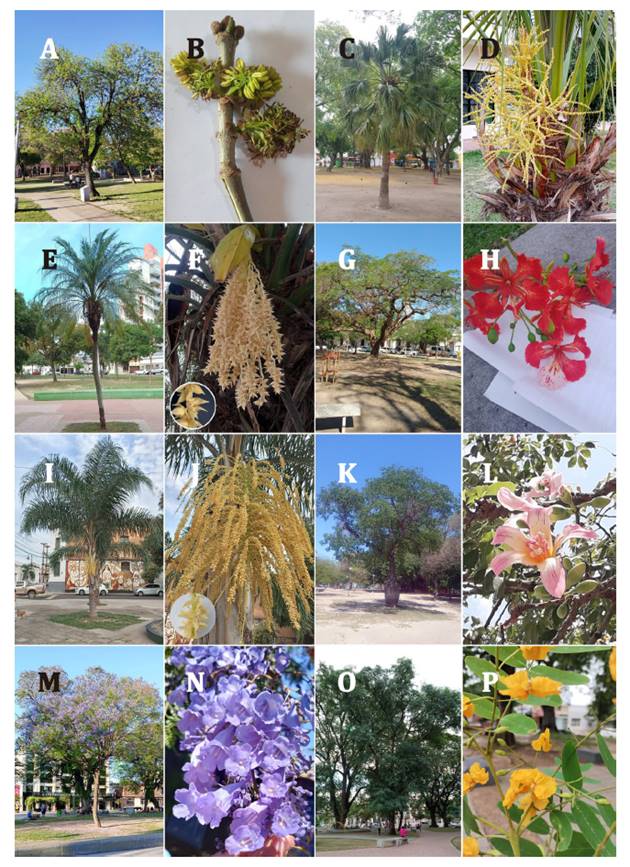
A-B: Fraxinus sp. C-D: Livistona chinensis. E-F: Phoenix roebelenii. G-H: Delonix regia. I-J: Syagrus romanzoffiana. K-L: Ceiba speciosa. M-N: Jacaranda mimosifolia. O-P: Tipuana tipu. A, C, E, G, I, K, M, O: General view, habit. B, D, F, H, J, L, N, P: Detail of the inflorescences.
A-B: Fraxinus sp. C-D: Livistona chinensis. E-F: Phoenix roebelenii. G-H: Delonix regia. I-J: Syagrus romanzoffiana. K-L: Ceiba speciosa. M-N: Jacaranda mimosifolia. O-P: Tipuana tipu. A, C, E, G, I, K, M, O: Aspecto general, porte. B, D, F, H, J, L, N, P: Detalle de inflorescencias.
Figure 5. Illustrations of most frequent taxa in the green spaces surveyed according to the PAV categories.
Figura 5. Ilustraciones de taxones más frecuentes en espacios verdes censados según categorías de VPA.
Discussion
Species Composition and Ecological Patterns
The floristic survey of tree and shrub species across seven urban green spaces in the microcenter of Corrientes recorded 2,251 individuals, predominantly trees (85%), exotic species (66%), entomophilous species (85.4%), and non-allergenic taxa (60.2%).
The most abundant taxa were Handroanthus heptaphyllus (22.44%), Tipuana tipu (9.51%), and Peltophorum dubium (8.26%), with only T. tipu considered allergenic. Similar patterns were reported by Laffont et al. (2015), who also identified these species as predominant in Corrientes. In contrast, Luna et al. (2023) reported a higher relative abundance of H. heptaphyllus (48.51%) in the northern riverside sector.
Studies from other cities in northeastern Argentina also report at least one entomophilous species of Bignoniaceae as dominant. For example, H. heptaphyllus was the most abundant species in Resistencia (11.3%; Ortiz & Luna, 2019), whereas Jacaranda mimosifolia predominated in Posadas (17.69%; Rodríguez & Dematteis, 1999). In Diamante (Entre Ríos), Handroanthus impetiginosus and Tecoma stans var. stans were also among the most representative taxa (Latorre & Sánchez, 2011).
Increasing species diversity in urban tree assemblages is recommended so that no single species exceeds 15% relative abundance, improving landscape value and reducing pest and disease risks (Ledesma, 2008).
A high diversity of exotic species was recorded in the surveyed urban green areas, consistent with previous studies from the northern Corrientes riverside and other Argentine cities (Luna et al., 2023; Marcó & Pirovani, 2009; Ortiz & Luna, 2019; Rodríguez & Dematteis, 1999; Rodríguez & Leal, 2000; Rodríguez et al., 2015).
Diversity, Dominance, and Spatial Variation
The Shannon Diversity Index across the seven urban green spaces was lower (mean = 2.48) than that reported for squares in the microcenter of Resistencia, Chaco (mean = 3.60; Ortiz & Luna, 2019). However, values for Mitre (2.95) and Camba Cuá (2.85) Parks, and Torrent (2.58) and Libertad (2.45) Squares were higher than those reported for the northern sector of the Corrientes riverside (2.26; Luna et al., 2023), whereas 25 de Mayo (2.21), Sargento Cabral (2.19), and La Cruz (2.12) Squares showed lower values. Overall, these results indicate moderate diversity across the surveyed urban green spaces.
The mean Shannon Evenness Index was 0.45, similar to that reported for the Corrientes riverside (0.32; Luna et al., 2023) but markedly lower than the value reported for urban green spaces in Resistencia (0.77; Ortiz & Luna, 2019). This indicates low species evenness driven by the dominance of a few specific taxa.
Based on the Berger-Parker dominance Index, Libertad Square exhibited the lowest dominance (0.20), with Handroanthus heptaphyllus as the most abundant species. Conversely, Torrent and La Cruz Squares showed the highest dominance values (0.37), with H. heptaphyllus and Citrus aurantium as the respective dominant species. These values are intermediate relative to those reported for the Corrientes riverside (0.48; Luna et al., 2023) and Resistencia (0.19; Ortiz & Luna, 2019), where H. heptaphyllus was also the dominant species.
Allergenicity and Implications for Urban Planning
Knowledge of the local allergenic flora is essential for the diagnosis and treatment of pollinosis (Latorre & Sánchez, 2011; Marcó & Pirovani, 2009). In the urban green spaces of Corrientes, 37 taxa with allergenic pollen were recorded, with Tipuana tipu, Citrus aurantium, and Syagrus romanzoffiana among the most representative. This pattern differs from that reported in Concepción del Uruguay (Entre Ríos), where Fraxinus sp., Salix sp., and Ligustrum sp. were the most prevalent allergenic taxa (Marcó & Pirovani, 2009). Similarly, 34 allergenic taxa were identified in Diamante (Entre Ríos), with Fraxinus americana L., F. pennsylvanica Marshall, and Platanus acerifolia (Aiton) Willd as the most abundant (Latorre & Sánchez, 2011).
The Potential Allergenic Value (PAV) serves as a robust metric for estimating allergenic risk in urban green spaces, particularly in cities where aerobiological monitoring is unavailable (Cariñanos et al., 2014). In Corrientes, taxa with high PAV were mainly anemophilous species, including Thuja sp., Fraxinus sp., Morus sp., and Liquidambar styraciflua. Similar patterns have been reported in other studies (Cariñanos et al., 2014; 2016; Cariñanos & Casares-Porcel, 2017; Escobedo et al., 2023; Munuera-Gázquez et al., 2017). For example, in Bogotá, species with high PAV included Cupressus sempervirens L., Thuja spp., Alnus acuminata Kunth, Schinus molle L., Dodonaea viscosa (L.) Jacq., Salix humboldtiana Willd., Platanus acerifolia, and Araucaria excelsa (Cordero) W.T. Aiton (Escobedo et al., 2023). In Santiago de Chile, the most allergenic species were Ligustrum lucidum, L. sinense Lour., Acer negundo L., Schinus molle, and Fraxinus excelsior L. (Green et al., 2003). In Argentina, a predominance of exotic anemophilous species such as Platanus acerifolia and Populus sp. has also been documented in Mujeres Argentinas Park in Buenos Aires (Alcaraz et al., 2023).
To reduce allergenic risk in urban green spaces, previous studies recommend increasing tree diversity and prioritizing species with entomophilous pollination, as well as incorporating dioecious or polygamous-dioecious taxa with pistillate flowers (Alcaraz et al., 2023; Cariñanos et al., 2014). Under this approach, the abundance of allergenic species becomes a key factor, as their impact is determined not only by their presence but also by their relative dominance in the urban tree assemblage (Cariñanos et al., 2014).
Conclusions
This study provides information on the potential allergenicity of urban green spaces in Corrientes and represents the first application of this index in a northeastern province of Argentina. Overall, the seven surveyed green spaces showed low to moderate allergenicity, largely because the most abundant taxa exhibit entomophilous pollination. Among the parks analyzed, Mitre and Camba Cuá showed the highest proportion of taxa with moderate to high allergenicity. The taxa most frequently used as urban trees with allergenic pollen were Fraxinus sp. and Thuja sp.
Studies are currently underway to analyze the contribution of pollen grains from urban trees to airborne concentrations in Corrientes and to identify the seasonal periods of greatest risk for sensitive individuals. This information will be essential for improving the diagnosis and treatment of pollinosis and for guiding future planting strategies. Similar research in other cities would generate valuable comparative data and provide a broader framework for species selection based on allergenic risk. Incorporating allergenicity as a criterion in urban forestry planning is therefore essential to minimize the effects of pollinosis in the local environment. Moreover, the use of the Potential Allergenic Value (PAV) as a guiding metric, together with the promotion of entomophilous and dioecious species with pistillate flowers, can significantly reduce allergenic exposure.
Based on the findings of this study, future urban forestry initiatives in Corrientes should prioritize the following strategies:
Broaden species selection by incorporating a greater diversity of native and non-allergenic taxa to enhance ecological compatibility and reduce health risks.
Limit individual species dominance to a maximum of 15% relative abundance, in accordance with best practices for urban biodiversity and pest resilience.
Promote structural and functional diversity in urban tree cover to strengthen ecological resilience and enrich the landscape’s aesthetic and cultural value.
Integrate allergenic potential into planting decisions, using tools such as the Potential Allergenic Value (PAV) to guide species selection and foster healthier urban environments.
Finally, a more balanced and health-conscious approach to urban tree management will not only enrich the botanical heritage of the city of Corrientes but also contribute to a safer and more sustainable urban future.
Acknowledgements
The first author express gratitude to Camila Villalba for her friendly cooperation during the field actions. The authors thanks two anonymous reviewers and the Editor whose comments have improved the manuscript. The first author express gratitude to Camila Villalba for her friendly cooperation during the field actions. The authors thanks two anonymous reviewers and the Editor whose comments have improved the manuscript. Finally, we would like to thank Lic. Cecilia Galindez for assisting us in reviewing the English text.
Abud Sierra, M. L., & Latorre, F. (2020). Diversidad, abundancia y estacionalidad del polen alergénico en la atmósfera de Mar del Plata (Argentina). Boletín de la Sociedad Argentina de Botánica, 5, 3-21. https://doi.org/10.31055/1851.2372.v55.n1.23094
Aerts, R., Bruffaerts, N., Somers, B., Demoury, C., Plusquin, M., Nawrot, T. S., & Hendrickx, M. (2021). Tree pollen allergy risks and changes across scenarios in urban green spaces in Brussels, Belgium. Landscape And Urban Planning, 207, 104001. https://doi.org/10.1016/j.landurbplan.2020.104001
Alcaraz, E. C., Mallo, A. C., & Nitiu, D. S. (2023). Análisis del potencial alergénico de la vegetación arbórea del “Parque Mujeres Argentinas”, Ciudad Autónoma de Buenos Aires. Boletín de la Sociedad Argentina de Botánica, 58 (Supl.), 49-50.
AllergoMe. (2024). The platform for allergen knowledge. https://www.allergome.org/
Bonjour, L., & Martínez-Carretero, E. (2020). Arecaceae Schultz-Sch. Multequina, 29(2), 1-12.
Camacho, I., Macías-de-la-Rosa, Á., Camacho, R., Grinn-Gofroń, A., & Cariñanos, P. (2024). The allergenic potential of green urban areas in the Macaronesian islands: The case of Funchal City (Madeira). The Urban Climate, 54, 101866. https://doi.org/10.1016/j.uclim.2024.101866
Cariñanos, P., Casares-Porcel, M., & Quesada-Rubio, L. M. (2014). Estimating the allergenic potential of urban green spaces: A case-study in Granada, Spain. Landscape And Urban Planning, 123, 134-144. http://dx.doi.org/10.1016/j.landurbplan.2013.12.009
Cariñanos, P., Adinolfi; C., Díaz de la Guardia, C., De Linares, C., & Casares-Porcel, M. (2016). Characterization of allergen emission sources in urban areas. Journal of Environmental Quality, 45(1), 244-252. https://doi.org/10.2134/jeq2015.02.0075
Cariñanos, P., & Casares-Porcel, M. (2017). Parámetros de alergenicidad y comportamiento alergénico de la flora ornamental. Asociación Española de Arboricultura, Valencia, 20-27.
Cariñanos, P., & Marinangeli, F. (2021). An updated proposal of the Potential Allergenicity of 150 ornamental Trees and shrubs in Mediterranean Cities. Urban Forestry & Urban Greening, 63, 127218. https://doi.org/10.1016/j.ufug.2021.127218
Contreras, F. I., Ferrelli, F., & Piccolo, M. C. (2020). Impactos de eventos secos y lluviosos sobre cuerpos de agua periurbanos subtropicales: aporte al ordenamiento del espacio urbano de Corrientes (Argentina). Finisterra, 55(114), 3-22. https://doi.org/10.18055/Finis19436
Cuadrado, G. (1978). Polen atmosférico de la ciudad de Corrientes (Argentina). FACENA, 2, 55-68.
Cuadrado, G. (1979). Calendario polínico preliminar para Corrientes (Argentina). FACENA, 3, 63-83.
D´Amato, G., Cecchi, L., Bonini, S., Nunes, C., Annesi-Maesano, I., Behrendt, H., Liccardi, G., Popov, T., & Van Cauwenberge, P. (2007). Allergenic pollen and pollen allergy in Europe. Allergy, 62(9), 976-990. https://doi.org/10.1111/j.1398-9995.2007.01393.x
Dimoudi, A., & Nikolopoulou, M. (2003). Vegetation in the urban environment: microclimatic análisis and benefits. Energy Build, 35, 69-76. https://doi.org/10.1016/S0378-7788(02)00081-6
Dobbs, C., Escobedo, F. J., & Zipperer, W. C. (2011). A framework for developing urban forest ecosystem services and goods indicators. Landscape And Urban Planning, 99(3-4), 196-206. https://doi.org/10.1016/j.landurbplan.2010.11.004
Esch, R. E., Hartsell, C. J., Crenshaw, R., & Jacobson, R. S. (2001). Common allergenic pollens, fungi, animals, and arthropods. Clinical Reviews in Allergy & Immunology, 21, 261-292. https://doi.org/10.1385/CRIAI:21:2-3:261
Escobedo, F. J., Kroeger, T., & Wagner, J. E. (2011). Urban forests and pollution mitigation: Analyzing ecosystem services and disservices. Environmental Pollution, 159(8-9), 2078-2087. https://doi.org/10.1016/j.envpol.2011.01.010
Escobedo, F. J., Dobbs, C., Tovar, Y., & Cariñanos, P. (2023). Neotropical urban forest allergenicity and ecosystem disservices can affect vulnerable neighborhoods in Bogota, Colombia. Sustainable Cities and Society, 89, 104343. https://doi.org/10.1016/J.scs.2022.104343
Flores, R. R. (2022). Contribución de las especies nativas y exóticas del arbolado urbano a la diversidad de especies y provisión de servicios ecosistémicos en la ciudad de Rancagua. [Tesis para obtener el grado de Magíster]. Facultad de Ciencias Forestales y de la Conservación de la Naturaleza. Universidad de Chile. https://repositorio.uchile.cl/handle/2250/198919
Gaido, L., González, F., Recouso, M., Scheibler, G., & Vicent, M. (2017). Espacios verdes en la Ciudad de Buenos Aires (2015-2016). En: Cuestiones de Derecho Urbano. Ed.: Asociación de Derecho Administrativo de la Ciudad Autónoma de Buenos Aires.
García, C., & Reyes, S. (2018). ¿Producen alergia las áreas verdes urbanas de Santiago? Agronomía y Forestal, 54, 41-44.
García, S. M., Casado, M. A., & González, T. E. (2022). Evaluación de la Capacidad Alergénica real del ”Parque de Invierno” de la ciudad de Oviedo (Asturias, España). Boletín de Ciencias y Tecnología. 56, 343-374.
Green, B. J., Zinovia Mitakakis, T., & Tovey, E. R. (2003). Allergen detection from 11 fungal 33 species before and after germination. J. Clinical Reviews in Allergy & Immunology, 111, 285-289. https://doi.org/10.1067/mai.2003.57
Hussain, M. M., Mandal, J., & Bhattacharya, K. (2013). Airborne load of Cassia pollen in West Bengal, eastern India: its atmospheric variation and health impact. Environmental Monitoring and Assessment, 185(3), 2735-2744. https://doi.org/10.1007/s10661-012-2744-4
Instituto de Botánica Darwinion [IBODA]. (2018). Flora Argentina. https://www.floraargentina.edu. ar/.
Instituto de Botánica Darwinion [IBODA]. (2024). Flora del Cono Sur: Catálogo de plantas vasculares. https://www.darwin.edu.ar/.
Kottek, M., Grieser, J., Beck, C., Rudolf, B., & Rubel, F. (2006). World map of the Köppen-Geiger climate classification updated. Meteorologische Zeitschrift, 15(3), 259-263. https://doi.org/10.1127/0941-2948/2006/0130
Laffont, E. R., Godoy, M. C., Galdeano, E., Coronel, J. M., & Etcheverry, C. (2015). Arbolado de espacios verdes de la Ciudad de Corrientes: Relevamiento de plagas y enfermedades, asesoramiento y capacitación. Repositorio Institucional de acceso abierto de la Universidad Nacional del Nordeste, 2, 129-137.
Lafortezza, R., Carrus, G., Sanesi, G., & Davies, C. (2009). Benefits and well-being perceived by people visiting green spaces in periods of heat stress. Urban Forestry & Urban Greening, 8(2), 97-108. https://doi.org/10.1016/j.ufug.2009.02.003
Lara, B., Rojo, J., Blanco, J., Cardador, C., Serrano, J., Soriano, D., & Pérez-Badia, R. (2017). Flora ornamental y potencial alergénico de los espacios verdes urbanos. Comparativa en parques de la ciudad de Toledo. Salud Ambiente, 17(2), 176-186.
Latorre, F. (1999). Differences between airborne pollen and flowering phenology of urban trees with reference to production, dispersal and interannual climate variability. Aerobiologia, 15, 131-141.
Latorre, F., & Sánchez, A. A. (2011). Flora alergógena urbana y polen atmosférico de Diamante (Argentina). Archivos Alergia e Inmunología Clínica, 42(1), 15-23. 10.53108/AAIC/20111/0015-0023
Ledesma, M. (2008). Arbolado público. Conceptos. Manejo. INTA-EEA Manfredi. Córdoba. 77.
Lozano, E. C., & Zapater, M. A. (2008). Delimitación y estatus de Handroanthus heptaphyllus y H. impetiginosus. (Bignoniaceae, Tecomeae). Darwiniana nueva serie, 46(2), 304-317. https://doi.org/10.14522/darwiniana.2014.462.77
Luna, C. V., Fontana, M. L., Ortiz, N. L., & Talavera, G., & Cristiá, A. J. (2023). Caracterización ecológica cuantitativa de la vegetación arbórea de la costanera de la ciudad de Corrientes, Argentina. Revista de la Facultad de Agronomía UBA, 43(3), 202-215.
Magurran, A. (1988). Ecological diversity and its measurement. Princeton University Press. 179.
Mandal, J., Roy, I., Chatterjee, S., & Gupta-Bhattacharya, S. (2008). Aerobiological investigation and in vitro studies of pollen grains from 2 dominant avenue trees in Kolkata, India. Journal of Investigational Allergology and Clinical Immunology, 18(1), 22-30.
Marcó, L. N., & Pirovani, M. (2009). Relevamiento de flora alergógena en Concepción del Uruguay. Archivos Alergia e Inmunología Clínica, 40(2), 44-50.
Martinez, C. F., & Coelho-Duarte, A. P. (2023). Hazard indicators in urban trees. Case studies on Platanus x hispanica Mill. ex Münchh and Morus alba L. in Mendoza City-Argentina. Revista de la Facultad de Ciencias Agrarias. Universidad Nacional del Cuyo, 55(2), 152-165. https://doi.org/10.48162/rev.39.117.
Maruani, T., & Amit-Cohen, I. (2007). Open space planning models: A review of 34 approaches and methods. Landscape and Urban Planning,1(1-2), 1-13. https://doi.org/10.1016/j.landurbplan.2007.01.003
Missouri Botanical Garden. (2024). Tropicos. https://www.tropicos.org. (Accedido en septiembre de 2024).
Munuera-Gázquez, A., Munuera-Giner, M., & Martínez-Boscadas, M. (2017). Potencial alergénico de los espacios verdes del barrio de Santa María de Gracia (Murcia, SE España). Anales de Biología, 39, 177-190.
Murray, M. G., Galán, C., & Villamil, C. B. (2010). Airborne pollen in Bahía Blanca, Argentina: seasonal distribution of pollen types. Aerobiologia, 26, 195-20. https://doi.org/10.1007/s10453-010-9156-0
Nitiu, D. S., & Mallo, A. C. (2002). Incidence of allergenic pollen of Acer spp., Fraxinus sp. and Platanus spp. in the city of La Plata, Argentina: preliminary results. Aerobiologia, 18, 65-71. https://doi.org/10.1023/a:1014957628672
Olabuenaga, S., Bianchi, M. M., Vacchino, M., Ozores, C. C., & Fainstein, B. (2007). Polen y polinosis en San Carlos de Bariloche. Desde la Patagonia: difundiendo saberes, 4, 42-47.
Ortiz, N. L., & Luna, C. V. (2019). Diversidad e indicadores de vegetación del arbolado urbano en la ciudad de Resistencia, Chaco-Argentina. Revista de la Facultad de Agronomía UBA, 39(2), 54-68.
Parodi, L. R., & Dimitri, M. J. (1972). Enciclopedia Argentina de Agricultura y Jardinería. Editorial ACME S. A. C. I. Buenos Aires,1, 1-649.
Paul, R. M., Fernández, L. C., & Huk, L. H. (1998). Calendario polínico preliminar ciudad de Posadas (Argentina). Revista Ciencia y Tecnología, 1(1), 53-60.
Paul, R. M., Fernández, L. C., & Huk, L. H. (2000). Análisis de la lluvia polínica de la Ciudad de Posadas, Misiones, Argentina. Revista Ciencia y Tecnología, 3(1), 36-46.
Peñalosa-Londoño, E., Uribe Turbay, M., Yaver Licht, N., Ávila Barragán, G., Ramírez-Jaramillo, P., Fernández-Gómez, H., & Valencia-Montealegre, D. (2017). Reporte Técnico de Indicadores de Espacio Público 2017. Defensoría del Espacio Público. Bogotá, Colombia, 63.
Rodríguez, M. E., & Dematteis, M. (1999). Los árboles y arbustos cultivados en la ciudad de Posadas (Misiones, Argentina). Revista Ciencia y Tecnología, 2(1), 51-66.
Rodríguez, A., & Leal, F. J. (2000). Proteínas alergénicas de Fraxinus sinensis y Cecropia sp. y reactividad cruzada entre Oleáceas. Revista de la Asociación Colombiana de Alergia, Asma e Inmunología, 9(2), 33-42.
Rodríguez, B., Seleme, F., Palacios, R., Juri, C., Arévalo, E., Ledesma, E., Moya, J., Villegas-Marín, A., Santucho, G., & Aibar, E. (2015). Relevamiento del arbolado urbano de plazas y espacios verdes del centro histórico de la ciudad de San Fernando del Valle de Catamarca. Catamarca. Argentina. Biología en Agronomía, 5(2), 21-42.
Rojo, J., Serrano, J. I., Cariñanos, P., Casares-Porcel, M., & Pérez-Badia, R. (2017). El potencial alergénico de los espacios verdes urbanos y su estimación en Toledo: El Parque de las Tres Culturas. La Cultura del Árbol, 77, 28-37.
Sabariego, S., García-Ventura, C., & Cariñanos, P. (2021). Estimating the allergenic potential of urban green areas in the city of Madrid (Spain). Aerobiologia, 37(3), 561-573. https://doi.org/10.1007/s10453-021-09705-8
The Pollen Library. (2024). Tree and plant allergy info for research - Allergen and botanic reference library. Recuperado de https://www.pollenlibrary.com
Thompson, J. L., & Thompson, J. E. (2003). The urban jungle and allergy. Immunology and Allergy Clinics, 23(3), 371-387. https://doi.org/10.1016/s0889-8561(03)00006-7
Vara, A., Fernández-González, M., Aira, J. M., & Rodríguez-Rajo, F. J. (2016). Fraxinus pollen and allergen concentrations in Ourense (South-western Europe). Environmental Research, 147, 241-248. https://doi.org/10.1016/j.envres.2016.02.014
Source of Funding
This research was developed as a Final Graduation Project and a Grant for Scientific Research and Technological Development (2023-2024; FaCENA-UNNE) obtained by LND, who was supervised and co-supervised by LMM and SVS, respectively. This study was financed by the Secretaría General de Ciencia y Técnica-UNNE, and the Consejo Nacional de Investigaciones Científicas y Técnicas (CONICET) for funding received through the projects PI 23P005 and PIP-KB 11220220100488CO.