Rev. FCA UNCuyo | 2026 | 58(2) | ISSN 1853-8665
Ecophysiology and crop management
https://doi.org/10.48162/rev.39.225
Effects of Anti-hail Net Transmittance and Installation System on Grapevine (Vitis vinifera L. cv. Malbec) Canopy Microclimate and Water Status
Efectos de la transmitancia de la tela antigranizo y del sistema de instalación sobre el microclima y el estado hídrico en Vitis vinifera L. cv. Malbec
Cesar Gabriel Nahüel 1,
Jorge Perez Peña 2,
Pablo Castro 1,
1 Instituto Nacional de Tecnología Agropecuaria (INTA). Estación Experimental Agropecuaria (EEA) Rama Caída. El Vivero s/n. San Rafael (5600). Mendoza. Argentina.
2 Instituto Nacional de Tecnología Agropecuaria (INTA). Estación Experimental Agropecuaria (EEA) Mendoza. San Martin 3853. Luján de Cuyo (5507). Mendoza. Argentina.
3 Universidad Nacional de Cuyo. Facultad de Ciencias Agrarias. Almirante Brown 500. M5528AHB. Chacras de Coria. Mendoza. Argentina.
4 Universidad Juan Agustín Maza. Centro de Estudios Vitivinícolas y Agroindustriales. Av. Acceso Este Lateral Sur 2245. Guaymallén (5519). Mendoza. Argentina.
5 Universidad Nacional de Cuyo. Facultad de Ciencias Agrarias. Instituto de Biología Agrícola de Mendoza (IBAM). CONICET. Almirante Brown 500. M5528AHB. Chacras de Coria. Mendoza. Argentina.
* prieto.jorge@inta.gob.ar
Abstract
Hailstorms cause substantial economic loss in vineyards worldwide by reducing yield and deteriorating grape quality. Although anti-hail nets are extensively used to prevent hail damage, their effects on canopy microclimate, vine water status, vegetative growth, yield, and berry composition have been scarcely studied. Understanding these effects is increasingly important as climate change intensifies the frequency and severity of extreme weather events. We evaluated the effects of net color and installation system on canopy microclimate and midday leaf water potential (Ψmd) of Vitis vinifera L. cv. Malbec over two growing seasons. Treatments consisted of two net colors (Black and Pearl) combined with two systems (Grembiule and Modified), together with an uncovered control. Regardless of net color, the Grembiule system reduced canopy air temperature (Tair) and vapor pressure deficit (VPD), while the Modified system increased both variables. Ψmd was higher under the Grembiule than in the control, whereas the Modified system showed intermediate values. These results demonstrate that the effects of anti-hail nets produce contrasting results depending on net color and installation system. Careful selection of the installation system is therefore essential, particularly in warm, arid winegrowing regions frequently exposed to hailstorms and other environmental stresses.
Keywords: Grembiule, radiation, plant water status, air temperature, VPD
Resumen
Los viñedos son afectados por granizo en todo el mundo, generando pérdidas económicas por una reducción del rendimiento y deterioro de la calidad. Los efectos de la tela antigranizo y del sistema de instalación sobre el crecimiento, microclima, potencial hídrico foliar (Ψmd), rendimiento y composición de la baya han sido poco estudiados. Comprender estos efectos es esencial, ya que los eventos climáticos extremos son más frecuentes con el cambio climático. Se evaluaron durante 2 temporadas los efectos del color de tela y del sistema de instalación sobre las condiciones microclimáticas y el Ψmd en Vitis vinifera L. cv. Malbec. Los tratamientos combinaron 2 colores (Negro y Perla) con 2 sistemas de instalación (Grembiule y Modificado) y un testigo sin tela. El sistema Grembiule redujo la temperatura del aire (Tair) y el VPD, mientras que el Modificado los incrementó, incluso respecto del testigo. El Ψmd fue mayor bajo Grembiule que el testigo y el Modificado presentó valores intermedios. Contrariamente a lo esperado, el Modificado aumentó Tair y VPD. Nuestros resultados demuestran que la protección antigranizo genera respuestas contrastantes según el color de la tela y el sistema de instalación. Es fundamental una adecuada selección para maximizar beneficios y minimizar efectos negativos.
Palabras clave: Grembiule, radiación, potencial hídrico, temperatura del aire, VPD
Originals: Received: 17/10/2025 - Accepted: 01/07/2026
Introduction
Hailstorms are unpredictable events that cause substantial economic loss in agricultural systems worldwide (Kim et al., 2023), especially in perennial crops such as grapevines. Because grapevine yield is determined over two consecutive growing seasons, hail damage may reduce production not only in the current season but also in the following one. Hailstorms affect major winegrowing regions across the world (Sodini et al., 2024), and their frequency is expected to increase under future climate scenarios (Raupach et al., 2021). Some regions in Mendoza (Argentina) are highly exposed to hail (Van den Boch, 2022), where between 10,000 and 20,000 ha experience complete crop loss each year (DACC, 2023). Damage severity depends on storm frequency and intensity, hailstone size, and phenological stage at which the event occurs (Petoumenou et al., 2019). Depending on the extent of the damage, vines may require one or two seasons to fully recover their productive capacity (Caretta et al., 2003; Mupambi et al., 2018a). Consequently, anti-hail nets have become the most effective and commonly adopted strategy for protecting vineyards against hail damage (Iglesias & Alegre, 2006; Lakatos et al., 2011; Gandorfer et al., 2016).
The installation system strongly influences the effects of anti-hail nets on the crop microenvironment. In several fruit crops, nets are installed above the canopy without altering canopy architecture. In vertically shoot-positioning (VSP) vineyards, however, the Grembiule system is the most used installation method. Originally developed in Switzerland, it was later adapted and improved in Argentina (Cabral et al., 1999) and is currently the standard system for protecting VSP vineyards. Although this configuration is easy to install and manage, it restricts canopy expansion and may, in some situations, increase leaf area density, resulting in cluster shading and reduced spray penetration, which can compromise plant sanitary health (Ruland et al., 2023). Previous studies have shown that excessive canopy density and shading modify grapevine physiology by affecting photosynthesis, berry composition, yield and wine quality (Cartechini & Palliotti, 1995; Villalobos-Soublett et al., 2021; Ruland et al., 2023). To overcome these constraints, grape growers have developed a modified installation system in which the nets of adjacent rows are joined at the center of the inter-row, allowing greater canopy expansion. This system, hereafter referred to as the Modified system, has been reported to maintain canopy microclimate and vine water status closer to those of uncovered vines while preserving effective hail protection (Nahuel et al., 2024). Despite the marked differences in canopy architecture and microclimate generated by the Grembiule and Modified systems, few studies have evaluated their effects on vegetative growth, yield and berry composition (Ruland et al., 2023; Domanda et al., 2024; Pallotti et al., 2025). Anti-hail nets modify several environmental variables within canopy, although their effects are not always consistent. Previous studies in apple and other fruit crops have shown that anti-hail nets reduce photosynthetic photon flux density (Iglesias & Alegre, 2006; Bosco et al., 2018; do Amarante et al., 2018), increase relative humidity, and decrease wind speed within the canopy (Middleton & McWaters, 2002; Solomakhin & Blanke, 2010; Lakatos et al., 2011; Wachsmann et al., 2014). By contrast, their effects on air temperature and plant water status vary across studies. Shading nets are increasingly used as a climate-change adaptation strategy in warm, dry winegrowing regions, and their effects have been extensively investigated in recent years (Boini et al., 2021; Gutierrez Gamboa et al., 2021; Crouchett-Rojas et al., 2025). However, the structural characteristics of those nets (e.g., mesh density, fabric weight, and shading levels), and installation systems differ substantially from those of commercial anti-hail nets used in vineyards. Consequently, their findings cannot be directly extrapolated to hail-protection systems. Because anti-hail nets are indispensable in regions frequently affected by hailstorms, identifying additional benefits, such as mitigating heat stress and other environmental stresses, would considerably enhance their agronomic value.
Mendoza accounts for approximately 70% of Argentina’s vineyards (INV 2025). Climatic projections regarding hail occurrence are variable, although an increase in extreme events is expected in several winegrowing regions (Raupach et al., 2021). The region has an arid continental climate characterized by annual precipitation of only 170-300 mm and high solar radiation (Córdoba et al., 2025; Flores et al., 2026). More than half of Mendoza’s vineyards are located in warm (Winkler IV) and hot (Winkler V) viticultural regions where grape production depends on irrigation. Under these conditions, understanding how anti-hail nets influence canopy microclimate and vine water status is particularly relevant. Therefore, the objective of this study was to evaluate the effects of two installation systems and two anti-hail nets differing in light transmittance on canopy microclimate and vine water status of Vitis vinifera L. cv. Malbec grown in Mendoza. We hypothesized that both net transmittance and installation system would differentially modify canopy climate and, consequently, vine water status.
Materials and Methods
Experimental Site and Plant Material
The experiment was carried out over two consecutive growing seasons (2018-2019 and 2019-2020) in an own-rooted Vitis vinifera L. cv. Malbec vineyard established in 2000 at the Rama Caída Experimental Station (34°39’47” S, 68°23’92” W, 724 m a. s. l.), of the Instituto Nacional de Tecnología Agrpecuaria (INTA), Mendoza, Argentina. Vines were trained to a vertically shoot-positioning (VSP) system and spur-pruned to approximately 16 buds per vine. Rows were oriented north-south, with a spacing of 2.5 m between rows and 1.5 m between vines. The vineyard was drip-irrigated with 1.6 L h-1 emitters installed at 0.75-m intervals. The soil had a loam texture, as determined by the sedimentation volume method (93.76 ± 0.60 mL L-1). From budburst to leaf fall, vines received approximately 686 mm of irrigation during each growing season.
Meteorological variables, including air temperature, relative humidity, and precipitation, were recorded with an automatic weather station (THP 933, Nimbus, Argentina) located approximately 150 m from the experimental vineyard. These data were used to calculate the Huglin Heliothermal Index (HI), Cool Night Index (CI), and Winkler Index (WI), and the season was classified according to the multicriteria classification proposed by Tonietto and Carbonneau (2004). Growing Degree Days (GDD) were calculated as the cumulative sum of daily mean temperatures above a base temperature of 10°C. The resulting values were compared with historical records derived from a database spanning more than 70 years.
Treatments and Experimental Design
The experiment evaluated the effects of two factors: net transmittance, hereafter referred to as net color, (Black and Pearl) and installation system (Grembiule and Modified system). The net colors were combined with two installation systems (Grembiule and Modified), resulting in four covered treatments: Black–Grembiule (BG), Pearl-Grembiule (PG), Black-Modified (BM) and Pearl–Modified (PM). An uncovered control was included for comparison. Treatments were assigned to vines previously selected according to winter pruning weight. The experiment followed a randomized block design with five replicates, using pruning weight (vine vigor) as the blocking factor. Each replicate consisted of 15 vines distributed across three adjacent rows (five consecutive vines per row), for a total of 75 vines per treatment. Measurements were performed on the three central vines of each experimental unit. The spatial arrangement of treatments is shown in Supplementary Figure S1, whereas schematic diagrams and photographs of the installation system are provided in Supplementary Material (Figure S2).
Both anti-hail nets (AgriNet, Mendoza, Argentina) were manufactured with UV-stabilized high-density polyethylene (0.947 g cm-3). The nets consisted of cylindrical monofilament (0.32 mm) woven in a leno pattern with orthogonal warp and weft yarns (Bastías & Boini, 2022), a mesh aperture of 3.5 x 7 mm, and 2.6 yarns cm-1 in both directions. Before installation, spectral transmittance was characterized using a spectroradiometer (FieldSpec ® HandHeld Pro, Analytical Spectral Devices, USA). According to these measurements, the Black net reduced incident photosynthetically active radiation (PAR) by approximately 37%, while the Pearl net reduced PAR by approximately 11% (Figure S3).
The Grembiule system comprised a 1.10-m-wide net placed on both sides of the VSP canopy and attached to the upper trellis wire. The net was supported by a suspended structure incorporating rotating tubes at both row ends to extend and tension the net. Plastic clips attached the net to supporting wires running along each side of the canopy. To cover the cluster zone, support the net, and ensure separation between the canopy and the net, metal spacers were attached to each trellis post at the middle (0.40 m wide) and lower (0.60 m) sections of the canopy. In contrast, the Modified system eliminated both spacers and supporting wires. Instead, the nets of two adjacent rows were joined at the center of the inter-row using metal tensioners connected to metallic bars that are automatically raised during tractor operations.
Microclimatic Characterization
Canopy microclimate was characterized by measuring air temperature (Tair), relative humidity (RH), photosynthetic photon flux density (PPFD; 400-700 nm), and wind speed (w). Tair and RH were recorded differently in each season due to equipment availability. During the 2018-2019 season, measurements were recorded for four consecutive days each month between December and March. During the 2019-2020 season, measurements were collected continuously for 110 days, from fruit set (stage 27 of the Eichhorn-Lorenz scale modified by Coombe 1995) until harvest. Measurements were obtained with wireless thermo-hygrometers (Klima Logger, TFA Dostmann GmbH & Co. KG, Wertheim-Reichelsheim, Germany), connected to a data logger (Klima Data 30.3015, TFA Dostmann GmbH & Co. KG, Wertheim-Reichelsheim, Germany). Sensors were located at cluster height (approximately 1 m above ground level), in the center of the canopy above the permanent cordon. One sensor was installed per replicate, and data were recorded every 30 min. Tair and RH were used to calculate vapor pressure deficit (VPD) at canopy level according to Campbell and Norman (1998):

where:
VPD = vapor pressure deficit (kPa)
T = air temperature (°C)
RH = relative humidity (%).
Maximum daily VPD (VPDmax) was calculated from 30-min measurements collected throughout each day. Wind speed was measured during the second season only. Maximum (wmax) and mean (wav) wind speed were recorded every 2 h between 8:00 and 14:00 h over six representative days using a digital anemometer (Kestrel 3000, Chester, PA, USA) placed 0.20 m above cluster height between the canopy and the net. Simultaneous measurements were taken outside the vineyard and used as reference values. Wind speed was expressed as a percentage of the corresponding reference values (wmax% and wav%).
PPFD was also measured only during the second season. Sensors were positioned between the canopy and the net on both sides of the row (0.30 m from the center of the canopy) at cluster height. Records of both sensors were integrated to obtain a single daily PPFD profile for each treatment. Simultaneously, reference PPFD was measured outside the vineyard. Instantaneous PPFD values were expressed relative to reference (PPFD%). The instantaneous values were integrated, and the daily integral (PPFDd; mol m-2 d-1) was expressed as relative to daily PPFD (PPFDd%). Measurements were recorded every 30 min from fruit set until harvest using ambient light sensors (IC Series, ROHM Co., Germany) connected to a central data logger (UE Engineering, Mendoza, Argentina).
Microclimatic data were analyzed following two complementary approaches. First, seasonal trends in maximum and minimum Tair, VPDmax, and GDD were evaluated as a function of days after budburst. Second, average diurnal patterns of PPFD, Tair, RH, and VPD were obtained by calculating the hourly mean for each month using all available observations. This approach allowed comparisons among treatments during the day from fruit set to harvest. To isolate the effects of net color and installation system from the canopy effects, the same microclimatic variables were also recorded beneath the nets at 1 m above ground level in experimental structures without vines located adjacent to the vineyard. Measurements were performed on four representative days between November and March using the instruments described above.
Plant Water Status
Plant water status was evaluated by measuring midday leaf water potential (Ψmd) during the growing season. Measurements were performed on two healthy, fully expanded, sun-exposed leaves placed between the fifth and eighth nodes of primary shoots. Leaf water potential was measured between 12:00 and 13:00 h with a pressure chamber (Model 4, Biocontrol, Buenos Aires, Argentina). Diurnal changes in leaf water potential (Ψleaf) were assessed on four representative days by taking measurements at 05:00 (pre-dawn), 09:00, 12:00, 15:00 and 18:00 h. Seasonal cumulative water stress was quantified using the water stress integral (SΨ) calculated from Ψmd according to Myers (1988):
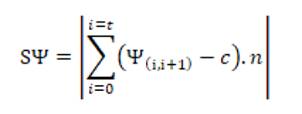
where
Ψᵢ = the mean midday leaf water potential for each time interval
c = the highest (least negative) midday leaf water potential recorded during the season,
n = the number of days in each interval. Higher SΨ values indicate greater cumulative water stress.
Statistical Analysis
Data were analyzed using linear mixed-effects models implemented in InfoStat 2020 (National University of Córdoba, Córdoba, Argentina). Model assumptions were verified by inspecting residuals for normality and homogeneity of variance. Net color, installation system, time, and interactions were treated as fixed effects, whereas blocks were considered random effects. Whenever the interactions between net color and installation system were significant, treatment means were compared by Fisher’s least significant difference (LSD) test (p≤0.05). When this interaction was not significant, the main effects were analyzed and subsequently compared with the uncovered control using the same procedure. Considering variables measured in both growing seasons, the interaction between treatment and season was first evaluated. Results are presented separately for each season after confirming null treatment*season interaction. For repeated-measures analyses, replicate was included as a random effect to account for within-subject correlation. Seasonal changes in Ψmd were analyzed as a function of days from budburst, with treatment and sampling date as fixed effects and block as a random effect.
Results
Meteorological Conditions
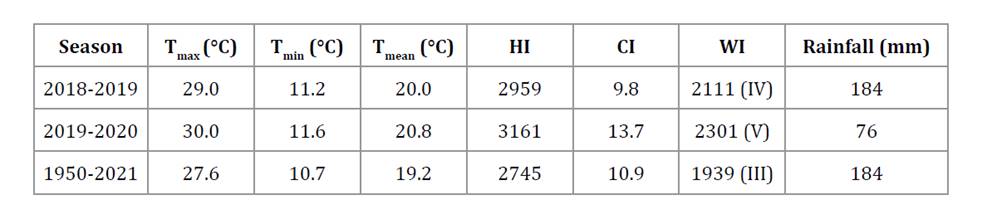
Meteorological conditions differed between growing seasons relative to the historical climate of the study region (table 1). According to historical values, the site is classified as Winkler Region III (Cabré et al., 2016) and as a warm viticultural region (HI +2) with very cool nights (CI +2; Tonietto & Carbonneau, 2004). During the 2018-2019 season, climatic conditions were generally consistent with the historical average, although slightly higher Tair shifted the Winkler classification to Region IV, and annual precipitation reached 184 mm. In contrast, the 2019-2020 season was considerably warmer than the historical average, resulting in a Region V classification according to the WI and a very warm classification (HI +3) with cool nights (CI +1). Annual rainfall during this season was substantially lower than the historical average, reaching only 76mm.
Table 1. Average maximum (Tmax), minimum (Tmin) and mean (Tmean) air temperature, Winkler Index (WI), Huglin Heliothermal Index (HI) (calculated from October 1 to April 1), cool night index (CI) and annual rainfall during 2018-2019 and 2019-2020 growing seasons, together with historical values for San Rafael, Mendoza.
Tabla 1. Datos meteorológicos. Temperatura máxima (Tmax) y mínima media (Tmin), y Temperatura media (Tmean), Índice de Winkler (WI) e Índice de Huglin (HI), calculados desde el 1 de octubre hasta el 1 de abril, índice de noches frescas (CI) y precipitación anual correspondiente a las temporadas 2018-2019 y 2019-2020, y valores históricos para San Rafael, Mendoza.
Microclimatic Characterization of Treatments Without Plants
Maximum PPFD decreased by 19-23% relative to the Control (Figure S4), whereas
daily integral PPFD (PPFDd) ranged from 68% to 73% of the incident radiation (Table S1). PPFDd% was lower under the Black net and the Grembiule system compared to the Pearl net and the Modified system, respectively (table 2). Throughout the season, minimum Tair occurred at approximately 05:00 h, while maximum Tair was reached around 16:00 h (Figure S5).
Table 2. Daily integral radiation (PPFDd%) for Control plants without protection (CO) and vines protected with Black or Pearl nets installed using the Grembiule and Modified systems (cv. Malbec).
Tabla 2. Integral de radiación diaria (PPFDd%). en plantas control sin protección (CO), con tela antigranizo color Negra y Perla, instaladas en los sistemas Grembiule y Modificado (cv. Malbec).
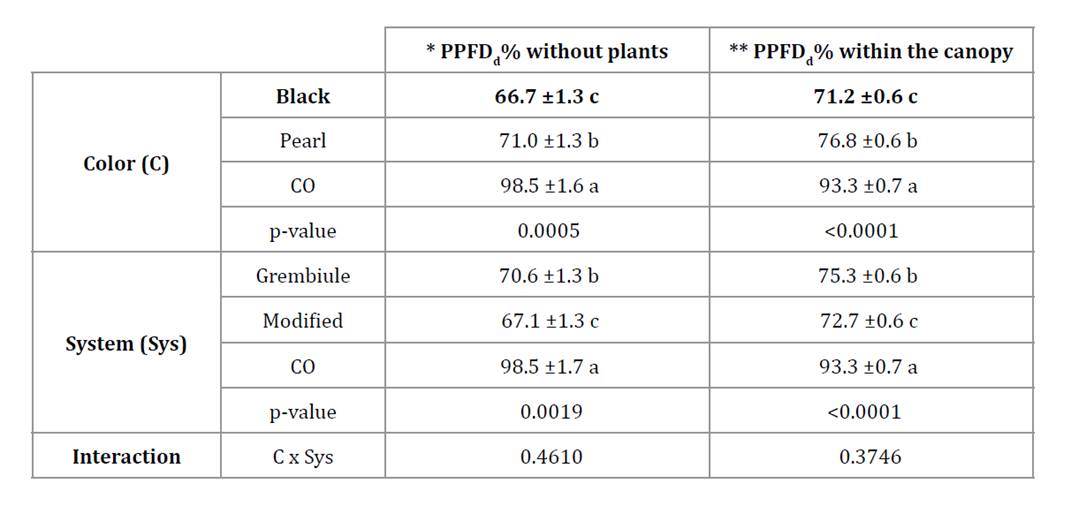
* Values represent the mean of four representative days during the growing season. ** Values denote the mean from December to March (85 days). Within each factor, different letters indicate significant differences (Fisher´s test, p < 0.05).
*Los valores representan la media registrada en 4 días representativos de la temporada. ** Los valores son la media registrada entre diciembre y marzo (85 días). Dentro de cada factor, las diferencias significativas son indicadas por letras diferentes (p < 0,05, prueba de Fisher).
Canopy Microclimatic Conditions
The microclimatic data registered during both seasons is presented for each season separately since the interaction with the season was not significant in any case (p= 0.2098). Anti-hail treatments reduced maximum canopy temperature (Tmax) throughout the period from fruit set to harvest, although the magnitude of the effect depended on the installation system (figure 1A). The BG treatment produced the greatest reduction in Tmax (around 1.06 °C below the control), followed by PG, while both Modified treatments (BM and PM) exhibited the highest temperatures. Minimum canopy temperature (Tmin) showed the opposite trend: the lowest values were recorded under the Grembiule (BG and PG), while BM and PM showed the highest Tmin values (figure 1B).
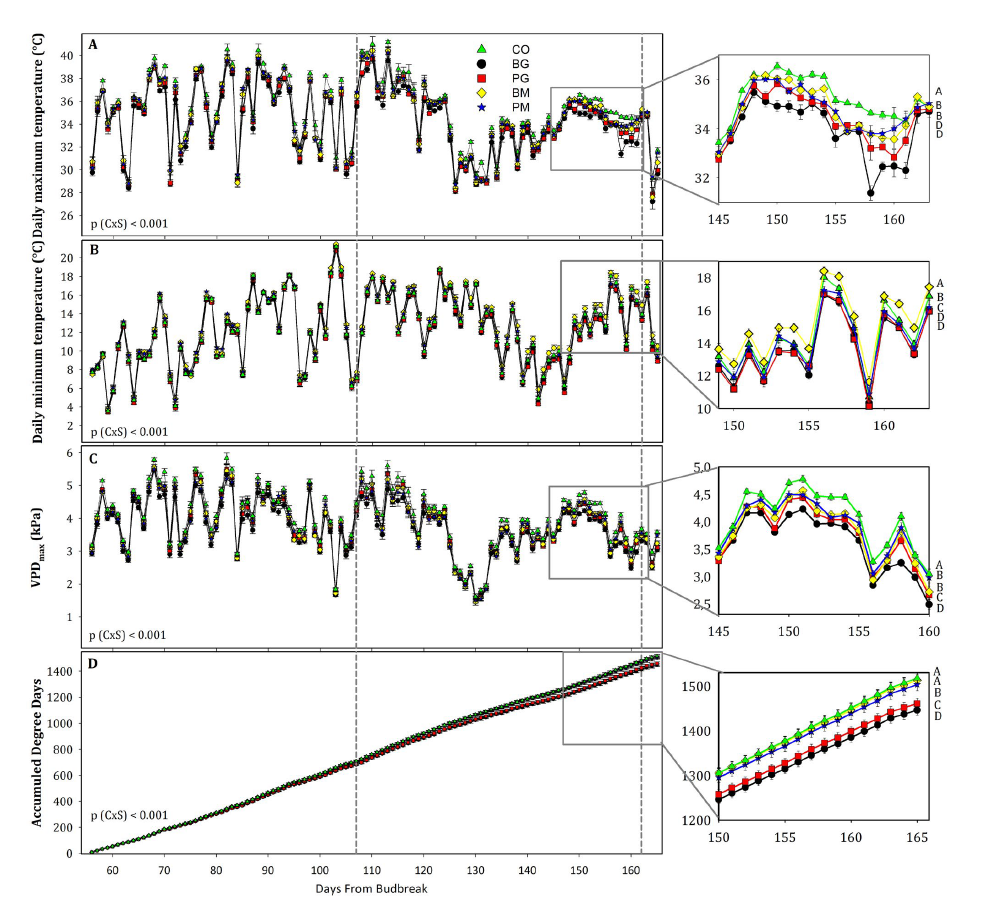
Figure 1. Seasonal evolution of daily maximum (A) and minimum (B) canopy Tair, maximum vapor pressure deficit (C) and cumulative growing degree days (D) from fruit set to harvest in all treatments: uncovered control (CO), Black net–Grembiule (BG), Pearl net–Grembiule (PG), Black net–Modified (BM) and Pearl net-Modified (PM). Inserts highlight portions of the curves where treatment differences were most pronounced. Statistical analyses were performed on the complete time series; different letters indicate significant differences (p < 0.05). Vertical dashed lines indicate veraison (day 107) and harvest (day 162).
Figura 1. Evolución estacional de la temperatura máxima diaria (A) y mínima diaria (B) del aire al interior de la canopia, déficit de presión de vapor máximo (C) y de los grados-día acumulados (D) desde cuaje hasta cosecha en diferentes tratamientos con tela antigranizo: plantas control sin protección (CO), tela Negra en sistema Grembiule (BG), tela Perla en sistema Grembiule (PG), tela Negra en sistema Modificado (BM) y tela Perla en sistema Modificado (PM). Los cuadros grises de la derecha indican la sección de la curva donde las diferencias fueron más pronunciadas. El análisis estadístico se aplicó a la curva completa, y las diferencias significativas se indican con letras distintas para toda la curva (p < 0,05). Las líneas verticales punteadas señalan el envero (día 107) y la cosecha (día 162).
VPDmax also declined under all anti-hail treatments throughout the season (figure 1C). The largest reduction was observed under BG (9.4% relative to the control), followed by PG (around 5.5%). Both Modified treatments produced similar intermediate reductions of around 4.5%. In contrast, cumulative growing degree days (GDD) were highest in the control and BM treatments, followed by PM, whereas both Grembiule treatments accumulated the fewest GDD (figure 1D).
The effects of anti-hail nets on PPFD varied throughout the growing season (figure 2). Net color alone significantly affected PPFD during January and March, whereas an interaction between net color and installation system was detected in November, December, and February. In January and March, PPFD decreased by around 30% under the Black net and by 27% under the Pearl net compared to control (figure 2C and 2E). During November, December, and February, all covered treatments reduced PPFD, with BM showing the lowest values, followed by BG, PM, and PG (figure 2A, 2B and 2E). Hourly analyses confirmed these seasonal trends (Table S2). BM showed the lowest afternoon PPFD during November and December, whereas the Black net showed the lowest PPFD throughout the day in January and March. In February, both BG and BM exhibited the lowest PPFD values across the entire day. Daily integral PPFD (PPFDd%) was higher under Pearl net (about 5.6%) than under the Black net and was also higher under the Grembiule system (around 2.6%) than under the Modified system (table 2).
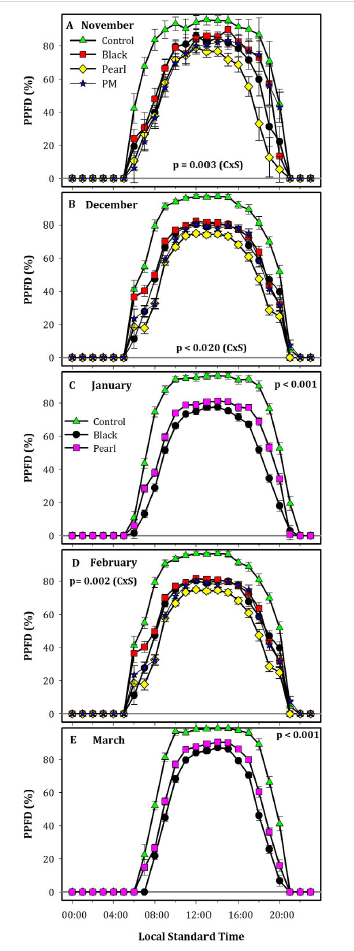
Figure 2. Seasonal evolution of photosynthetic photon flux density (PPFD) expressed as a percentage of incident radiation (PPFD%) under Black and Pearl nets installed using the Grembiule or Modified systems. Interaction effects between net color and installation system are shown for November (A), December (B), and February (D). Because installation system had no significant effect in January (C) and March (E), only the effect of net color is presented. Each point represents the hourly ± SD.
Figura 2. Evolución de la densidad de flujo de fotones fotosintéticos (PPFD) expresados como porcentaje de la radiación directa (PPFD%) para diferentes tratamientos con tela antigranizo: tela Negra en sistema Grembiule (BG), tela Perla en sistema Grembiule (PG), tela Negra en el sistema Modificado (BM) y tela Perla en el sistema Modificado (PM). En noviembre (A), diciembre (B) y febrero (D) se presenta la interacción entre los dos factores (sistema de instalación y color de la tela). Para enero (C) y marzo (E) solo se muestra el efecto del color de la tela, dado que el sistema de instalación no resultó significativo. Cada punto representa la media correspondiente a una hora específica de cada mes ± desviación estándar.
The installation system, rather than net color, was the main factor affecting canopy Tair (figure 3). No treatment differences were detected in November, when neither net color nor installation system significantly influenced Tair (Table S3). During both growing seasons, however, the Modified System showed higher Tair than the Grembiule and, in some cases, exceeded those of the uncovered control. During the first growing season, canopy Tair under the Modified system was higher than under the Grembiule system from December through March and exceeded the control from December to February (Figure S6). During the second season, canopy Tair was lower under the Grembiule than under the Modified system from December to March. Although temperatures under the Modified system were similar to those of the control in December (figure 3B), they progressively exceeded the control from January onward.
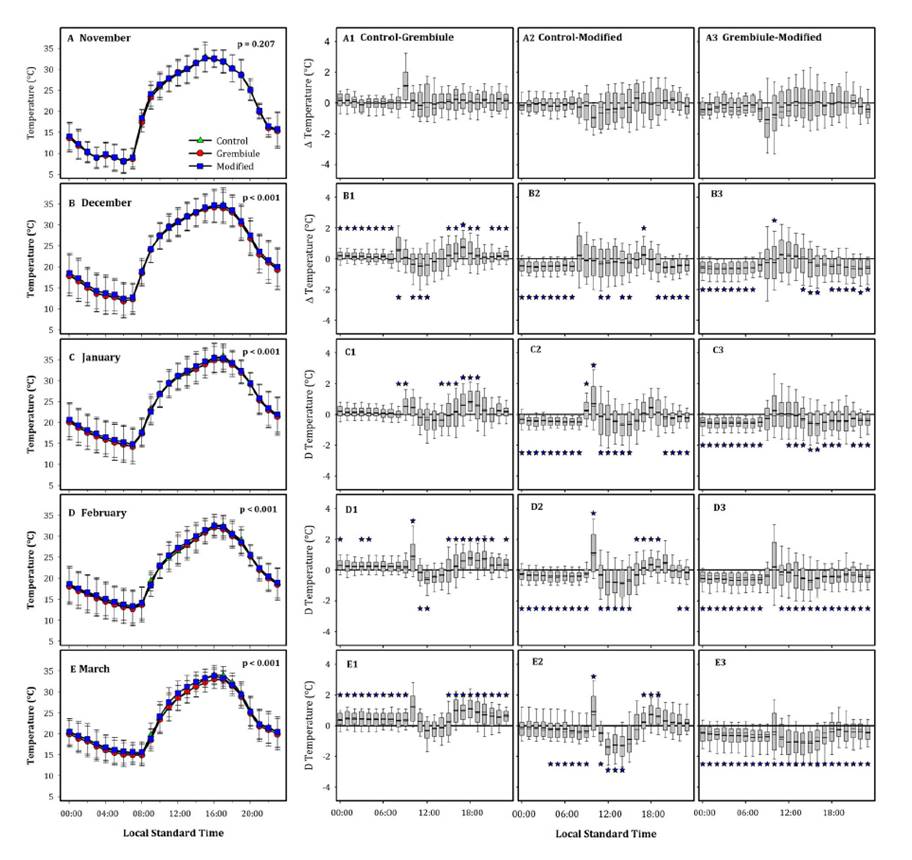
Figure 3. Diurnal course of canopy air temperature (Tair) measured 1m above ground level under the Grembiule and Modified installation systems and in uncovered control vines during November (A), December (B), January (C), February (D) and March (E) of the 2019–2020 growing season. Each point represents the hourly mean ± SD. The right panels show boxplots of pairwise temperature differences: control-Grembiule (column 1), control-Modified (column 2), and Grembiule-Modified (column 3). Asterisks (*) denote significant differences between treatments; detailed statistical results are provided in Table S3.
Figura 3. Evolución diaria de la temperatura del aire (Tair) a 1 m del suelo bajo dos sistemas de instalación: Grembiule, sistema modificado y plantas control sin protección (CO), para noviembre (A), diciembre (B), enero (C), febrero (D) y marzo (E). durante la temporada 2019-20. Cada punto representa la media de una hora específica de cada mes ± desviación estándar. En los paneles de la derecha, se muestra un box-plot con las diferencias entre los tratamientos para cada hora y mes: Δ Control-Grembiule (columna 1), Δ Control-Modificado (columna 2) y Δ Grembiule-Modificado (columna 3). Las diferencias estadísticamente significativas entre los tratamientos se indican con un asterisco (*). (más información en Material Suplementario, Tabla S3).
To further characterize temperature differences between treatments, the hourly temperature differential (ΔT°) was calculated for each pairwise comparison (figure 3, right panels). As the installation system significantly affected canopy temperature (Table S3), comparisons focused on differences among the Grembiule, Modified, and control treatments. The ΔT° was calculated as the difference between the first and second treatments indicated in each panel (e.g., Control-Grembiule); therefore, negative values indicate higher temperatures in the second treatment. No significant differences between treatments were observed in November (figure 3A1-A3, Table S3). From December onward, however, the installation system consistently influenced canopy temperature.
The Modified system showed the highest Tair, the Grembiule presented the lowest, and the uncovered control generally showed intermediate values, although absolute differences remained small during some periods of the day. Seasonal differences became progressively more pronounced as the growing season advanced. In December, the control presented higher temperatures than the Grembiule during the morning and late afternoon, while the Grembiule was slightly warmer around midday (figure 3B1). Throughout most of the day, the Modified system showed higher temperatures than both, control (figure 3B2) and the Grembiule (figure 3B3). Similar patterns were observed during the following months, with the thermal contrast between the Modified system and the other treatments increasing toward harvest. By the end of the season (figure 3D1-D3), afternoon temperature differences reached approximately 2°C between the Modified and Grembiule systems (figure 3E3) and between the Modified system and the control (figure 3E2, Table S3). In March, the control also remained warmer than the Grembiule during most of the day, with differences approaching 1°C in the afternoon.
Relative Humidity and Vapor Pressure Deficit
The relative humidity (RH) was slightly affected early in the season but showed clear treatment differences during the summer months. No differences between treatments were noted in November (figure 4A). During the first growing season, RH was influenced by the installation system but not by net color. The Grembiule showed higher RH than the Modified system and the uncovered control in December, January and March, whereas the Modified system exceeded the control only in December (Figures S7-S8). During the second growing season, treatment effects varied with time. In December, RH was higher under BG and PM than in the control (figure 4C). In January and February, both net color and installation system significantly affected RH (figure 4E and 4G). RH increased by approximately 1.4% under the Grembiule and 1.2% under the Modified system compared with the control. Likewise, RH was around 1.0% higher under the Black net and 1.6% higher under Pearl net (Table S4; Figure S7). In March, the highest RH was recorded under PG (+2.8%), followed by PM (+1.2%), BM (+1.1%), and BG (+0.9%) (figure 4I).
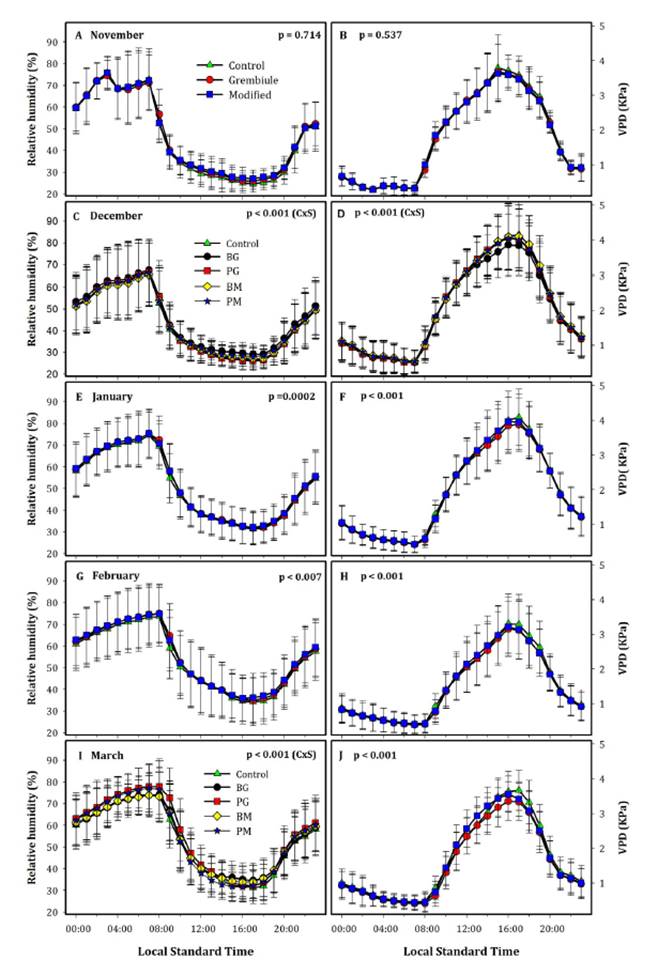
Figure 4. Daily pattern/Diurnal course of air relative humidity (RH) and vapor pressure deficit (VPD) measured at 1 m above ground level under all anti-hail treatments: uncovered control, Black net–Grembiule (BG), Pearl net-Grembiule (PG), Black net–Modified (BM) and Pearl net–Modified (PM) system. Individual treatments are presented when a significant interaction between net color and installation system was identified. November (A, B), January (E, F), February (G, H), and March VPD (J), had non-significant interactions, and only the main effect of installation system is shown. Each point represents the hourly mean ± SD. Statistical comparisons for individual hours and monthly means are summarized in Tables S4 and S5.
Figura 4. Evolución diaria de la humedad relativa del aire (RH) y del déficit de presión de vapor (VPD) a 1 m del suelo bajo diferentes tratamientos con tela antigranizo: testigo sin protección (CO), tela Negra en sistema Grembiule (BG), tela Perla en sistema Grembiule (PG), tela Negra en el sistema Modificado (BM) y tela Perla en el sistema Modificado (PM). Se presentan los tratamientos individuales cuando la interacción entre sistema de instalación y color de tela fue significativa. Para noviembre (A, B), enero (E, F), febrero (G, H) y para marzo en VPD (J), no se detectó interacción y se muestran únicamente los efectos del sistema de instalación. Cada punto corresponde a la media para una hora específica de cada mes ± desviación estándar. Las comparaciones estadísticas entre los tratamientos para cada hora y mes, así como los valores medios mensuales para cada tratamiento, se resumen en las Tablas S4 y S5.
The Grembiule system reduced canopy VPD throughout both growing systems. During the first season, VPD remained lower under the Grembiule than under the Modified system and the control, whereas the Modified system did not differ from the control (Figures S7 and S8). Similar trends were observed during the second season. In December, BG and PG showed the lowest VPD values, approximately 4.3% below the control (figure 4D), while BM exhibited the highest VPD, especially at night, at noon, and in the afternoon (Table S5). From January through March, VPD was primarily determined by the installation system (figure 4F, H and J). The Grembiule reduced VPD by around 4-6% compared to the control. In January and March, VPD under the Modified system was similar to that of the control, whereas in February it was slightly lower. Although the control generally exhibited the highest VPD for most of the day, the Modified system exceeded the control between around 10:00 and 16:00 h (Table S5). In general, the Grembiule system, particularly the BG treatment, showed the lowest VPD from December through March.
Wind Speed
Installation system, but not net color, influenced canopy wind speed. Maximum wind speed (wmax) did not differ between treatments, whereas mean wind speed was significantly affected by the installation system. Relative maximum wind speed (wmax%) was reduced by 29% under the Grembiule and by 27% under the Modified system compared with the control (figure 5A). In addition, the Grembiule produced a greater reduction in relative mean wind speed (wav%) than the Modified system, regardless of net color (figure 5B).
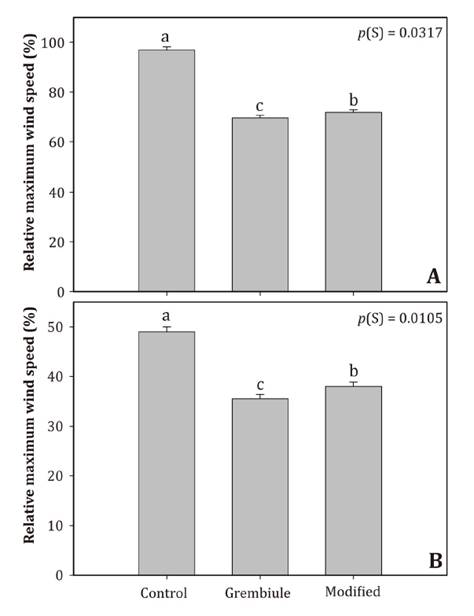
Figure 5. Relative maximum wind speed (A) and relative mean wind speed (B) registered under the Grembiule and Modified installation systems compared to uncovered control vines. Different letters indicate significant differences (Fisher’s test, p < 0.05). Values represent the mean ± SD of measurements collected on six representative days during January and February.
Figura 5. Velocidad máxima relativa del viento (A) y velocidad media relativa del viento (B) registradas bajo dos sistemas de instalación (Grembiule y Modificado) y plantas testigo sin protección (CO). Las diferencias significativas se indican con letras diferentes (LSD de Fisher, p < 0,05). Las mediciones se realizaron durante seis días representativos de enero y febrero; cada punto representa la media de las seis fechas ± desviación estándar.
Plant Water Status
Installation system influenced vine water status throughout both growing seasons. Ψmd was significantly affected by installation system (figure 6B and 6D), whereas the interaction between net color and installation system was not significant. During the 2018-2019 season, Ψmd was also influenced by net color, with Black net showing the highest values, The Pearl net showing intermediate values, and the control showing the lowest values (figure 6A). In contrast, no significant differences between net colors were found during the 2019-2020 season (figure 6C). Across both seasons, vines protected with the Grembiule system showed the highest Ψmd values, followed by those of the Modified system, while uncovered vines presented the lowest Ψmd values. These results were further supported by the seasonal water integral (SΨ; figure 6) and by the diurnal patterns of leaf water potential (Ψleaf) measured on representative dates during the growing season (Figure S9).
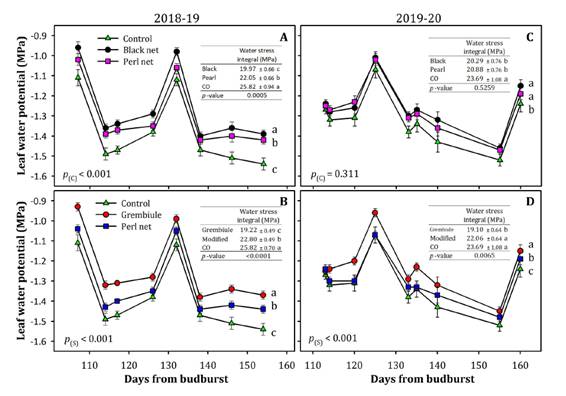
Figure 6. Midday leaf water potential (Ψmd) of Malbec vines grown without anti-hail protection, under Black and Pearl nets (A, C) and under the Grembiule and Modified installation systems (B, D) during the 2018-2019 and 2019-2020 growing seasons. Within each factor, different letters indicate significant differences (Fisher’s test, p < 0.05). Insets show the seasonal water stress integral (SΨ) from veraison to harvest. Each Ψmd point represents the mean ± SD for each sampling date; SΨ values are expressed as mean ± SD.
Figura 6. Potencial hídrico foliar al mediodía en plantas de Malbec sin protección (CO), bajo tela antigranizo Negra y Perla (A y C), y los sistemas de instalación Grembiule y Modificado (B y D), durante las temporadas 2018-19 y 2019-20. Dentro de cada factor, las diferencias significativas se indican con letras distintas (LSD de Fisher, p < 0,05). Las tablas insertas muestran la integral de potencial hídrico (SΨ) desde envero hasta cosecha. Cada punto de Ψmd representa la media para una fecha específica ± desviación estándar (DE). Los valores de SΨ se presentan como media ± DE.
Discussion
In this study, we evaluated how different anti-hail net color and installation system impact canopy microclimatic conditions. To achieve this, we integrated both seasonal metrics (i.e., seasonal maximum and minimum values, daily integral radiation, water stress integral) and the daily evolution/dynamics of these variables throughout the growing season. This approach revealed effects/responses that would have remained undetected if only seasonal maximum or minimum values had been considered. These results will provide a foundation for improving our understanding of how anti-hail nets influence plant growth, yield, yield components, berry maturity, and composition.
Black Net and Modified Installation System Decreased Seasonal and Daily Radiation
Our results demonstrate that both net color and installation system affected radiation transmission at the canopy level, with the Black net and the Modified system producing the greatest reductions in PPFDd%. The lower PPFDd% observed under protected treatments agrees with previous reports in apple (Iglesias & Alegre, 2006; Lopez et al., 2018; Mupambi et al., 2018a; Mupambi et al., 2018b), citrus (Mira-García et al., 2020) and table grapevine (Villalobos-Soublett et al., 2021; Avenant & Avenant, 2022). As expected from spectral characterization performed before the experiment (Figure S3), the Black net reduced PPFDd% by more than the Pearl net. Likewise, the Modified system produced lower PPFDd% throughout the season. Measurements obtained in the absence of plants suggest that these differences were attributable to the net characteristics and installation geometry rather than to differences in canopy architecture and vegetative growth. Because the net is positioned more horizontally in the Modified system, it intercepts a greater proportion of incoming radiation before it reaches the canopy. Despite these reductions, maximum PPFD values recorded around solar noon under all protected treatments ranged between 1000-1500 μmol m-2 s-1, which falls within the range required to sustain maximum photosynthetic rates in the outer leaf layer (Zufferey & Murisier, 2000). These findings suggest that carbon assimilation in sun-exposed leaves was unlikely to be limited by the anti-hail nets. Nevertheless, differences in canopy architecture and leaf area density between installation systems may alter light penetration into the fruiting zone. Further studies should therefore evaluate how changes in canopy structure induced by net installation affect light distribution within the canopy.
Installation System showed Greater Influence on Tair than Net Color
Our results indicate that the installation system exerted a stronger influence on canopy Tair than net color. Previous studies have reported lower Tair under anti-hail nets in apples (Iglesias & Alegre 2006; Solomakhin & Blanke, 2010; Aggarwal & Bhardwaj, 2022) and under shade nets in grapevines (Villalobos-Soublett et al., 2021; Gutiérrez-Gamboa et al., 2024). Similarly, the Grembiule system reduced Tair during both growing seasons, whereas the Modified system showed temperatures comparable to or even higher than those of the uncovered control. The higher Tair observed under the Modified system was unexpected since this treatment intercepted more radiation than the Grembiule system. A plausible explanation is that the more horizontal net configuration absorbed a larger fraction of incoming radiation and increased heat transfer to the air enclosed beneath the net. In addition, the larger enclosed air volume created by the Modified system may have enhanced heat accumulation. Although both wav% and wmax% were higher under the Modified than the Grembiule, air movement was substantially lower than that in the control. Consequently, the increase in Tair under the Modified system may result from reduced air exchange and the greenhouse effect generated by the net configuration (Arthurs et al., 2013; Iglesias & Alegre, 2006; Solomakhin & Blanke, 2010).
The Grembiule, regardless of net color, also resulted in the lowest accumulation of GDD and the fewest days with temperatures exceeding 35°C. This effect may reflect lower radiation load reaching the canopy (Iglesias & Alegre, 2006) and, potentially, the more compacted canopy architecture reported for this installation system (Ruland et al., 2023). These results suggest that the Grembiule system may help mitigate temperature increases associated with climate change and reduce the risk of heat damage during the weeks preceding harvest (Blanke, 2008), while still allowing enough radiation to reach the fruiting zone (Martínez-Lüscher et al., 2017). This interpretation agrees with the findings of Caravia et al. (2016), who demonstrated the effectiveness of shade nets in protecting grapevines from extreme temperatures during ripening, and with those of Gutiérrez-Gamboa et al. (2024) who reported improved canopy microclimate and water-use efficiency under high-temperature conditions.
Both Installation Systems Increased Relative Humidity and Decreased Wind Speed Regardless of Net Color
Both installation systems increased RH within the canopy from December through March, regardless of net color. Compared with the control, RH increased by approximately 1.2% in January and up to 1.9% in February under the Black & Pearl nets. These values are consistent with previous research indicating that anti-hail nets enhance/increase RH by 2-5%, depending on cloud cover (Solomakhin & Blanke, 2010). This increase in RH seen under anti-hail net was smaller than that reported for shade nets, which can raise RH by 10-15% (Middleton & McWaters 2002; Wachsmann et al., 2014; Aggarwal & Bhardwaj, 2022). The magnitude of this response depends on several environmental factors, including solar radiation, air temperature, rainfall (Bosco et al., 2018), and wind speed (Aggarwal & Bhardwaj, 2022). The greater increase in RH under the Grembiule system may be associated with the approximately 28% reduction in wind speed noted in this treatment. Similar reductions in wav% (30-50%) have been reported previously (Middleton & McWaters 2002; Bosco et al., 2018; Kalcsits et al., 2017). In contrast, net color did not significantly affect wind speed in the present study. This result differs from previous reports showing greater wind reduction under colored nets with similar shading factors because they require a higher density of colored threads, producing smaller mesh openings (Arthur et al., 2013). Wind speed is an important microclimatic variable as it influences boundary-layer thickness and, consequently, stomatal conductance, transpiration, and vegetative growth (Carey et al., 2008).
The Installation System Determined Effects on VPD
The installation system strongly influenced VPD throughout both growing seasons. The Grembiule system consistently reduced VPDmax and the daily course of VPD, in agreement with previous studies evaluating shade (Cartechini & Palliotti, 1995) and anti-hail nets (Ruland et al., 2023). Both installation systems lowered VPD during the night and morning. Around midday, however, the Modified system showed VPD values similar to or higher than those of the control. Under this system, the increase in Tair offsets the concurrent increase in RH, leading to higher VPD.
Anti-Hail Protection Improved Grapevine Water Status
The Grembiule system improved vine water status, irrespective of net color. Throughout the season, vines protected with the Grembiule showed higher Ψmd and lower SΨ than the Modified system and the control, in agreement with the lower VPD, wind speed, and Tair under this installation system. These results also agree with previous reports in apple (Lopez et al., 2018; Boini et al., 2021). Taken together, our results suggest that the Grembiule system reduced atmospheric evaporative demand by modifying the canopy microclimate, hence improving vine water status. By contrast, the Modified system showed Ψmd values similar to or slightly higher than those of the control and produced comparable Ψmd and SΨ values.
Overall, this study provides detailed information on how anti-hail net color and installation system affect microclimate and vine water status during the growing season. Conducted under arid conditions, it offers useful insights for optimizing canopy management in protected vineyards. Future work will evaluate how these microclimatic modifications affect vegetative growth, yield components, berry development and fruit composition.
Conclusions
Anti-hail net color and, particularly, installation system modified canopy microclimate and vine water status. The Grembiule system reduced Tair, VPD, and wind speed, while improving vine water status, as indicated by higher Ψmd values. In contrast, the Modified system increased Tair and VPD, especially during the end of the growing season. These findings suggest that the Grembiule system provides benefits beyond hail protection by helping mitigate the effects of high temperatures and increasing atmospheric evaporative demand in warm, arid viticultural regions. Conversely, the Modified system may be better suited to cooler production areas.
Acknowledgements
This study is part of the Ph.D. thesis of C.G.N. at the School of Agronomy, Universidad Nacional de Cuyo. Authors are grateful to I. Carbajal Ramos and H. Lázaro for valuable discussions of statistical analyses, and V. Gimenez, A. Gómez, M. Vico, R. Osorio and D. Nahuel for technical assistance in the field. The authors also thank AgriNet S.A. for providing the anti-hail nets used in this study.
Aggarwal, R., Bhardwaj, S. (2022). Effect of anti-hail net installations on microclimate around apple plants in orchards of Himachal Pradesh. Journal of Agrometeorology, 24(1), 83-85. https://doi.org/10.54386/jam.v24i1.783
Arthurs, S. P., Stamps, R. H., Giglia, F. F. (2013). Environmental modification inside photoselective shadehouses. HortScience, 48, 975-979. https://doi.org/10.21273/HORTSCI.48.8.975
Avenant, J. H., Avenant, E. (2022). The effect of overhead netting on water utilization and soil water content of a table grape vineyard. Acta Horticulturae, 1335, 627-634. https://doi.org/10.17660/ActaHortic.2022.1335.79
Bastías, R. M. & Boini, A. (2022). Apple Production under Protective Netting Systems. In Apple Cultivation-Recent Advances. IntechOpen. pp. 91-102. http://dx.doi.org/10.5772/intechopen.109429
Blanke, M. M. (2008). Perspectives of fruit research and apple orchard management in Germany in a changing climate. Acta Horticulturae, 772, 441-446. https://doi.org/10.17660/ActaHortic.2008.772.75
Boini, A., Manfrini, L., Morandi, B., Corelli Grappadelli, L., Predieri, S., Daniele, G. M., López, G. (2021). High levels of shading as a sustainable application for mitigating drought, in modern apple production. Agronomy, 11(3), 422. https://doi.org/10.3390/agronomy11030422
Bosco, L. C., Bergamaschi, H., Cardoso, L. S., de Paula, V. A., Marodin, G. A. B., Brauner, P. C. (2018). Microclimate alterations caused by agricultural hail net coverage and effects on apple tree yield in subtropical climate of Southern Brazil. Bragantia, 77(1), 181-192. https://doi.org/10.1590/1678-4499.2016459
Cabral, D., Worlock, A., Gudiño, J., Fuentes, C. (1999). Protección de frutales y viñedos contra el granizo. Guía práctica para la construcción de estructuras. Ediciones INTA.
Cabré, M. F., Quénol, H., Nuñez, M. (2016). Regional climate change scenarios applied to viticultural zoning in Mendoza, Argentina. Int. J. Biometeoroly, 60, 1325-1340. https://doi.org/10.1007/s00484-015-1126-3
Campbell, G. S., Norman, J. N. (1998). An introduction to environmental biophysics. Springer Science & Business Media. 286 p. https://doi.org/10.1007/978-1-4612-1626-1
Caravia, L., Collins, C., Petrie, P. R., Tyerman, S. D. (2016). Application of shade treatments during Shiraz berry ripening to reduce the impact of high temperature. Aust. J. Grape Wine Res., 22, 422-437. https://doi.org/10.1111/ajgw.12248
Caretta A., Salcedo C., Ortiz Maldonado A. (2003). Damages by hail in grapes: its consequences in future harvest. Revista de la Facultad de Ciencias Agrarias. Universidad Nacional de Cuyo, 35(1), 83-88.
Carey, V. A., Archer, E., Barbeau, G., Saayman, D. (2008). Viticultural terroirs in Stellenbosch, South Africa. II. The interaction of Cabernet-Sauvignon and Sauvignon Blanc with environment. Oeno One, 42, 185-201. https://doi.org/10.20870/oeno-one.2008.42.4.808
Cartechini, A., Palliotti, A. (1995). Effect of shading on vine morphology and productivity and leaf gas exchange characteristics in grapevines in the field. Am. J. Enol. Vitic., 46, 227-234. https://doi.org/10.5344/ajev.1995.46.2.227
Coombe, B. G. (1995). Growth stages of the grapevine: adoption of a system for identifying grapevine growth stages. Aust. J. Grape Wine Res., 1(2), 104-110. https://doi.org/10.1111/j.1755-0238.1995.tb00086.x
Córdoba, M.; Vallone, R.; Paccioretti, P.; Corvalán, F.; Balzarini, M. (2025). Data-driven Method for the Delimitation of Viticultural Zones: Application in the Mendoza River Oasis, Argentina. Revista de la Facultad de Ciencias Agrarias. Universidad Nacional de Cuyo. 57(2): 57-68. DOI: https://doi.org/10.48162/rev.39.171
Crouchett-Rojas, R., Araya-Alman, M., Verdugo-Vásquez, N., Fourment, M., Gutiérrez-Gamboa, G. (2025). Shading Nets: A Current Viticultural Strategy to Mitigate the Negative Impacts of Global Warming on Grape and Wine Quality. Aust. J. Grape Wine Res., 9729885, 12. https://doi.org/10.1155/ajgw/9729885
DACC (Dirección de Agricultura y Contingencias Climáticas). (2023). Estadísticas 1993-2023. https://www.mendoza.gov.ar/contingencias/riesgo-agricola/
do Amarante, C. V. T., Stanger, M. C., Coldebella, M. C., Vilvert, J. C., dos Santos, A., Steffens, C. A. (2018). Fruit quality and yield of ‘Imperial Gala’ apple trees protected by anti-hail nets of different colorations in southern Brazil. Acta Horticulturae, 1205, 897-904. https://doi.org/10.17660/ActaHortic.2018.1205.115
Domanda, C., Blanco, I., Buccolieri, R., & Rustioni, L. (2024). Anti-Hail Nets in Viticulture: Do They Affect White Grape Quality in the Mediterranean Region? Agriculture, 4(9), 1438. https://doi.org/10.3390/agriculture14091438
Flores, C. A.; Caretta, A. I.; Martineng, N. B. (2026). Climatic Normals in Chacras de Coria. Evolution of Air Temperature for the 1959-2020 Period. Revista de la Facultad de Ciencias Agrarias. Universidad Nacional de Cuyo. 58(1): 1-14. DOI: https://doi.org/10.48162/rev.39.210
Gandorfer, M., Hartwich, A., Bitsch, V. (2016). Hail risk management in fruit production: anti-hail net versus hail insurance in Germany. Acta Horticulturae, 1132, 141-146. https://doi.org/10.17660/ActaHortic.2016.1132.19
Gutiérrez-Gamboa, G., Zheng, W., de Toda, F. M. (2021). Current viticultural techniques to mitigate the effects of global warming on grape and wine quality: A comprehensive review. Food Res. Int., 139, 109946. https://doi.org/10.1016/j.foodres.2020.109946
Gutiérrez-Gamboa, G., Villalobos-Soublett, E., Garrido-Salinas, M., Verdugo-Vásquez, N. (2024). Monofilament Shading Nets Improved Water Use Efficiency on High-Temperature Days in Grapevines Subjected to Hyperarid Conditions. Horticulturae, 10(2), 176. https://doi.org/10.3390/horticulturae10020176
Iglesias, I., Alegre, S. (2006). The effect of anti-hail nets on fruit protection, radiation, temperature, quality and profitability of ‘Mondial Gala’ apples. Journal of Applied Horticulture, 8 (2), 91-100. https://doi.org/10.37855/jah.2006.v08i02.22
Instituto Nacional de Vitivinicultura (INV). (2025). Informe anual de superficie 2024. Ministerio de Economía de la Nación. Recuperado el 03 de octubre de 2025, de https://www.argentina.gob.ar/sites/default/files/2018/10/anuario_superficie_2024_0.pdf
Kalcsits, L., Musacchi, S., Layne, D. R., Schmidt, T., Mupambi, G., Serra, S., Espinoza, C. Z. (2017). Above and below-ground environmental changes associated with the use of photoselective protective netting to reduce sunburn in apple. Agricultural and Forest Meteorology, 237, 9-17. https://doi.org/10.1016/j.agrformet.2017.01.016
Kim, M. H., Lee, J., Lee, S. J. (2023). Hail: Mechanisms, Monitoring, Forecasting, Damages, Financial Compensation Systems, and Prevention. Atmosphere, 14(11), 1642. https://doi.org/10.3390/atmos14111642
Lakatos, L., Gonda, I., Soltész, M., Szabó, Z., Szél, J., Nyéki, J. (2011). Effects of excessive weather on the micro-climate of apple plantations under the hail protection nets. Int. J. Hortic. Sci, 17(4-5), 81-85. https://doi.org/10.31421/IJHS/17/4-5/975
Lopez, G., Boini, A., Manfrini, L., Torres-Ruiz, J. M., Pierpaoli, E., Zibordi, M., Losciale, P., Morandi, B., Corelli-Grappadelli, L. (2018). Effect of shading and water stress on light interception, physiology and yield of apple trees. Agricultural Water Management, 210, 140-148. https://doi.org/10.1016/j.agwat.2018.08.015
Martínez-Lüscher, J., Chen, C. C. L., Brillante, L., Kurtural, S. K. (2017). Partial Solar Radiation Exclusion with Color Shade Nets Reduces the Degradation of Organic Acids and Flavonoids of Grape Berry (Vitis Vinifera L.). J. Agric. Food Chem., 65, 10693-10702. https://doi.org/10.1021/acs.jafc.7b04163
Middleton, S., Mcwaters, A. (2002). Hail Netting of Apple Orchards-Australian Experience. The compact fruit tree, 35(2), 51-55.
Mira-García, A. B., Conejero, W., Vera, J., Ruiz-Sánchez, M. C. (2020). Leaf water relations in lime tres grown under shade netting and open-air. Plants, 9(4), 510. https://doi.org/10.3390/plants9040510
Mupambi, G., Anthony, B. M., Layne, D. R., Musacchi, S., Serra, S., Schmidt, T., Kalcsits, L. A., (2018a). The influence of protective netting on tree physiology and fruit quality of apple: A review. Sci. Hortic., 236, 60-72. https://doi.org/10.1016/j.scienta.2018.03.014
Mupambi, G., Musacchi, S., Serra, S., Kalcsits, L. A., Layne, D. R., Schmidt, T. (2018b). Protective netting improves leaf-level photosynthetic light use efficiency in ‘Honeycrisp’ apple under heat stress. HortScience, 53(10), 1416-1422. https://doi.org/10.21273/HORTSCI13096-18
Myers, B. J. (1988). Water stress integral: a link between short-term stress and long-term growth. Tree Physiology, 4(4), 315-323. https://doi.org/10.1093/treephys/4.4.315
Nahuel., C. G., Castro, P., Nahuel, E., Carbajal Ramos, I., Pérez Peña, J. (2024). Comportamiento de Vitis vinifera L. cv. Merlot bajo tres sistemas de instalación de malla antigranizo. Revista de Ingeniería y Ciencias Aplicadas (RevICAp), 4(2).
Pallotti, L., Dottori, E., Lattanzi, T., Lanari, V., Brillante, L., Silvestroni, O. (2025). Anti-Hail Shading Net and Kaolin Application: Protecting Grape Production to Ensure Grape Quality in Mediterranean Vineyards. Horticulturae, 11(2), 110. https://doi.org/10.3390/horticulturae11020110
Petoumenou, D. G., Biniari, K., Xyrafis, E., Mavronasios, D., Daskalakis, I., Palliotti, A. (2019). Effects of natural hail on the growth, physiological characteristics, yield, and quality of Vitis vinífera L. cv. Thompson Seedless under Mediterranean growing conditions. Agronomy, 9(4), 197. https://doi.org/10.3390/agronomy9040197
Raupach, T. H., Martius, O., Allen, J. T., Kunz, M., Lasher-Trapp, S., Mohr, S., Rasmussen, K. L., Trapp, R. J., Zhang, Q. (2021). The effects of climate change on hailstorms. Nat. Rev. Earth Environ., 2, 213-226. https://doi.org/10.1038/s43017-020-00133-9
Ruland, K., Montague, T., Helwi, P. (2023). Impact of hail-netting on Vitis vinifera L. canopy microclimate, leaf gas exchange, fruit quality, and yield in a semi-arid environment. Viticulture Data Journal, 555, e108805. https://doi.org/10.3897/vdj.555.e108805
Sodini, M., Pichierri, A., Tiozzo Fasiolo, D., Masutti, G., Gianesini, M., Scalera, L., Sivilotti, P. (2024). Canopy Volume Mitigates Hail Damage on Grapevine Berries: Insights from a Bayesian Probabilistic Analysis. SSRN, 4797493. http://dx.doi.org/10.2139/ssrn.4797493
Solomakhin, A., Blanke, M. (2010). The microclimate under coloured hailnets affects leaf and fruit temperature, leaf anatomy, vegetative and reproductive growth as well as fruit coloration in apple. Annals of Applied Biology, 156(1), 121-136. https://doi.org/10.1111/j.1744-7348.2009.00372.x
Tonietto, J., Carbonneau, A. (2004). A multicriteria climatic classification system for grape-growing regions worldwide. Agricultural and Forest Meteorology, 124(1-2), 81-97. https://doi.org/10.1016/j.agrformet.2003.06.001
Van den Bosch, M. E. (2022). Evaluación económica de las pérdidas por granizo en los oasis de la provincia de Mendoza e identificación de eventos extremos. Revista de Investigación en Modelos Financieros, 1, 63-77. https://ojs.econ.uba.ar/index.php/RIMF/article/view/2339
Villalobos-Soublett, E., Gutiérrez-Gamboa, G., Balbontín, C., Zurita-Silva, A., Ibacache, A., Verdugo-Vásquez, N. (2021). Effect of shading nets on yield, leaf biomass and petiole nutrients of a Muscat of Alexandria vineyard growing under hyper-arid conditions. Horticulturae, 7(11), 445. https://doi.org/10.3390/horticulturae7110445
Wachsmann, Y., Zur, N., Shahak, Y., Ratner, K., Giler, Y., Schlizerman, L., Sadka, A., Cohen, S., Garbinshikof, V., Giladi, B., Faintzak, M. (2014). Photoselective anti-hail netting for improved citrus productivity and quality. Acta Horticulturae, 1015, 169-176. https://doi.org/10.17660/ActaHortic.2014.1015.19
Zufferey V., Murisier F. (2000). Photosynthèse des feuilles de vigne (cv. Chasselas). I. Influence de la lumière et de la température. Revue suisse Vitic. Arboric. Hortic., 32(6): 341- 346.
Authorship declaration
We declare that all the authors have contributed significantly to the work and all of them are in agreement with the present manuscript.
Funding
This research was funded by projects MZASJ-1251306, PEI505, PDI060 and PE-L01-I002 of the Instituto Nacional de Tecnología Agropecuaria (INTA).
Disclosure statement
Mention of trade names or proprietary products is for the convenience of the reader only and does not constitute endorsement or preferential treatment by INTA.
https://drive.google.com/file/d/1r3qUURjakVqCRM3UX_1L-w7u4nk6L-8k/