Rev. FCA UNCuyo | 2026 | 58(2) | ISSN 1853-8665
Economy and agricultural politics
https://doi.org/10.48162/rev.39.229
Temporal Contribution of Backyard Products to Food Security in Rural Areas of Chiapas
Contribución temporal de los productos del traspatio a la seguridad alimentaria en áreas rurales de Chiapas
Francisco Guevara-Hernández 1,
Manuel Alejandro La O-Arias 1*,
Roselia Ramírez-Díaz 1,
René Pinto-Ruiz 1,
Rosa María Martínez-Tagua 1,
Ernesto Javier Gómez-Padilla 1
1 Universidad Autónoma de Chiapas (UNACH). Facultad de Ciencias Agronómicas. Campus V, Carretera Ocozocoautla. Villaflores km 84.5. Apartado Postal 78. C. P. 30470. Villaflores. Chiapas. Mexico.
* manuel.arias@unach.mx
Abstract
This study analyzed the temporal dynamics of backyard contributions to household food security in La Concordia, Chiapas. A total of 130 households were surveyed through a non-experimental, descriptive, longitudinal design with a mixed-methods approach. Semi-structured interviews were conducted in 24 localities, addressing four dimensions: food consumption and purchase priorities; monthly availability of backyard products; food and non-food uses of species; and monthly dynamics of satisfaction with food access. Correspondence analysis, Ward’s hierarchical clustering, and the Use Value Index were applied to identify priority structures, seasonal availability patterns, and the functional value of backyard species. Results show that backyards contribute differently according to seasonality. Animal products remain stable throughout the year, although their use varies between deferred accumulation in pig production and regular consumption of eggs and poultry. In contrast, plant products exhibit marked seasonality, grouped into three sets according to average availability and temporal patterns. The group with the highest availability coincided with species whose mean Use Value Index exceeded one. Less than 50% of households reported satisfaction with food access, with critical months concentrated between December and April, coinciding with lower overall availability of plant species.
Keywords: household gardens, basic food basket, plant biodiversity, seasonal availability, household food satisfaction
Resumen
Con el objetivo de analizar la dinámica temporal de la contribución de los traspatios familiares a la seguridad alimentaria en La Concordia, Chiapas, se estudiaron 130 hogares mediante un diseño no experimental, descriptivo y longitudinal, con enfoque mixto. Se aplicaron entrevistas semiestructuradas en 24 localidades considerando cuatro dimensiones: consumo y prioridad de compra; disponibilidad mensual de productos del traspatio; usos alimentarios y no alimentarios; y dinámica mensual de satisfacción con el acceso a alimentos. Se aplicaron análisis de correspondencias, agrupamiento jerárquico de Ward e Índice de Valor de Uso para identificar estructuras de prioridad, patrones estacionales de disponibilidad y valor funcional de las especies del traspatio. Los resultados muestran que los traspatios contribuyen de manera diferenciada según la estacionalidad. La disponibilidad de productos animales es estable, aunque su aprovechamiento varía entre acumulación porcina y consumo regular de huevos y aves. En contraste, los productos vegetales presentan marcada estacionalidad, agrupándose en tres conjuntos según disponibilidad media y patrones temporales. El grupo con mayor disponibilidad coincidió con especies cuyo Índice de Valor de Uso promedio superó la unidad. Menos del 50 % de los hogares reportaron satisfacción con el acceso a alimentos, concentrándose los meses críticos entre diciembre y abril, coincidiendo con una menor disponibilidad general de especies vegetales.
Palabras clave: huertos familiares, canasta básica, biodiversidad vegetal, disponibilidad estacional, satisfacción alimentaria del hogar
Introduction
Food security is a multidimensional framework integrating productive, economic, nutritional, and political aspects of food access. Formalized at the 1996 World Food Summit, it guides development strategies through four dimensions: availability, access, utilization, and stability, underscoring links between food insecurity, structural poverty, and the limitations of welfare approaches focused solely on food (FAO, 1996; Manikas et al., 2023). The Latin American and Caribbean Food Security Scale (ELCSA) assesses household food security through ordinal categories mild, moderate, severe, reflecting progressive restrictions in access, quantity, and quality (FAO, 2012). In Mexico, 42.2% of the population faces some degree of food insecurity, coexisting with high childhood and adult obesity rates, which highlight persistent dietary deficiencies and limited effectiveness of assistance programs (Martínez-Martínez et al., 2023).
Food insecurity is acute in southern Mexico, linked to structural poverty and territorial inequality (CONEVAL, 2022a). In Chiapas, 75.5% live below the welfare income line and nearly 40% experience food insecurity. La Concordia shows high vulnerability and marginalization, requiring analysis of local subsistence strategies (CONEVAL, 2022b; CONAPO, 2020).
Family-based productive strategies predominate, combining subsistence through backyard systems with local natural and human capital. Prior studies highlight backyard contributions to food security and resilience, but often treat them as static, overlooking temporal dynamics shaping their role (Castañeda-Navarrete, 2021; Galhena et al., 2013). A temporal approach is therefore necessary because backyard contributions are not constant throughout the year; they depend on seasonal availability, species-specific production cycles, household use strategies, and periods of greater or lower household food access (Sibhatu & Qaim, 2017; Bonuedi et al., 2022).
The Basic Food Basket provides a useful socioeconomic reference for understanding household purchase priorities and dependence on foods acquired through the market, particularly when local self-provisioning systems, such as backyards, only partially cover household food needs (Vermeulen et al., 2023; Hernández-Núñez et al., 2022). Accordingly, the objective of this study was to analyze and characterize the temporal dynamics of backyard contributions to household food security in the municipality of La Concordia, Chiapas, emphasizing the role of seasonality in shaping availability, use, and household food satisfaction.
Materials and Methods
Study Area, Population and Sample
The study was conducted in the municipality of La Concordia, Frailesca region, Chiapas, Mexico (16.1166° N, 92.6882° W), at 879 m a. s. l. (INEGI, 2024) (figure 1). The climate is warm to semi-warm subhumid (Aw2 and (A)C(w2) according to the Köppen-García classification), with an average annual precipitation of approximately 1,450 mm concentrated in summer (García, 1973; National Water Commission [CONAGUA], 2024).
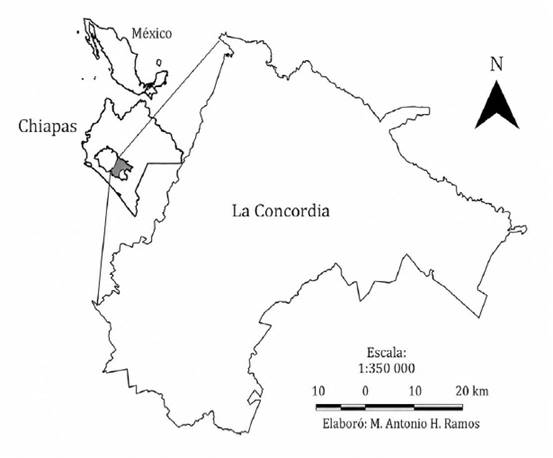
Figure 1. Location of the municipality of La Concordia in the state of Chiapas, Mexico.
Figura 1. Ubicación del municipio de La Concordia en el estado de Chiapas, México.
A total of 130 rural households from 24 localities were included. Sample size was estimated using Gallego’s formula for populations of unknown size, assuming a 90% confidence level and P = 0.50 (Gallego, 2004). Stratified random sampling by locality was applied to ensure territorial representativeness.
The backyards evaluated were family-managed productive spaces located next to the household dwelling. They were characterized by small-scale and diversified production, with plant and animal components used for self-consumption, occasional sale, medicinal purposes, condiments, ornamentation, and other domestic uses. Their management depended mainly on household labor, local knowledge, and resources available within the family unit.
As part of the same field research, household economy and backyard management were characterized using variables related to family composition, labor participation, productive use, and economic contribution, including household size, members working at home, salaried household members, time devoted to backyard activities, backyard area, crop and animal production, production value, production costs, utility, frequency of consumption, occasional sale of surpluses, and gender of the person responsible for management.
Backyard area showed marked variability according to productive profile: most backyard types ranged, on average, between 314 and 453 m², whereas pig-oriented backyards reached larger areas. This heterogeneity supported the identification of different household strategies, including crop production, poultry rearing for food and occasional income, pig production as a savings mechanism, and food access supported by external income sources.
Methodological Design and Data Collection
The study employed a non-experimental, descriptive, longitudinal design with a mixed-methods approach to analyze the temporal contribution of backyard products to household food security. Semi-structured interviews were conducted with household heads using a previously validated instrument developed by food security and agroecology specialists.
The protocol recorded productive and sociocultural information related to backyard products, uses, valuation, and household food satisfaction. It was structured around four dimensions: (i) purchase priority, (ii) availability of backyard products throughout the year, (iii) food and non-food uses, and (iv) household satisfaction with food access. Each dimension was operationalized through specific variables, including 27 selected basic food products used as a reference to assess household purchase priorities and dependence on foods acquired outside the backyard (CONEVAL, 2022b), an inventory of backyard plant and animal species, and monthly records of product availability and perceived food sufficiency. Product availability was recorded in a case × month matrix to quantify species presence over time. A parallel case × month matrix recorded household satisfaction with food access, expressed as the relative frequency of satisfied households.
Indicators and Operationalization
Monthly availability of each species was classified into five ordinal levels (Not available, minimal, low, medium, high) using the minimum variance stratification rule of Dalenius and Hodges (1959). This procedure standardized frequency interpretation and facilitated comparison of temporal patterns among species. From the cases × months matrix, these categories enabled identification of seasonal plant groups, interpreted as temporal patterns of presence and functional contribution within backyard agroecosystems.
The cultural and practical value of each species was estimated using the Use Value Index (UVI) proposed by Phillips and Gentry (1993).
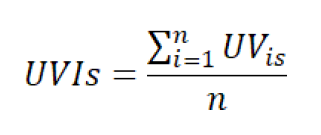
where:
UV is = represents the number of uses mentioned by informant i for species s
n = total number of informants.
Together, availability classification and UVI provide a complementary analytical approach: the former describes temporal dynamics of species presence, while the latter characterizes sociocultural and functional value within backyard systems. Table 1 summarizes the methodological framework, structurally linking analytical dimensions with operational variables and indicators. This ensures conceptual traceability between data collection and statistical interpretation, while preserving the systemic perspective guiding analysis of temporal dynamics.
Table 1. Analytical dimensions, operational variables, and indicators applied.
Tabla 1. Dimensiones analíticas, variables operativas e indicadores aplicados.
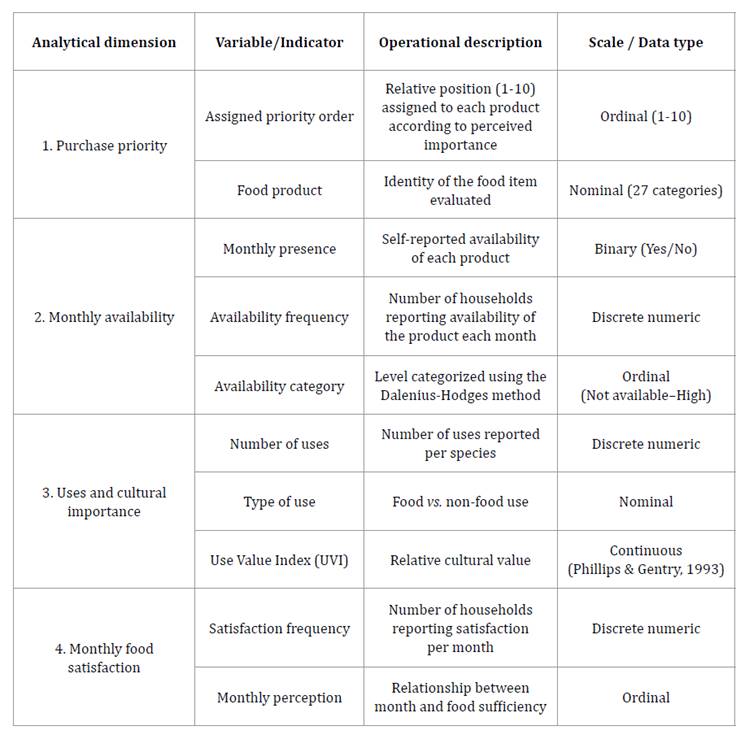
Monthly availability was recorded on a five-level ordinal scale (1-5) based on household perception, used for classification with the Dalenius-Hodges minimum variance method.
La disponibilidad mensual se registró en una escala ordinal de cinco niveles (1-5) según la percepción de los hogares, utilizada para la clasificación mediante el método de mínima varianza de Dalenius-Hodges.
Statistical Analysis
Correspondence analysis (CA) was applied to jointly represent food products and purchase priority levels, to identify proximity structures between categories. Euclidean distances served as the criterion for functional discrimination and were stratified using the Dalenius-Hodges minimum variance rule (Dalenius & Hodges, 1959), defining robust association levels (high, medium and low). The analytical strategy focused on frequency structures, relative positions in correspondence analysis, seasonal clustering, and descriptive indicators of use value, consistent with the descriptive and exploratory scope of the study. Temporal similarities among plant species were explored through hierarchical cluster analysis with Ward’s linkage and Euclidean distances, based on the monthly availability matrix. The five availability categories were treated as an ordered gradient of increasing presence, derived from monthly frequency classes rather than from subjective scores alone. Euclidean distance was therefore used as an exploratory criterion to summarize differences in temporal availability profiles among species. The resulting clusters were interpreted descriptively as patterns of seasonal availability, not as inferential or causal groupings.
Results and Discussion
Dietary Priority Structure and Sociocultural Interpretation Based on Correspondence Analysis
Correspondence analysis jointly represented food items and household purchase priorities (figure 2).
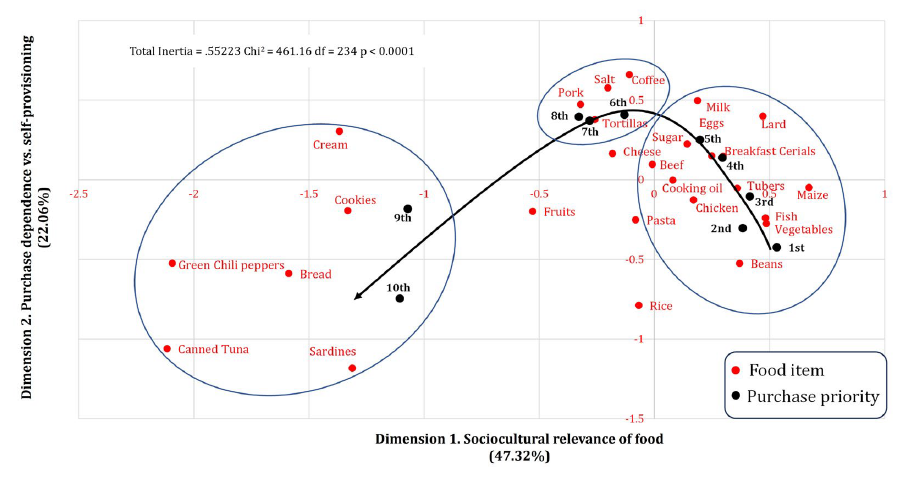
Figure 2. Correspondence analysis of food items and household purchase priorities in La Concordia, Chiapas.
Figura 2. Análisis de correspondencias de los alimentos y las prioridades de compra de los hogares en La Concordia, Chiapas.
Dimension 1, Sociocultural relevance of food, explained 47.32% of variability, distinguishing staple foods of high priority from items of lower importance. Dimension 2, Purchase dependence vs. self-provisioning, explained 22.06%, separating foods reliant on external purchase from those complemented by backyard production. Together, both dimensions accounted for 69.38% of total variability and defined three functional priority groups. The first group comprises high-priority foods (priority levels 1-5), led by beans and followed by vegetables, chicken, fish, eggs, milk, and beef, which together constitute the nutritionally and culturally grounded basis of regional consumption.
The second group comprises intermediate-priority foods (levels 6-8), such as tortillas, pork, and coffee, reflecting habitual consumption with varying market dependence. The third group includes low-priority foods (levels 9-10), cream, bread, cookies, canned fish, which are complementary in diet and shaped by economic availability and preference.
This hierarchical structure reflects food preferences and a functional gradient integrating nutritional stability, cultural identity, and household self-provisioning. Purchase priorities result from the interaction of consumption frequency, cultural significance, local acquisition potential, and economic capacity. Tortillas exemplify this: although a staple, their intermediate priority stems from widespread household preparation with local maize, conferring cultural and affective value beyond market purchase and highlighting food decisions shaped by symbolic and identity-based practices (Gómez Padilla et al., 2024; Guevara-Hernández & Mariaca-Méndez, 2023).
The Role of Backyard Systems as a Support for Household Food Resilience
In La Concordia, maize is not usually cultivated in backyards, as it belongs to the milpa system. Yet foods produced in backyards substantially overlap with those in the highest priority strata (table 2), indicating that backyards complement rather than replace household subsistence or Family Production Units (Arias et al., 2022). This complementarity operates through three mechanisms: reducing dependence on external purchases, buffering market fluctuations, and strengthening household food resilience.
Table 2. Strength of association between food items and purchase priority levels.
Tabla 2. Fuerza de asociación entre los alimentos y los niveles de prioridad de compra.
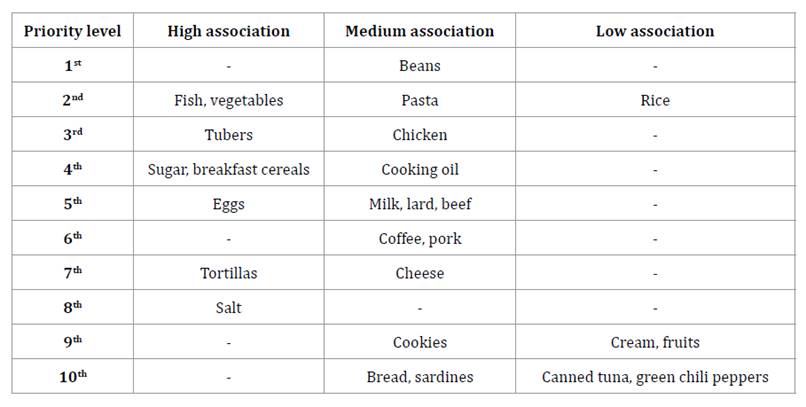
Association strength was classified using the Dalenius-Hodges minimum variance method based on the distribution of Cartesian distances.
La fuerza de asociación se clasificó utilizando el método de mínima varianza de Dalenius- Hodges, basado en la distribución de las distancias cartesianas.
Within this framework, animal production offers flexible resources with distinct roles. The domestic animal component was mainly represented by poultry species, particularly chickens, turkeys, and ducks, with pigs present to a lesser extent. This animal diversity was functionally relevant because poultry contributed to regular household food supply through eggs and meat, whereas pigs operated mainly as an accumulative asset for sale or use during household contingencies. Eggs, and to a lesser extent poultry meat, remain stably available year-round, with consistent frequency, value, and opportunity cost (table 2), aligning with their low purchase priority. These products hold high cultural value and serve dual purposes, supporting household subsistence and local income (Mendoza-Alonso et al., 2021). By contrast, pork acts as an accumulative asset, marketed during price peaks or household contingencies, reinforcing its buffering role. Similar dynamics occur in smallholder goat systems (La O-Arias et al., 2017).
The functional organization of backyards in La Concordia aligns with studies describing them as diversified agroecosystems, where plant and animal species coexist under household strategies of subsistence, self-consumption, and cultural preservation (Guevara-Hernández et al., 2023). Beyond food production, their diversity integrates culinary and medicinal uses with daily management practices that strengthen household food security (Castañeda-Navarrete, 2021; Galhena et al., 2013). This study adds the seasonal dimension of availability, identifying functional groups with differentiated roles throughout the year and highlighting backyards as dynamic agroecosystems.
Seasonal Dynamics of Plant Availability in Backyard Systems
Hierarchical cluster analysis of monthly plant availability identified differentiated temporal production patterns in La Concordia backyards (figure 3). Clustering used Ward’s method with Euclidean distance among monthly presence series. The procedure yielded three functional seasonal groups plus a distinct pattern of year-round availability.
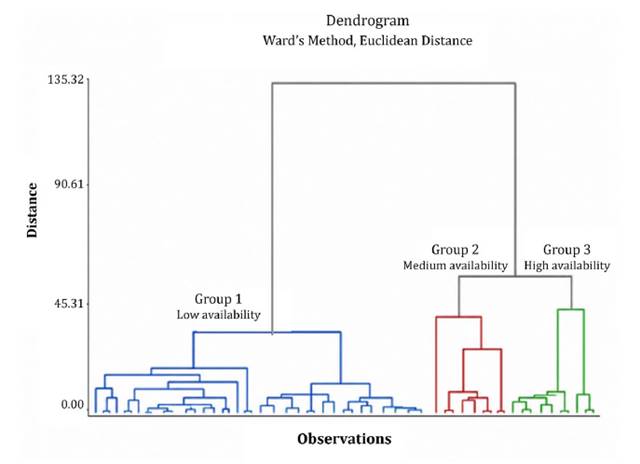
Species were grouped by similarity in annual availability patterns.
Las especies se agruparon por similitud en los patrones de disponibilidad anual.
Figure 3. Seasonal clustering of plant species by monthly availability in La Concordia, Chiapas.
Figura 3. Agrupamiento estacional de especies vegetales según la disponibilidad mensual en La Concordia, Chiapas.
The seasonal groups define the annual calendar of plant-based provisioning in backyards and reveal marked species seasonality. This temporal organization shapes household food access and use diversity, forming the functional basis for interpreting backyards as complementary components of family food security strategies.
From this perspective, backyards function as dynamic soft agroecosystems, where human decisions, production calendars, and ecological responses interact non-linearly (Gómez-Padilla et al., 2025; Sanny et al., 2024). The study shows this temporal logic in seasonal species availability, reflecting system organization and adjustment across the annual cycle.
Within this framework, temporality is central to backyard agroecosystems. Under specific environmental, productive, and sociocultural conditions, these systems adopt configurations of resources, availability, and use; when conditions shift, they show high capacity for functional readjustment. This plasticity reorganizes plant supply and management practices, fostering adaptive processes that strengthen household resilience. Thus, the backyard functions as a dynamic soft system, whose role is continually redefined by changing environments and domestic strategies.
Seasonal Grouping of Plant Species
The distribution of species by temporal availability in backyards reveals distinct functional groups with differentiated behaviors throughout the year (table 2). Group I. High diversity, low annual availability: shows intermittent presence, marked monthly fluctuations, and prolonged absences, making it the group with greatest species richness (table 3).
Table 3. Plant species grouped according to seasonal availability patterns in backyards of the municipality of La Concordia, Chiapas.
Tabla 3. Especies vegetales agrupadas según patrones de disponibilidad estacional en traspatios del municipio de La Concordia, Chiapas.
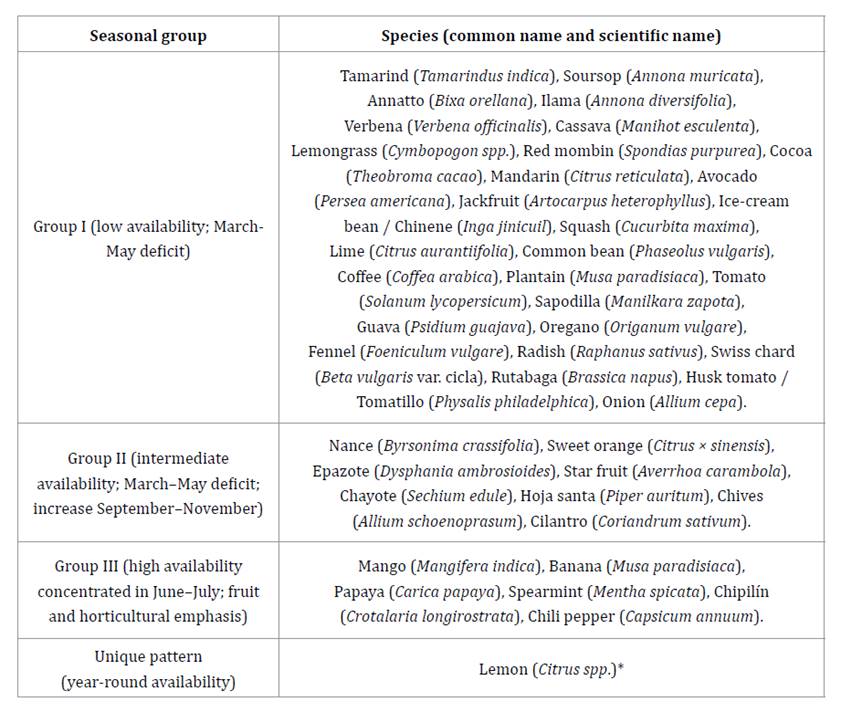
* Lemon denotes a locally recognized citrus (Citrus spp.) with year-round availability and frequent culinary uses. Its permanent presence explains exclusion from seasonal groups.
* El limón se refiere a un cítrico localmente reconocido (Citrus spp.) con disponibilidad durante todo el año y usos culinarios frecuentes. Su presencia permanente explica la exclusión de los grupos estacionales.
Group I includes minor fruit trees, short-cycle vegetables, and plants for condiments or medicinal use (Tamarindus indica, Annona muricata, Cucurbita maxima, Solanum lycopersicum, Origanum vulgare). Monthly dynamics show brief peaks and prolonged scarcity, yielding irregular household contributions (figure 4). Functionally, it is diverse and multipurpose, linked to occasional domestic, medicinal, and cultural uses rather than staple foods. Group II. Intermediate availability and marked seasonality: species with defined temporal patterns (Citrus sinensis, Sechium edule, Piper auritum; table 3) show scarcity alternating with temporary increases, especially in the year’s second half. Their dynamics reveal a transitional function between phases of higher and lower supply (figure 4). With intermediate availability, they complement backyard production, buffering reduced supply and reinforcing temporal stability while diversifying fresh food access.
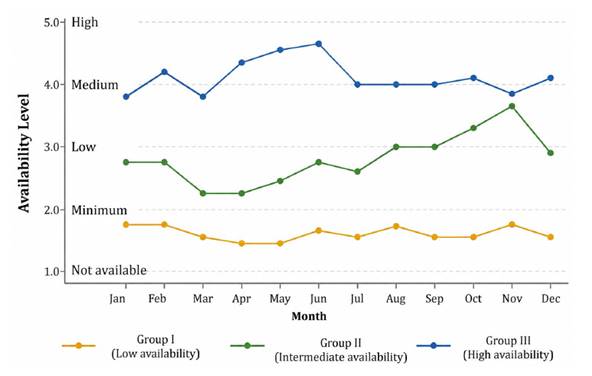
Availability is shown on a five-level ordinal scale (1-5). Lemon (Citrus spp.) displayed permanent availability, thus excluding from seasonal groups.
La disponibilidad se muestra en una escala ordinal de cinco niveles (1-5). El limón (Citrus spp.) presentó disponibilidad permanente, por lo que se excluyó de los grupos estacionales.
Figure 4. Monthly availability of seasonal plant groups in La Concordia backyards.
Figura 4. Disponibilidad mensual de los grupos estacionales de plantas en los traspatios de La Concordia.
Group III. High availability and temporal stability: includes species with the greatest relative availability year-round, peaking in June-July with regional humidity. Key species (Mangifera indica, Carica papaya, Musa paradisiaca, Crotalaria longirostrata) form the core productive component of backyards, ensuring a steady fruit and vegetable supply and reinforcing household food stability (table 3, figure 4). Their dynamics contrast with other groups, offering a broad window of availability. Lemon (Citrus spp.), with constant presence, was excluded from seasonal groups; its permanence and versatile uses make it a structural species that supports daily consumption and system stability.
Use Value and its Correspondence with Seasonal Availability
To examine the link between temporal availability and cultural relevance, the Use Value Index (UVI) was analyzed, integrating frequency of use and functional diversity (table 4).
Table 4. Use Value Index (UVI) by seasonal groups of plant species.
Tabla 4. Índice de Valor de Uso (UVI) por grupos estacionales de especies vegetales.
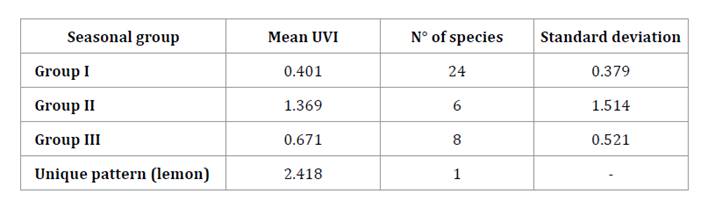
The Use Value Index (UVI) was calculated from household-reported frequency and diversity of uses. Values show group means, species count, and standard deviation.
El Índice de Valor de Uso (UVI) se calculó a partir de la frecuencia y diversidad de usos reportados por los hogares. Los valores muestran las medias de grupo, el número de especies y la desviación estándar.
Lemon showed the highest UVI, consistent with its year-round availability and versatile uses. Group II ranked highest among seasonal groups, reflecting functional and cultural relevance through strategic culinary and domestic roles. Groups I and III had lower values: Group I due to specific or sporadic uses, and Group III because species contribute mainly through productive stability rather than diverse uses. Overall, species selection and persistence in backyards respond to both functional and symbolic criteria, beyond productive performance.
Seasonal Implications for Food Security
Household satisfaction with food access followed a marked seasonal pattern, with the most critical period occurring between November and April and a relative improvement between June and October (figure 5). The lowest satisfaction frequencies coincided with months of lower overall plant availability, whereas the relative improvement in satisfaction occurred during the period of greater contribution from the most stable seasonal plant group.
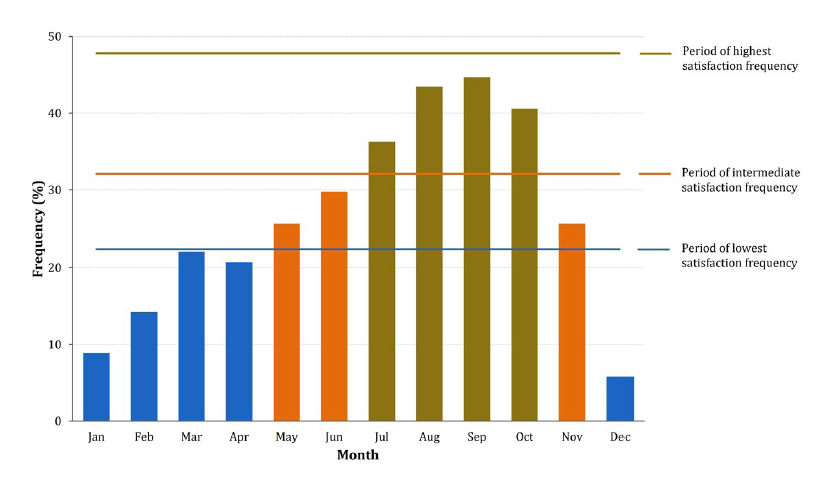
Data derived from surveys applied to households with backyard production systems.
Los datos se derivan de encuestas aplicadas a hogares con sistemas de producción en traspatio.
Figure 5. Monthly dynamics of household satisfaction with food availability in the municipality of La Concordia, Chiapas.
Figura 5. Dinámica mensual de la satisfacción de los hogares con la disponibilidad de alimentos en el municipio de La Concordia, Chiapas.
This descriptive pattern is consistent with the temporal dynamics of plant availability: Group III contributes to food supply during the humid months, Group II supports seasonal transitions, and Group I, although limited in volume, functions as a biocultural reserve with medicinal and condiment species. Overall, household food resilience relies less on backyard output than on the articulation of seasonal availability, species’ cultural value, and external acquisition capacity (Guevara-Hernández et al., 2023; Marcial Romero et al., 2019).
General Considerations of the Backyard as a Seasonal Socioecological System
The backyard is not only a production space, but a domestic socioecological system structured by time. Its functionality arises from coordinating species with contrasting availability, use values, and cultural roles (Galhena et al., 2013; Guevara-Hernández et al., 2023), organized into interdependent seasonal groups. Group III constitutes the productive core, ensuring staple foods through stable species with high availability in humid months. Group II, though smaller in volume, acts as a strategic buffer: its seasonal peaks and high use values sustain culinary practices and household management in critical periods. Group I, despite limited aggregate availability, serves as a biocultural reserve, providing medicinal, condiment, and occasional-use species that enhance adaptive capacity. Lemon, with permanent availability and versatile uses, reinforces this systemic view by stabilizing domestic practices year-round. Conceptually, this finding links backyard diversity with the stability dimension of food security: species are not only relevant because of their abundance, but also because of the moment in which they become available and the domestic functions they support. Thus, backyard food security depends less on production volume than on temporal complementarity, where seasonal availability, cultural value, and household strategies converge to generate resilience as a system-level property.
These findings should be interpreted considering that the study describes one annual cycle in rural households from a single municipality. Because backyard availability and household food access are sensitive to interannual climatic variability, unusual rainfall or drought conditions may modify the intensity and timing of seasonal patterns. Future research could also incorporate place-based and spatially explicit approaches that integrate environmental, productive, economic, and land-use variables to strengthen agricultural planning and local decision-making (Córdoba et al., 2025; Winter et al., 2025; Ciardullo & Gennari, 2025).
Conclusion
Family backyards in La Concordia, Chiapas, contribute to household food security through seasonal dynamics that shape the availability and use of plant and animal products. Animal-source products showed relatively stable availability throughout the year, although their use differed between regular consumption of eggs and poultry and the accumulation of pigs as a savings mechanism. In contrast, plant-based products showed marked seasonality, allowing the identification of three functional groups according to availability patterns and use value. Less than half of households reported satisfaction with food access, particularly between December and April, when plant availability was lower. These findings highlight backyards as complementary systems operating under structural constraints. Overall, household food resilience depends less on production volume than on the temporal complementarity among backyard components, the cultural valuation of species, household labor, occasional income, self-consumption, savings strategies, and access to externally acquired foods. This study provides new evidence that the contribution of backyards to food security is not static, but seasonally organized. These findings provide a basis for strengthening backyard management during critical months of food access.
Acknowledgements
The authors acknowledge the cooperation of the participating households and local communities, as well as the institutional support that made this research possible. They also thank MSc. Emilio Herasto Aguilar Vázquez for the gathering of field information of the backyards.
Arias, Y. L., Guevara-Hernández, F., La O-Arias, M. A., & Cadena, I. P. (2022). Caracterización y tipos de familias productoras de maíz local en la Frailesca, Chiapas. CienciaUAT, 16(2), 155-171. https://doi.org/10.29059/cienciauat.v16i2.1525
Bonuedi, I., Kornher, L., & Gerber, N. (2022). Agricultural seasonality, market access, and food security in Sierra Leone. Food Security, 14, 471-494. https://doi.org/10.1007/s12571-021-01242-z
Castañeda-Navarrete, J. (2021). Homegarden diversity and food security in southern Mexico. Food Security, 13(3), 669-683. https://doi.org/10.1007/s12571-021-01148-w
Ciardullo, V. F.; Gennari, A. J. (2025). Agricultural Land Valuation-Hedonic Pricing and Geostatistical Advances: A State-of-the-Art Review. Revista de la Facultad de Ciencias Agrarias. Universidad Nacional de Cuyo. 57(2): 224-236. DOI: https://doi.org/10.48162/rev.39.185
Comisión Nacional del Agua. (2024). Resúmenes mensuales de temperaturas y lluvia. Gobierno de México. https://smn.conagua.gob.mx/es/climatologia/temperaturas-y-lluvias resumenesmensuales-de-temperaturas-y-lluvias
Consejo Nacional de Evaluación de la Política de Desarrollo Social. (2022a). Estadísticas de pobreza en Chiapas. https://www.coneval.org.mx/coordinacion/entidades/Chiapas/Paginas/principal.aspx
Consejo Nacional de Evaluación de la Política de Desarrollo Social. (2022b). Medición de la pobreza 2022. https://www.coneval.org.mx/Medicion/MP/Paginas/Pobreza_2022.aspx
Consejo Nacional de Población. (2020). Índice de marginación por entidad federativa y municipio. https://datos.gob.mx/dataset/indices_marginacion
Córdoba, M.; Vallone, R.; Paccioretti, P.; Corvalán, F.; Balzarini, M. (2025). Data-driven Method for the Delimitation of Viticultural Zones: Application in the Mendoza River Oasis, Argentina. Revista de la Facultad de Ciencias Agrarias. Universidad Nacional de Cuyo. 57(2): 57-68. DOI: https://doi.org/10.48162/rev.39.171
Dalenius, T., & Hodges, J. L. (1959). Minimum variance stratification. Journal of the American Statistical Association, 54(285), 88-101. https://doi.org/10.1080/01621459.1959.10501501
Food and Agriculture Organization of the United Nations. (1996). Rome declaration on world food security and world food summit plan of action. FAO.
Food and Agriculture Organization of the United Nations. (2012). Escala Latinoamericana y Caribeña de Seguridad Alimentaria (ELCSA): Manual de uso y aplicación. FAO. https://www.fao.org/4/i3065s/i3065s.pdf
Galhena, D. H., Freed, R., & Maredia, K. M. (2013). Home gardens: A promising approach to enhance household food security and wellbeing. Agriculture & Food Security, 2(1), Article 8. https://doi.org/10.1186/2048-7010-2-8
Gallego, C. F. (2004). Cálculo del tamaño de la muestra. Matronas Profesión, 5(18), 5-13.
García, E. (1973). Modificaciones al sistema de clasificación climática de Köppen (para adaptarlo a las condiciones de la República Mexicana). UNAM.
Gómez-Padilla, E. J., Llaven-Martínez, J., Gómez-Padilla, E., La O-Arias, M. A., & Guevara-Hernández, F. (2024). Caracterización de maíces locales de la región Frailesca de Chiapas: Diversidad morfológica y productiva. Revista Chapingo Serie Agricultura Tropical, 4(2), 1-16. https://doi.org/10.5154/r.rchsat.2024.04.04
Guevara-Hernández, F., & Mariaca-Méndez, R. (2023). Importancia actual de los maíces locales (Zea mays L.): aportes y reflexiones etnobotánicas desde Chiapas, México. Universidad y Sociedad, 15(6), 438-445. https://rus.ucf.edu.cu/index.php/rus/article/view/4162
Gómez-Padilla, E. J., Guevara-Hernández, F., & La O-Arias, M. A. (2025). De prácticas aisladas a la perspectiva agroecosistémica: La transformación conceptual del rastrojo de maíz en la región Frailesca, Chiapas. Revista Chapingo Serie Agricultura Tropical, 5. https://doi.org/10.5154/r.rchsat.2024.05.04
Guevara-Hernández, F., La O-Arias, M. A., Aguilar-Vázquez, E. H., Ruiz-Sánchez, E., Martínez-Aguilar, F., & Aguilar-Jiménez, C. E. (2023). Backyards: Typology and contribution to food security in Mexico. Ciência Rural, 53(8). https://doi.org/10.1590/0103-8478cr20220397
Hernández-Núñez, H. E., Gutiérrez García, G. A., Gutiérrez-Montes, I., Suárez Salazar, J. C., Andrade, H. J., Bernal, A. P., Casanoves, F., & Flora, C. B. (2022). How close are we to self-provisioning? A look at the livelihood strategies of rural households in the Southern Andean Region of Colombia. Sustainability, 14(5), 2504. https://doi.org/10.3390/su14052504
Instituto Nacional de Estadística y Geografía. (2024). Geografía y medio ambiente: Edafología. https://www.inegi.org.mx/temas/edafologia/#mapas
La O-Arias, M. A., Guevara-Hernández, F., Rodríguez-Larramendi, L. A., Pinto-Ruiz, R., Nahed Toral, J., Ley de Coss, A., & Reyes Muro, L. (2017). Evolución de los sistemas de crianza de cabras criollas cubanas en el contexto de la conservación del genotipo. Revista Mexicana de Ciencias Pecuarias, 9(1), 68-85. https://doi.org/10.22319/rmcp.v9i1.4400
Manikas, I., Ali, B. M., & Sundarakani, B. (2023). A systematic literature review of indicators measuring food security. Agriculture & Food Security, 12(1), Article 10. https://doi.org/10.1186/s40066-023-00415-7
Marcial Romero, N., Sánchez-Gómez, J. P., & López-Gómez, A. (2019). Vulnerabilidad alimentaria en hogares rurales y su relación con la política alimentaria en México. Revista Mexicana de Ciencias Agrícolas, 10(4), 935-945. https://doi.org/10.29312/remexca.v10i4.1746
Martínez-Martínez, O. A., Gil-Vásquez, K., & Romero-González, M. B. (2023). Food insecurity and levels of marginalization: Food accessibility, consumption and concern in Mexico. International Journal for Equity in Health, 22(1), Article 178. https://doi.org/10.1186/s12939-023-01977-5
Mendoza-Alonso, M. C. Q., González-García, R. A., Hernández-Ramírez, J. R., Pérez-Domínguez, J. C., & Martínez-Hernández, I. (2021). Estrategias de la producción avícola de traspatio en la localidad Nueva Libertad, La Concordia, Chiapas, México. Brazilian Journal of Animal and Environmental Research, 4(3). https://doi.org/10.34188/bjaerv4n3-108
Phillips, O., & Gentry, A. H. (1993). The useful plants of Tambopata, Peru: II. Additional hypothesis testing in quantitative ethnobotany. Economic Botany, 47(1), 33-43. https://doi.org/10.1007/BF02862204
Sanny, L., Kurniawan, N. B., Hidayanto, A. N., & Budi, I. (2024). A soft system approach for Smart agriculture: The use of digital marketing in organic farm business. In Proceedings of the 2024 International Conference on ICT for Smart Society (ICISS), (pp. 1-5). https://doi.org/10.1109/ICISS62896.2024.10751412
Sibhatu, K. T., & Qaim, M. (2017). Rural food security, subsistence agriculture, and seasonality. PLOS ONE, 12(10), e0186406. https://doi.org/10.1371/journal.pone.0186406
Vermeulen, H., Meyer, F., & Schönfeldt, H. C. (2023). A basic healthy food basket approach to evaluate the affordability of healthy eating in South Africa and Kenya. Frontiers in Sustainable Food Systems, 7, 1181683. https://doi.org/10.3389/fsufs.2023.1181683
Winter, P. L.; Gennari, A. J.; Ciardullo, V. F.; Santoni, L. J. (2025). Strategic Pathways for the Olive Oil Chain in Argentina: Profitability, Sustainability and Oleo tourism. Revista de la Facultad de Ciencias Agrarias. Universidad Nacional de Cuyo. 57(2): 87-101. DOI: https://doi.org/10.48162/rev.39.173
Declaration of Conflict of Interest
The authors declare no conflict of interest. The funding sponsors had no role in the design of the study; in the collection, analyses, or interpretation of data; in the writing of the manuscript, and in the decision to publish the results.
Authors’ Contributions
All authors contributed to the conception, development, and writing of the manuscript. All authors critically revised the content and approved the final version for publication.
Use of Artificial Intelligence
The authors declare that artificial intelligence tools were used solely for language editing and stylistic refinement. All intellectual content and responsibility for the manuscript remain with the authors.