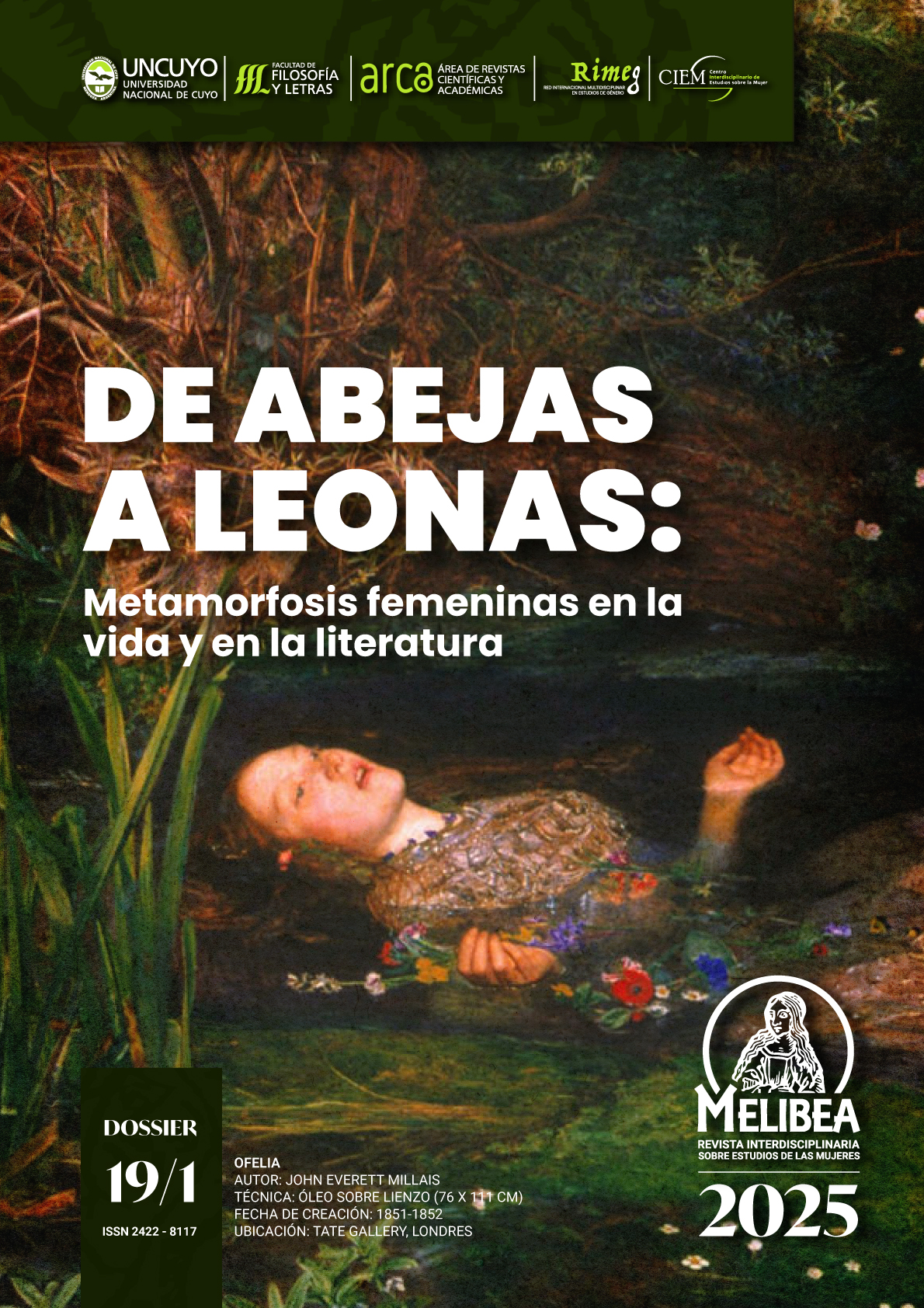
Ophelia's Voice: From Orality to Tragedy
A Comparative Study of the Voice of Shakespeare's Female Character
Keywords:
Ophelia, Lament, Voice, Lirics, IntertextualityAbstract
This work explores Ophelia's madness in Shakespeare's The Tragedy of Hamlet, Prince of Denmark. We explore her voice, what she sings, what her laments say, and what elements of orality are found in her speeches. We propose to assess the lyrical aspect of her voice and select a corpus that highlights what Ophelia says through intertextual poetic compositions. We consider lament as the means of expression of Ophelian song and are interested in investigating the oral elements present in her speech. We analyze Ophelia's "journeys" through different lyrical texts to understand how she became a mythical character. We delve into the poetics of her voice and the motifs related to myths in constant migration. We unravel this female voice that transcends time and discover her role as a muse for creators of diverse disciplines such as Lorca and Brecht, but also as a great bearer of a sung message.
Downloads
References
Calle Albert, I. (2015). “La música en el teatro de Shakespeare. Un estudio holístico del concepto en sus principales obras dramáticas.” Cuadernos de Bellas Artes, 5. Latina.
Dorra, R. (1997). “Poética de la voz.” Entre la voz y la letra (11-40). Plaza y Valdés Editores.
Espino Relucé, G. (2015). Literatura oral. Literatura de tradición oral. Pakarina Ediciones.
Godenzzi, J. (1999). Tradición oral andina: Problemas metodológicos del análisis del discurso. En J. C. Godenzzi (Comp.), Tradición oral andina y amazónica, 273-289. CBC Centro de Estudios Regionales Andinos Bartolomé de Las Casas.
Graves, R. (1997). The white goddess: A historical grammar of poetic myth. Faber & Faber. (Trabajo original publicado en 1948).
Lasa, C. E. (2017). “Rimbaud lee a Shakespeare: sustratos de antilirismo en el poema "Ofelia"”. Buenos Aires Poetry, 10, 1-14.
Margarit, L. (2007). El libro de los elementos. Tsé Tsé.
Orringer, N. (1996). “En el bosque negro de Shakespeare con García Lorca.” Studies in Honor of Gilberto Paolini (323-335). Juan de la Cuesta Editors.
Rimbaud, A. (2009). Poesías completas. Trad. Javier del Prado. Cátedra.
Rubio Jiménez, A. M. (2021). “El motivo de Ofelia en la lírica expresionista alemana: denuncia social, política y marginalidad.” Futhark. Revista de Investigación y Cultura, 15. https://revistascientificas.us.es/index.php/futhark/article/view/15902
Sanabria, C. (2019). Ofelia fementida: Transescrituras desde la literatura, la pintura, el cine. Laertes.
Shakespeare, W. (2014). Hamlet. Introducción por Anne Barton. Aguilar, Altea, Taurus, Alfaguara.
Zumthor, P. (1991). Introducción a la poesía oral. Taurus.
Downloads
Published
How to Cite
Issue
Section
License

This work is licensed under a Creative Commons Attribution-NonCommercial 4.0 International License.
Esta obra está bajo una Licencia Creative Commons Atribución-NoComercial 4.0 Internacional.
Los/as autores/as que publican en esta revista están de acuerdo con los siguientes términos:
1. Los/as autores conservan los derechos de autor y garantizan a la revista el derecho de ser la primera publicaci´´ón del trabajo bajo una licencia Creative Commons Atribución-NoComercial 4.0 Internacional. Por esto pueden compartir el trabajo con la referencia explícita de la publicación original en esta revista.
2. Revista Melibea permite y anima a los autores a difundir la publicación realizada electrónicamente, a través de su enlace y/o de la versión postprint del archivo descargado de forma independiente.